






John Heydler was a significant figure in Major League Baseball, known for his roles as an umpire, sportswriter, and executive. His career spanned several decades, during which he made substantial contributions to the sport, particularly in the areas of recordkeeping and league administration. This article delves into Heydler's life, his career trajectory, and his lasting impact on baseball.
Early Life and Entry into Baseball
John Arnold Heydler was born on July 10, 1869, in La Fargeville,
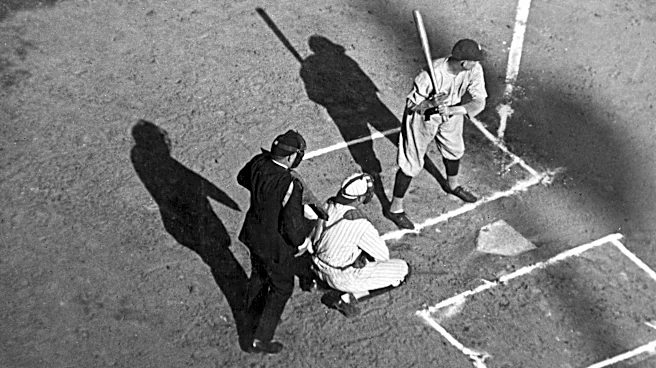
New York. As a young man, he worked as a printer's apprentice and later at the U.S. Government Printing Office. His early career was marked by a diverse set of roles, including that of a sportswriter. However, it was his work as an umpire in the National League from 1895 to 1898 that marked his initial foray into professional baseball. During this period, Heydler umpired a total of 83 games, gaining firsthand experience in the sport.
In 1903, Heydler's career took a significant turn when he was hired as the private secretary to Harry Pulliam, the then-president of the National League. This role involved compiling league playing statistics, a task that would become a cornerstone of Heydler's contributions to baseball. His meticulous work in recording the league's early history laid the foundation for his advocacy of new statistical measures, such as runs batted in for batters and earned run averages for pitchers.
Leadership in the National League
Heydler's administrative acumen led to his appointment as the National League's secretary-treasurer from 1907 to 1918. Following the tragic suicide of Harry Pulliam in 1909, Heydler briefly assumed the role of league president. He returned to this position more permanently from 1918 to 1934, a period during which he implemented several key initiatives.
One of Heydler's notable achievements was hiring the Elias brothers in 1919 to maintain official playing statistics, ensuring the accuracy and reliability of baseball records. He also played a pivotal role in the selection of Kenesaw Mountain Landis as the first Commissioner of Baseball in 1921, recognizing the need for a strong figure to oversee the sport and manage the interests of team owners.
Legacy and Innovations
John Heydler's influence extended beyond administrative duties. He was instrumental in the establishment of the Baseball Hall of Fame, a testament to his commitment to preserving the sport's history and honoring its greatest contributors. In December 1928, Heydler proposed a rule change that would allow a tenth player to bat in place of the pitcher, a concept that eventually evolved into the designated hitter rule adopted in 1973.
After retiring as league president, Heydler continued to serve as the National League chairman until his death in 1956 in San Diego, California. His legacy is marked by his forward-thinking approach to baseball administration and his dedication to enhancing the sport's statistical and historical record. John Heydler's contributions have left an indelible mark on Major League Baseball, influencing the way the game is played and remembered today.