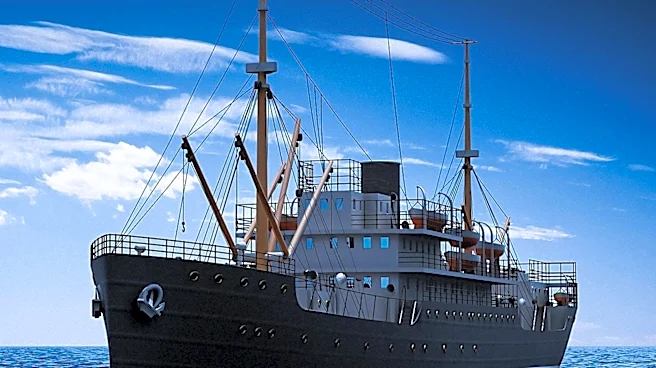







The SS Patrick Henry, renowned as the inaugural Liberty ship, embarked on a demanding service history that spanned the entirety of World War II and extended into the post-war era. Its operational life was characterized by numerous voyages across perilous waters, delivering vital supplies to Allied forces and nations. Named after the American Founding Father, the ship was a symbol of the United States' commitment to supporting the global war effort
through its innovative and rapid shipbuilding program. Its journey from a newly launched vessel to its eventual scrapping reflects the broader narrative of the Liberty ships' indispensable role and their ultimate obsolescence.
Global Voyages During World War II
Upon the completion of its fitting on December 30, 1941, the SS Patrick Henry was immediately pressed into service. Its maiden voyage took it to the Middle East, marking the beginning of a rigorous schedule. Throughout World War II, the ship completed 12 voyages, traversing vast distances to reach critical ports around the world. These destinations included Murmansk, a particularly dangerous route as part of Convoy PQ 18, as well as Trinidad, Cape Town, Naples, and Dakar. Each journey was fraught with the dangers of wartime shipping, including submarine attacks and harsh weather conditions, underscoring the resilience of the vessel and its crew.
The ship's participation in Convoy PQ 18 to Murmansk highlights its involvement in some of the most challenging naval operations of the war. These convoys faced constant threats from German U-boats and aircraft in the Arctic Circle, making the successful delivery of cargo a testament to the strategic importance and robust construction of the Liberty ships. The SS Patrick Henry's ability to navigate these treacherous routes contributed significantly to the Allied supply lines, providing essential materials to the Soviet Union and other fronts.
Post-War Incidents and Final Disposition
The SS Patrick Henry successfully survived the war, a testament to its sturdy design and the efforts of its crews. However, its post-war career was not without incident. In July 1946, the ship suffered serious damage when it ran aground on a reef off the coast of Florida. This event marked a turning point in its operational life, leading to its eventual retirement from active service. Following the grounding, the vessel was laid up at the National Defense Reserve Fleet in Mobile, Alabama, awaiting its fate.
After more than a decade in reserve, the SS Patrick Henry was sold to Bethlehem Steel on September 18, 1958, for $76,191. It was officially withdrawn from the fleet on October 22, 1958, and subsequently scrapped in Baltimore, the same city where it was originally built. The scrapping of the SS Patrick Henry symbolized the end of an era for this pioneering vessel, which had played a crucial role in the Allied victory and the history of modern shipbuilding.