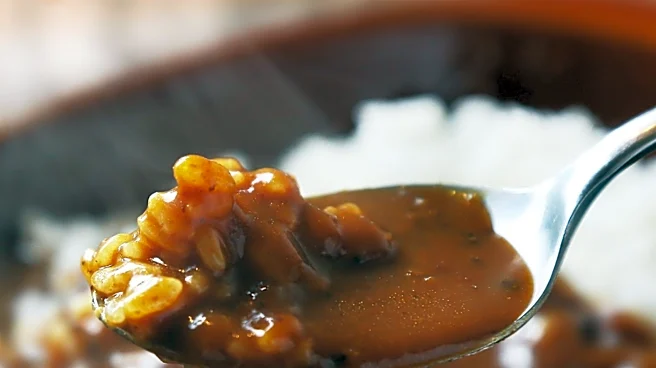

Curry, a dish with origins in Indian cuisine, has found a special place in Japanese culinary culture. Known as karē in Japan, this dish has been adapted to suit local tastes and has become a staple in Japanese households.
This article delves into the evolution of curry in Japan, exploring how it has been transformed and popularized over the years.
The Introduction of Curry to Japan
Curry was introduced to Japan during the Meiji period, likely through the influence of the British Royal Navy. At the time, the Indian subcontinent was under British colonial rule, and curry was classified as yōshoku, or Western-style food, in Japan. The dish was adapted by the Imperial Japanese Navy, which substituted bread with rice and thickened the curry with flour to prevent spilling while at sea.
The first mention of curry in Japanese cookbooks appeared in 1872, and by 1877, it was included on the menu of Seiyoken, a Tokyo restaurant. The dish gained popularity as it was easy to prepare and suited the Japanese palate. Over time, curry became a common dish in Japanese households, with various adaptations emerging.
The Popularity of Japanese Curry
Japanese curry is typically served in three main forms: curry rice (karē raisu), curry udon (karē udon), and curry bread (karē pan). Curry rice, which consists of curry sauce poured over white rice, is the most popular form and is often simply referred to as curry. The basic ingredients for Japanese curry include onions, carrots, potatoes, and a choice of meat such as beef, pork, or chicken.
The convenience of instant curry roux, available in block and powder forms, has contributed to the widespread popularity of curry in Japan. These pre-made mixes allow for quick and easy preparation, making curry a go-to meal for many Japanese families. The dish is often served with fukujinzuke or rakkyō, pickled vegetables that complement the flavors of the curry.
Regional Variations and Modern Trends
In recent years, regional specialty curries have emerged in Japan, each with its own unique twist. For example, Yokosuka navy curry is sold in Yokosuka to promote its heritage as a naval base. Additionally, spice curry, a dish that originated in Osaka, incorporates a wide variety of spices and has gained popularity for its bold flavors.
Japanese curry continues to evolve, reflecting the country's culinary creativity and adaptability. Its journey from a foreign dish to a beloved staple in Japanese cuisine is a testament to the dynamic nature of food culture in Japan.