




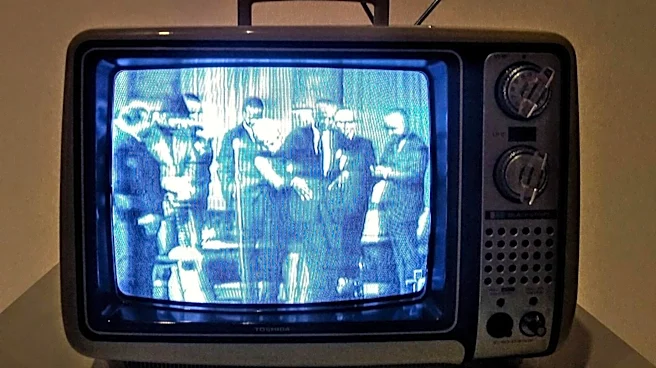


The Red Skelton Show was a staple of American television, captivating audiences from 1951 to 1971. Hosted by the charismatic Red Skelton, the show evolved significantly over its two-decade run, adapting to changes in television and audience preferences. This article explores the show's journey from its beginnings on NBC to its final days, highlighting key transitions and developments.
The Early Years
The Red Skelton Show debuted on NBC in the fall of 1951, marking
the transition of Red Skelton from radio and film to television. Sponsored by Procter & Gamble, the show initially aired on Sunday nights. Skelton's agreement with MGM restricted his television appearances until September 30, 1951, setting the stage for his television career. After two seasons, the show moved to CBS in 1953, settling into a Tuesday night slot that would become its hallmark.
During its early years, the show was produced at Desilu Productions and CBS Television City in Hollywood. It was one of the few programs to be telecast in color during the 1950s, a testament to Skelton's enthusiasm for the medium. Despite CBS's initial reluctance to embrace color broadcasting, Skelton's influence ensured that the show was colorcast approximately 100 times between 1955 and 1960.
Expansion and Format Changes
In 1962, The Red Skelton Show expanded to a full hour, becoming The Red Skelton Hour. This change allowed for more elaborate comedic sketches and guest performances. The format during this period was straightforward, beginning with a comedic blackout sketch and a musical number featuring dancers and singers. Skelton's opening monologue often included character humor, showcasing his talent for physical comedy.
Guest stars played a significant role in the show's format, with musical performances led by bandleader David Rose. The show featured a variety of notable guests, including John Wayne, Jack Benny, and The Beach Boys, who made their television debut on the program. The inclusion of musical guests and celebrity appearances added variety and appeal to the show, keeping audiences engaged.
Final Years and Legacy
The show's association with CBS ended in 1970, as the network shifted focus towards programming that appealed to younger, urban audiences. Despite strong Nielsen ratings, The Red Skelton Show was canceled, leaving Skelton heartbroken. NBC picked up the program later that year, but changes to the format and set failed to resonate with audiences.
The final season saw the introduction of a repertory company and a return to a half-hour format. However, the lack of rapport between Skelton and the new cast led to the show's conclusion in March 1971. Despite its end, The Red Skelton Show left a lasting legacy, earning Skelton a lifetime achievement award from the Academy of Television Arts and Sciences in 1986 and induction into the Television Hall of Fame in 1989.