





Top Fuel drag racing stands as the fastest sanctioned category of drag racing, with cars reaching speeds over 340 miles per hour. This extreme sport has undergone significant evolution, particularly concerning safety regulations and technological advancements, driven by a continuous push for both speed and driver protection. From changes in fuel composition to mandated vehicle modifications and track length adjustments, the sport has consistently
adapted to manage the inherent risks while pushing the boundaries of automotive performance.
Adapting to Speed: Track Length and Fuel Regulations
One of the most significant changes in Top Fuel drag racing history involved the shortening of the race distance. Traditionally, drag races covered a quarter-mile, or 1,320 feet. However, in 2008, following the fatal crash of Funny Car driver Scott Kalitta, the National Hot Rod Association (NHRA) mandated a reduction to 1,000 feet for Top Fuel and Funny Car classes. This measure, initially temporary, became the standard, with the FIA adopting it for some tracks and, as of 2012, making it the defined Top Fuel distance. The International Hot Rod Association (IHRA) also dropped the quarter-mile distance in Australia in 2017, influenced by car owner Santo Rapisarda, who frequently races NHRA events in the United States. This change aimed to limit top speeds and enhance safety, addressing concerns about engine explosions at high speeds.
Fuel composition has also been a critical area of regulation. In 2000, the NHRA limited the maximum concentration of nitromethane in a car's fuel to 90%. After a fatality at Gateway International Raceway in 2004 involving racer Darrell Russell, this ratio was further reduced to 85%. However, complaints from teams regarding increased costs and mechanical failures, which could lead to oildowns or severe crashes due to the reduced nitromethane mixture, led to the rule being rescinded. Starting in 2008, the fuel mixture returned to 90% nitromethane. Since 2015, NHRA regulations have limited the fuel composition to a maximum of 90% nitromethane, with the remainder largely methanol. While this mixture is not mandatory, and less nitromethane can be used, it highlights the ongoing balance between performance and safety.
Engineering for Extremes: Engine Design and Safety Features
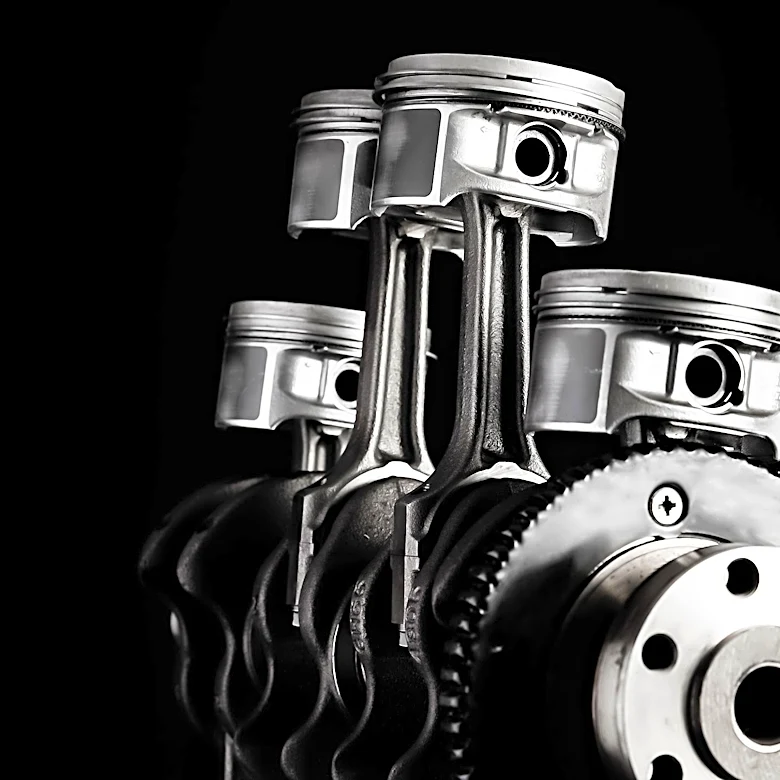
The engines powering Top Fuel dragsters are marvels of specialized engineering, though some aspects are heavily restricted by NHRA rules, sometimes requiring the use of technologies decades old. Despite these restrictions, other areas like fuel injection, clutch operation, ignition, and car materials are under constant development. The engine displacement is limited to 500 cubic inches, typically featuring a 4.1875-inch bore and a 4.5-inch stroke. These engines are based on a second-generation Chrysler RB Hemi design but are built exclusively with specialized parts, including blocks machined from forged aluminum with press-fitted ductile iron cylinder liners. The absence of water passages in the block significantly increases its strength and stiffness, with cooling primarily handled by the incoming air/fuel mixture and lubricating oil.
Safety mandates extend beyond fuel and track length to the very construction of the vehicles. Following the 2004 fatality, the NHRA mandated enclosed roll cages and different rear tires to reduce failure. A titanium "shield" was also required around the back-half of the roll cage to prevent debris from entering the cockpit. Rear tire pressure is heavily regulated by Goodyear Tire and Rubber on behalf of the NHRA, set at a minimum of 7 psi. Furthermore, final drive ratios higher than 3.20 are prohibited to limit top speed potential and reduce danger. These measures collectively aim to protect drivers in a sport where acceleration can reach over 5.6 g0 and engine sound can exceed 150 dB, enough to cause physical pain or permanent damage.
The Power Behind the Roar: Superchargers and Fuel Systems
Superchargers are a critical component of a Top Fuel engine, mandated to be a 14-71 type Roots blower with twisted lobes, driven by a toothed belt. These superchargers are slightly offset to the rear to ensure even air distribution. Absolute manifold pressure typically ranges from 56–66 pounds per square inch, though up to 74 psi is possible. A 200 psi burst plate is fitted in the manifold for safety. Driving the supercharger at maximum pressure requires approximately 1,000 horsepower. These devices are derivatives of General Motors scavenging-air blowers, adapted for automotive use in the early days of the sport. Mandatory safety rules require a secured Kevlar-style blanket over the supercharger assembly due to the risk of "blower explosions" from the volatile air/fuel mixture.
The fuel system is equally sophisticated, utilizing a constant flow injection system with an engine-driven mechanical fuel pump and about 42 fuel nozzles. The pump can flow 100 US gallons per minute at 7500 rpm and 500 psi fuel pressure. Injectors are strategically placed: 10 in the injector hat above the supercharger, 16 in the intake manifold, and two per cylinder in the cylinder head. The air/fuel mixture is carefully managed throughout a race, starting leaner and enriching as the clutch tightens, then leaning out again as engine speed builds to maintain a predetermined ratio based on factors like track surface friction. This precise control is essential because nitromethane, with its inherent oxygen, allows for a broad range of mixtures, enabling power outputs just below the limits of tire traction to avoid "smoking the tires" and losing the race.