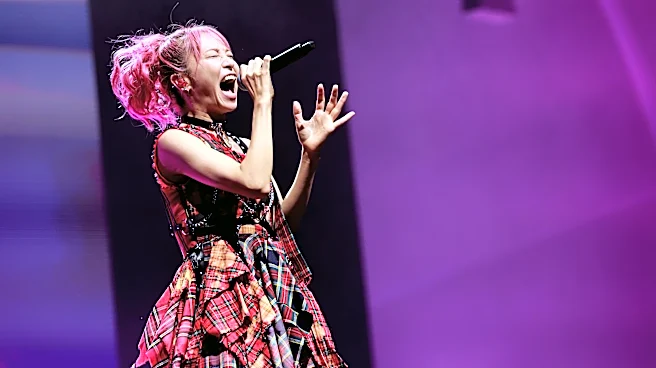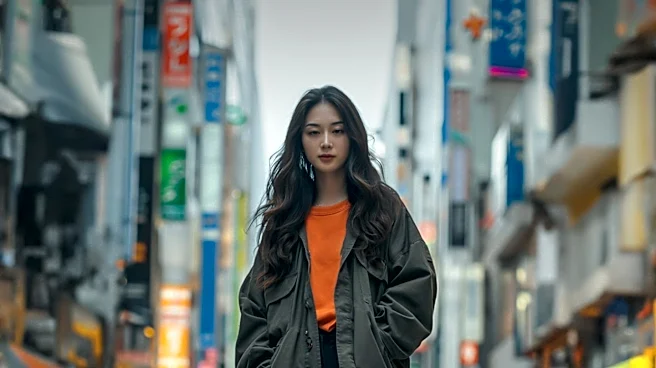




Japanese street fashion encompasses a wide array of contemporary clothing styles found in Japan. These styles are created by blending local and international fashion brands, resulting in distinctive looks that are often considered extreme and imaginative, drawing parallels to haute couture seen on European catwalks. While many trends experienced a leveling off after the early 2000s, the rise and fall of these styles have been documented since 1997
in magazines like *Fruits*, which played a significant role in promoting street fashion in Japan. The influence of Japanese hip-hop, which gained mainstream attention in 2003 after being present in Tokyo's underground club scene, also led Tokyo's youth to emulate their favorite hip-hop stars, from oversized clothing to tanned skin.
The strong youth culture that emerged in the 1960s and 1970s, particularly in Tokyo's Harajuku district, continues to drive the development of new styles, looks, and fashion subcultures. Consumerism, which was a crucial part of Japan's "national character" during its economic boom in the 1980s, still influences fashion purchases, even after the economic bubble burst in the 1990s. These factors contribute to the rapid turnover and variability of popular styles at any given time. Japan is also known for its substantial consumption of foreign luxury brands, with data from 2006 indicating that the country consumed 41 percent of the world's luxury goods.
Lolita Fashion: Victorian Elegance and Childlike Charm
Lolita fashion is one of the most recognizable and widespread styles within Japanese street fashion, gaining a global following. It incorporates various themes, typically featuring skirts or dresses worn at or below knee length with petticoats for volume. Blouses or tops are often adorned with lace or ruffles, inspired by Victorian or Rococo styles. Socks or stockings can range from ankle to thigh-high and may be topped with lace. Common footwear includes Mary Janes, tea party shoes, or boots. Several well-known sub-styles exist within Lolita fashion.
Gothic Lolita draws heavily from Eastern and Victorian Goth aesthetics, characterized by dark colors and accessories featuring motifs like skeletons, bats, spiders, and other gothic icons, including characters from Tim Burton films. Victorian iron gates and architectural designs often appear in dress prints, with bonnets, rectangle headdresses, and brooches being popular accessories. Sweet Lolita, in contrast, is the most childlike style, emphasizing baby animals, fairy tale themes, and innocent attire, originally inspired by Victorian children's clothing and the concept of *kawaii*. Classic Lolita more closely resembles historical Rococo or Victorian fashion, using muted colors for a more mature feel, often with floral prints or solid colors. Punk Lolita is an experimental style that blends punk influences with the Lolita silhouette, sometimes appearing deconstructed. Ouji, or 'boy style,' is the masculine counterpart, influenced by Victorian boys' clothing, featuring 'prince pants' (short capri-style pants) with masculine blouses, top hats, and knee socks.
Gyaru and Its Diverse Manifestations
Gyaru, a type of Japanese street fashion originating in the 1970s, focuses on a girly-glam style, a rebellious attitude, and exaggerated beauty, heavily inspired by Western fashion. Ganguro, a substyle of gyaru, became popular among Japanese girls in the early 1990s and peaked in the early 2000s. It typically involves brightly colored outfits, mini-skirts, and tie-dyed sarongs, alongside bleached hair, a deep tan, black and white eyeliner, and platform shoes. Namie Amuro is often credited with popularizing the ganguro style. The terms "Yamanba" and "Manba" refer to the extreme ends of Ganguro, with enthusiasts considering ganguro an "easy version" of their style.
Kogal (Kogyaru) fashion is based on a high school uniform, but with modifications such as a shorter skirt, loose socks, and often dyed hair and a scarf. This style was prominent in the 1990s and saw a resurgence in popularity at the end of 2020, specifically targeting high school-aged girls. Jirai Kei, meaning "landmine type," is an edgier counterpart to Girly Kei, originating from Japan's Kabukichō and gaining popularity in the early 2020s. It combines dark and *kawaii* styles, similar to Lolita and preppy fashions, often paired with accessories featuring bows, hearts, crosses, or lace elements, and platform shoes. This style highlights femininity and cuteness, balancing striking blacks with soft pastel pinks, and is associated with a stereotype of hyper-feminine young women whose personalities may not match their appearance.