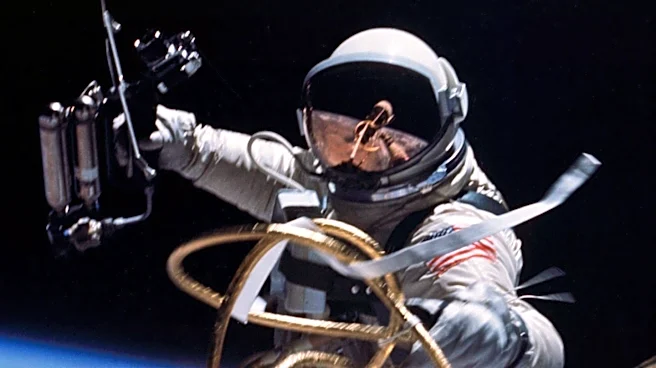





Sally Ride's journey from a young physicist to a pioneering astronaut is a story of determination, intellect, and groundbreaking achievements. As the first American woman in space, Ride's career was marked by her contributions to NASA's Space Shuttle program and her dedication to science and education. Her path to becoming an astronaut was paved by her academic excellence and her passion for physics, which ultimately led her to make history in space exploration.
Academic Excellence and Early Career
Sally Ride was born in Southern California and demonstrated an early interest in science and sports. She attended Stanford University, where she excelled academically, earning a Bachelor of Science degree in physics and a Bachelor of Arts degree in English literature in 1973. Her academic pursuits continued with a Master of Science degree in 1975 and a Doctor of Philosophy in 1978, focusing on the interaction of X-rays with the interstellar medium.
Ride's academic achievements were complemented by her involvement in sports, particularly tennis, which she played competitively. Her diverse interests and talents set the stage for her future career in space exploration. Ride's selection as a mission specialist astronaut with NASA Astronaut Group 8 was a historic moment, as it was the first class of NASA astronauts to include women. Her training included serving as the ground-based capsule communicator for the second and third Space Shuttle flights and contributing to the development of the Space Shuttle's robotic arm.
Becoming an Astronaut
In January 1977, Ride spotted an article about NASA's recruitment of a new group of astronauts for the Space Shuttle program, which aimed to include women. She applied and was selected as one of 35 astronaut candidates in NASA Astronaut Group 8, which included six women. Ride's training involved learning to fly NASA's T-38 Talon jet aircraft and mastering the Shuttle Remote Manipulator System, also known as the Canadarm.
Ride's selection for the STS-7 mission in 1983 marked her debut as the first American woman in space. Her role in the mission involved operating the robotic arm to deploy and retrieve the Shuttle pallet satellite (SPAS-1), showcasing her technical expertise and contributing to the mission's success. Ride's participation in the mission demonstrated her ability to handle complex tasks in space, further solidifying her status as a trailblazer.
Contributions to Science and Education
After leaving NASA in 1987, Sally Ride continued to contribute to science and education. She worked at Stanford University's Center for International Security and Arms Control and the University of California, San Diego, primarily researching nonlinear optics and Thomson scattering. Ride's involvement in committees investigating the loss of Challenger and Columbia highlighted her commitment to improving space exploration safety.
Ride's legacy extends beyond her achievements in space. Her posthumous recognition as the first known LGBTQ astronaut further underscores her impact on diversity and inclusion in the field. Sally Ride's journey from a young physicist to a pioneering astronaut remains a testament to her enduring influence on space exploration and beyond.