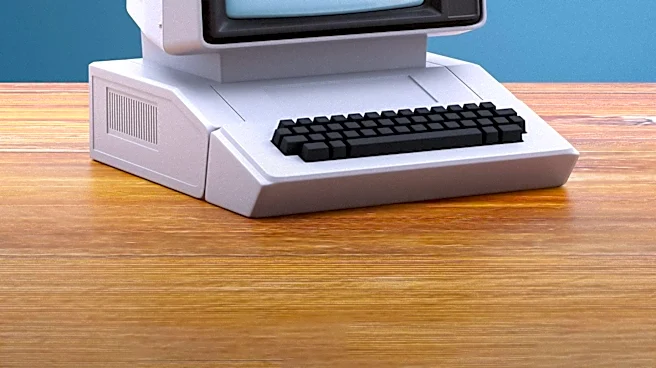







The TRS-80, a pioneering microcomputer line by Tandy Corporation, marked a significant milestone in the history of personal computing. Launched in 1977, the TRS-80 Model I was among the first mass-produced personal computers, alongside the Apple II and Commodore PET. Over the years, the TRS-80 evolved through several models, each bringing new features and improvements, culminating in the TRS-80 Model 4.
The Birth of the TRS-80 Model I
The TRS-80 Model I was introduced in 1977 as a desktop
microcomputer developed by Tandy Corporation. It was sold through Radio Shack stores, making it widely accessible to the public. The name TRS-80 was derived from Tandy Radio Shack and the Zilog Z80 microprocessor it used. The Model I was notable for being one of the earliest mass-produced and mass-marketed home computers, which contributed to its popularity among hobbyists and small businesses.
By 1979, the TRS-80 had the largest selection of software in the microcomputer market, outselling competitors like the Apple II by a significant margin. However, the Model I faced challenges due to stricter U.S. FCC regulations on radio-frequency interference, leading to its discontinuation shortly after the release of the Model III in 1980.
Advancements with the TRS-80 Model III
The TRS-80 Model III, released in 1980, was designed to be broadly compatible with the Model I while addressing some of its predecessor's shortcomings. It featured built-in lowercase support, a better keyboard, and an enhanced character set. The Model III also included a real-time clock and a faster Z80 processor, all housed in an all-in-one enclosure that required fewer cables.
One of the significant improvements of the Model III was its compliance with the new FCC regulations, which the Model I could not meet. This compliance, along with its improved hardware, made the Model III a popular choice in the educational market, where its all-in-one design was particularly valued for its simplicity and security.
The TRS-80 Model 4: A New Era
In 1983, the TRS-80 Model 4 was introduced as the successor to the Model III. It maintained compatibility with the Model III while offering further enhancements. The Model 4 featured a larger display screen, inverse video, and an internal audio speaker. It also came with a more modern operating system, TRSDOS Version 6, which was derived from the advanced Model III LDOS 5.
The Model 4's hardware improvements included a faster Z80A 4 MHz CPU and the option for additional RAM through bank switching technology. These advancements allowed the Model 4 to run industry-standard software like CP/M without hardware modification, making it a versatile choice for both personal and business use.
The evolution of the TRS-80 from the Model I to the Model 4 reflects the rapid advancements in personal computing during the late 1970s and early 1980s. Each model built upon the successes and lessons of its predecessors, contributing to the TRS-80's legacy as a foundational player in the history of microcomputers.