


Dwight Eugene Gooden, affectionately known as "Dr. K" and "Doc," carved out a significant, yet complicated, legacy in Major League Baseball over 16 seasons. His career, spanning from 1984 to 2000, showcased a pitcher of immense talent, particularly during his early years with the New York Mets. However, Gooden's journey was also marked by a series of personal struggles, including substance abuse and legal troubles, which often overshadowed his athletic
achievements. This duality presents a compelling narrative of a gifted athlete battling demons off the field.
A Dominant Force on the Mound
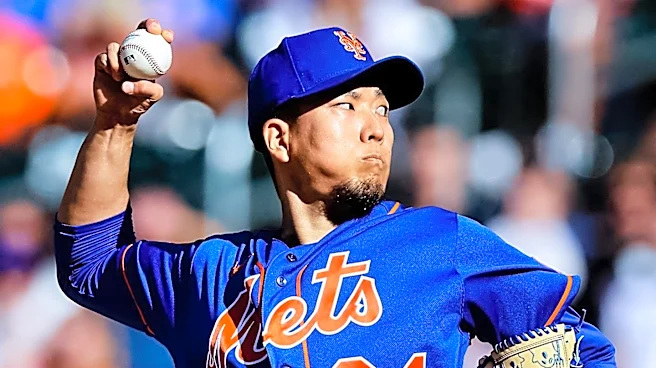
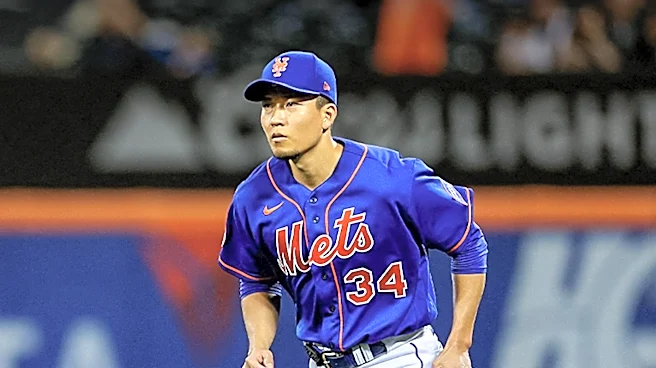
Gooden's professional baseball career began with a bang. Drafted in the first round in 1982, he quickly ascended through the minor leagues, leading the Class-A Carolina League in wins, strikeouts, and ERA in 1983. His major league debut with the New York Mets in 1984 immediately established him as a pitching phenom. Over his career, Gooden pitched 2,800 and two-thirds innings across 430 games, accumulating a win-loss record of 194-112, a 3.51 earned run average (ERA), and 2,293 strikeouts. These statistics underscore his effectiveness and longevity in the sport.
His early years, particularly with the Mets from 1984 to 1994, were characterized by a dominant fastball and an ability to rack up strikeouts. He was a key player for the Mets, contributing to their success, including their 1986 World Series championship. Gooden's ability to strike out batters was legendary, earning him his famous nickname. However, some analysts suggest that his early workload, estimated at over 10,800 pitches between 1983 and 1985 when he was just 18 to 20 years old, may have contributed to later pitching troubles, alongside other factors.
The Shadow of Substance Abuse and Legal Issues
Despite his on-field brilliance, Gooden's career was frequently interrupted and ultimately impacted by his struggles with substance abuse. An early indication of these issues surfaced in 1986 when he failed to attend the Mets' World Series victory parade. He later admitted in 2011 that he had been using drugs at his dealer's apartment during the parade, a stark revelation that highlighted the hidden battles he was fighting even at the peak of his career.
These struggles continued to manifest in legal problems throughout his life. On March 24, 2010, Gooden was arrested in Franklin Lakes, New Jersey, after leaving the scene of a traffic accident. He was found to be under the influence of an undisclosed controlled substance and was charged with DWI with a child passenger, leaving the scene of an accident, and other motor vehicle violations. The charge of endangering the welfare of a child stemmed from a child being present with him at the time of the accident. He subsequently pleaded guilty to child endangerment, receiving five years' probation and an order for outpatient drug treatment.
Recurring Legal Troubles and Their Impact
Gooden's legal issues resurfaced in 2019. On June 7, he was arrested for cocaine possession in Holmdel Township, New Jersey. Police stopped him for driving too slowly and having illegally tinted windows, leading to the discovery of two baggies suspected of containing cocaine. He faced charges of possession of a controlled substance, possession of drug paraphernalia, and driving under the influence. In August of that year, he pleaded guilty to one charge of possessing cocaine and was sentenced to a year of probation in November 2020.
Just over a month after his cocaine possession arrest, on July 22, 2019, Gooden was arrested again for driving while intoxicated, this time in Newark, New Jersey. This arrest occurred the day before he was due in court to address the cocaine possession charges from June. These repeated incidents underscore the persistent challenges Gooden faced off the baseball diamond, creating a complex legacy that intertwines his undeniable athletic talent with his very public battles against addiction and its consequences. His career serves as a poignant reminder of the pressures and personal struggles that can affect even the most celebrated athletes.