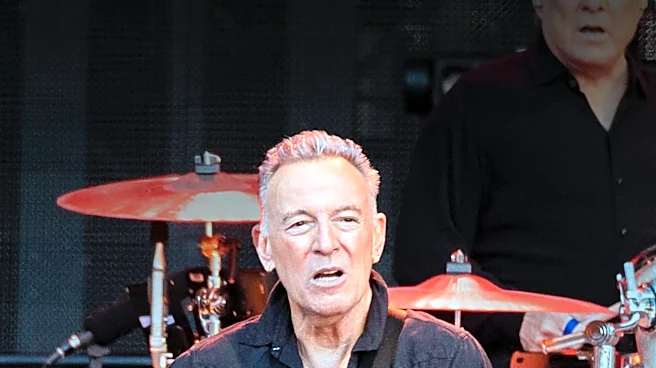








"Born to Run" stands as a seminal track in the career of American singer-songwriter Bruce Springsteen, serving as the title song for his third studio album released in 1975. This powerful anthem marked Springsteen's initial worldwide single release, though its immediate success outside the United States was limited. Domestically, however, the song quickly gained significant airplay on progressive and album-oriented rock radio stations, establishing
its presence in the American music landscape. It also became Springsteen's first Top 40 hit on the Billboard Hot 100, reaching the No. 23 spot, solidifying its place in popular culture.
The Genesis of an Anthem
The inspiration for "Born to Run" struck Springsteen in late 1973 while he was on the road in Tennessee. He awoke with the title, which he promptly wrote down, recognizing it as the initial spark for what would become a legendary song. Written in the first person, the lyrics craft a narrative that appears to be a love letter addressed to a character named Wendy. The protagonist, a hot rod-riding figure, seems to possess an abundance of passion for love but lacks patience. Springsteen himself has clarified that at its core, the song expresses a much simpler desire: the yearning to escape his hometown of Freehold, New Jersey. This sentiment is directly referenced in the lyric "sprung from cages out on Highway 9," alluding to U.S. Route 9, a highway that passes through Freehold.
Springsteen detailed in his 1996 book, *Songs*, that while the song's beginning was composed on guitar around its distinctive opening riff, the remainder of the track was completed on piano. The piano was, in fact, the primary instrument used for composing most of the *Born to Run* album. The song was recorded in the key of E major, and some of its lead guitar parts drew inspiration from the distinctive style of Duane Eddy. "Born to Run" became a staple in Springsteen's live performances even before the album's release, being played in concerts as early as May 1974, if not sooner. Interestingly, the first recording of the song was made by Allan Clarke of the British group The Hollies, though its release was delayed until after Springsteen's now-famous version.
Critical Acclaim and Cultural Significance
Upon its single release, "Born to Run" garnered immediate praise from critics. *Billboard* magazine lauded it as "one of the best rock anthems to individual freedom ever created," further describing it as "a monster song with a piledriver arrangement" that had the potential to become Springsteen's biggest hit. *Cash Box* magazine noted Springsteen's unique vocal style, stating he sounded "like a cross between Roger McGuinn (from his Byrds days) and nobody else we've ever heard." The song's impact extended beyond critical reviews, resonating deeply with audiences.
Its cultural significance was formally recognized in 1980 when the New Jersey State Assembly passed a resolution to name "Born to Run" the "unofficial rock theme of our State's youth." However, this bill ultimately failed to pass the state Senate, reportedly due to some of the song's lyrics expressing a desire to leave New Jersey. Despite this legislative hiccup, the song's legacy has only grown. In 2001, the RIAA's Songs of the Century list placed it 135th out of 365. *Q* magazine included it at No. 920 in their 2003 list of the "1001 Greatest Songs Ever," describing it as "best for working class heroes." In 2004, WXPN ranked it No. 6 on their list of The 885 All-Time Greatest Songs. *Pitchfork* listed it at No. 16 in their 2016 compilation of "The 200 Best Songs of the 1970s," and *Rolling Stone* magazine placed it at No. 27 in their 2020 list of the 500 Greatest Songs of All Time. It is also recognized as one of The Rock and Roll Hall of Fame's 500 Songs that Shaped Rock and Roll, cementing its status as an enduring classic.