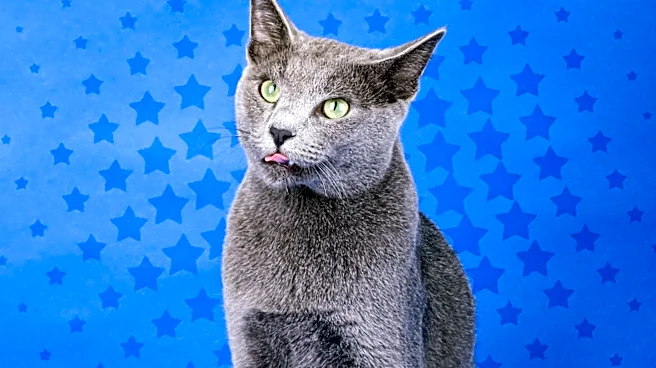



The Russian Blue cat, a pedigreed breed known for its distinctive solid blue coat and bright green eyes, boasts a fascinating history that spans continents and centuries. Its origins are rooted in the naturally occurring landrace cats found in the port of Arkhangelsk, Russia, leading to its alternative name, the Archangel Blue. This breed's journey from the remote Archangel Isles to becoming a recognized champion in international cat registries is a testament
to its enduring appeal and the dedication of breeders.
It is widely believed that the Russian Blue first made its way to Western Europe in the 1860s, transported by sailors who traveled from the Archangel Isles to Great Britain and Northern Europe. This maritime connection played a crucial role in introducing these unique felines to a broader audience beyond their native Russia. The earliest documented reference to an "Archangel Cat" in British print appeared in 1862, marking its initial public acknowledgment in the West.
Early Exhibitions and Classification Challenges
The formal introduction of the Archangel Cat to the show world occurred in 1872 at The Crystal Palace in England. This event was a significant step in the breed's recognition, allowing enthusiasts and the public to admire its distinct features. However, the path to establishing a clear breed identity was not without its complexities. Harrison Weir, a prominent figure in the cat fancy, noted in 1895 that some early show cats identified as Russian Blues were actually British-bred grey tabbies. He also reported the arrival of separate grey cats from Archangel in Britain during the 1800s, which possessed characteristics consistent with the modern Russian Blue breed.
Initially, the Russian Blue competed in a general class alongside all other blue-colored cats. This broad classification meant that its unique traits were not always individually highlighted. It wasn't until 1912 that the breed was granted its own dedicated class, a pivotal moment that underscored its distinctiveness and paved the way for more focused breeding and development. This separate classification allowed for the refinement of the breed's specific characteristics, setting it apart from other blue cats.
Post-War Development and Modern Bloodlines
The breed's development was primarily concentrated in the UK and Scandinavia until after World War II. The war years brought challenges, leading to a decline in the number of Russian Blues. To address this scarcity, crossbreeding with Siamese cats became necessary to bolster the population. While Russian Blues were present in the United States before the war, it was in the post-war period that American breeders played a crucial role in shaping the modern Russian Blue seen today. They combined the bloodlines of both Scandinavian and British Russian Blues, contributing to the breed's genetic diversity and resilience. Over time, the Siamese traits introduced during the crossbreeding efforts have largely been bred out, allowing the original Russian Blue characteristics to re-emerge and solidify. Today, the Russian Blue is accepted for registry and holds championship status with all major international cat registries, a testament to its successful journey from a regional landrace to a globally recognized pedigreed cat.