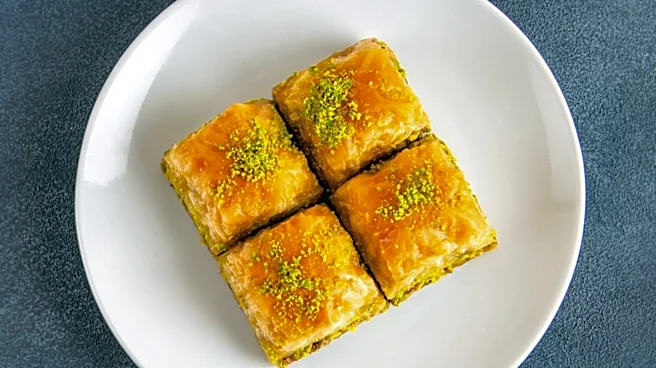



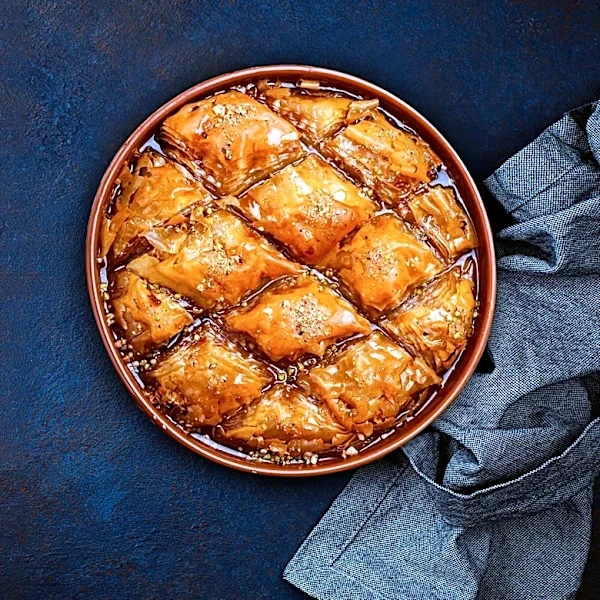




Baklava, a layered pastry dessert made with filo pastry, chopped nuts, and sweetened with syrup or honey, is a beloved treat enjoyed across various cultures. While its exact origins are debated, it is considered a traditional dessert in the cuisines of countries spanning West Asia, Southeast Europe, Central Asia, and North Africa. This sweet confection has a rich history, with theories tracing its roots from ancient empires to imperial kitchens, showcasing
its enduring appeal and adaptability across diverse culinary landscapes.
Ancient Roots and Byzantine Connections
The history of baklava, though not fully documented, suggests an archaic version of this pastry was prepared in the Byzantine Empire. This indicates that the concept of a layered, sweetened pastry has deep historical roots in the region. While the specific form we recognize today may have evolved later, the foundational idea of combining dough, nuts, and sweeteners was present centuries ago, laying the groundwork for future culinary innovations.
Further back, some similarities have been noted between baklava and Ancient Greek desserts such as gastris, kopte sesamis, and kopton, as described in book XIV of the Deipnosophistae. However, these ancient Greek recipes typically describe a filling of nuts and honey with top and bottom layers of honey and ground sesame, resembling modern pasteli or halva, rather than a flaky dough. This distinction highlights that while the ingredients might have been similar, the preparation and texture of these ancient desserts differed significantly from the layered filo pastry characteristic of baklava.
The Ottoman Empire and Imperial Development
The Turkish version of baklava is believed to have been developed in the imperial kitchens of the Topkapı Palace in Constantinople, which is modern-day Istanbul. This period marks a significant point in the evolution of baklava, suggesting that the refined, multi-layered pastry we know today was perfected within the sophisticated culinary environment of the Ottoman court. The imperial kitchens were known for their elaborate dishes and the development of complex culinary techniques, making them a plausible birthplace for the intricate baklava.
A notable tradition associated with baklava in the Ottoman Empire was the Baklava Alayı, a ceremonial procession where the Sultan presented trays of baklava to the Janissaries every 15th of the month of Ramadan. This practice underscores the dessert's importance not just as a food item, but also as a symbol of imperial generosity and a part of significant cultural and religious observances. The ceremonial aspect further cemented baklava's place in the cultural fabric of the empire.
Diverse Origins and Regional Variations
Beyond the Byzantine and Ottoman theories, several other proposals exist for baklava's original roots. These include the Greek placenta cake, the medieval Arabic confection lauzinaj, and the Central Asian Turkic tradition of layered breads. These diverse suggestions point to a complex culinary lineage, indicating that similar layered pastry traditions may have developed independently or influenced each other across different regions.
Some sources also suggest Iran and Turkey as places of origin, further complicating a singular narrative. The existence of güllaç, a dessert found in Turkish cuisine consisting of filo dough layers soaked in warm milk with sugar and served with walnuts and pomegranate, is considered by a small minority as a possible origin for baklava. The earliest documentation of güllaç is found in Yinshan Zhengyao, a 1330 food and health manual from the Mongol Empire, suggesting a long history of layered desserts in the broader region. This rich tapestry of historical theories and regional variations illustrates baklava's deep cultural significance and its widespread adoption across many different culinary traditions.