




The documented history of makeup in Japan offers a fascinating journey through cultural shifts, societal norms, and technological advancements. Unlike modern Western styles that often emphasize pinpoint makeup for eyes and mouth, traditional and even modern Japanese styles place a greater emphasis on foundation, base makeup, and skincare. This historical overview begins in the Edo period, a time of feudal society and unique cultural development, and traces
the evolution of cosmetic practices through significant eras of modernization and global influence, revealing how makeup reflected and shaped Japanese identity.
The Edo Period (1603–1868): Feudal Society and Etiquette
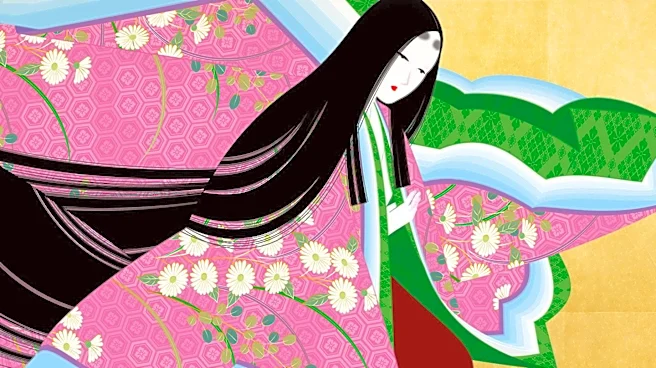
The Edo period, spanning from 1603 to 1878, was a time when the Tokugawa family held central political power, leading to a feudal society where the samurai class rose in status and living standards improved. Despite an isolationist policy, Japan cultivated a distinct culture. During this era, makeup was considered an essential part of grooming and etiquette, a teaching reinforced by women's educational books like "Woman's Treasure," published in 1692. The four primary types of cosmetics were white powder, red lipstick, eyebrow makeup, and tooth blackening.The white powder, known as *Oshiroi*, was made from mercury or lead. Women of higher status used mercury, while ordinary women used cheaper lead. Whitening the face was paramount, as encapsulated by the proverb: "a woman with a white face hid seven problems," implying that physical or character flaws were overlooked if one's face was white. *Ohaguro*, or tooth blackening, served to distinguish status and situation; blackened teeth indicated a married woman, and shaved eyebrows signified motherhood. Makeup trends were also influenced by sumptuary laws enacted by the Tokugawa Shogunate, which promoted austerity and prohibited luxury. These laws encouraged light makeup, a notion supported by texts like "Book of the Secret Mirror for Women" (1650) and "Women's Instruction and Training Manual" (1678), which stated that makeup should be for grooming and politeness. However, regional differences existed; while Edo favored minimal makeup due to the shogunate's influence, Kyoto and Osaka preferred heavier makeup, admiring the glamorous styles of the Imperial Household.
The Meiji Period (1868–1912): Modernization and Western Influence
The Meiji period marked a dramatic departure from Japan's isolationist past. The government actively embraced foreign cultures, ending the feudal system and restoring sovereignty to the emperor. This era saw the influx of knowledge and technology from Europe and the United States, profoundly impacting Japan's cosmetic culture. Traditional practices like *ohaguro* and eyebrow shaving were rejected as old-fashioned. New cosmetics and application methods spread through emerging media like daily newspapers and monthly magazines.In the early Meiji period, foreign engineers were invited to Japan, and chemical technologies were introduced, leading to the domestic production of Westernized cosmetics. This period saw the emergence of predecessors to today's cosmetic giants, Shiseido and Kao. However, due to limited technology and production capacity, Western cosmetics were expensive and primarily accessible to the upper class. Shiseido, founded in 1872 by Arinobu Fukuhara as Japan's first private Westernized dispensing pharmacy, began selling toothpaste in 1888 and entered the cosmetic industry in 1897. After World War II, Shiseido expanded globally, establishing a significant international presence. Similarly, Tomio Nagase founded Nagase Shoten, Kao Corporation’s predecessor, in 1887. Kao Soap, launched in 1890, was a major success, inspiring Japan's toiletry market. Kao also expanded internationally after World War II, establishing bases across Asia, Europe, and the United States.
The Taisho and Showa Periods: War, Westernization, and Diversification
The Taisho Period (1912–1926) saw Japan's economy recover and grow significantly due to World War I. Westernization progressed, and Western-style makeup became common not only among the upper class but also the general public. The increasing number of women in the workforce further fueled the development of makeup culture, as women sought cosmetics for quick application. Domestic companies modernized production, leading to a wider range of products, though the desire for whiter skin remained strong, with companies aggressively advertising skin-whitening products.The Showa Period (1926–1989) was marked by significant global events. Before and during World War II (1926–1944), information spread widely through television, radio, and magazines. However, trade controls during the Sino-Japanese War in 1937 imposed high tariffs on imported cosmetics, severely impacting the industry. With military priorities, makeup became discreet and minimal, leading to a dramatic decrease in available products. The Pacific War's air raids further exacerbated shortages, making this period known as a "blank period for cosmetics." After World War II (1945–1989), American influence led to the import of many U.S. products. The spread of color films inspired women to imitate actresses' makeup, and in the 1950s, a desire to emulate Caucasian women led to Western-style pinpoint makeup emphasizing lips and eyes. The 1960s saw major cosmetic companies focus on TV commercials, raising awareness of makeup's importance, while white skin remained an ideal. Later in the Showa period, mass production gave way to diversification and individualization, leading to "corrective makeup" that highlighted individual facial features. Growing environmental and health awareness also led to demand for healthier ingredients and sunscreens. The 1970s emphasized eyebrows and eyes, a trend amplified by magazines. The 1985 Equal Employment Opportunity Law for Men and Women saw women drawing thick eyebrows to assert their presence in male-dominated workplaces. Simultaneously, some men began using eyebrow pencils and foundation for a "masculine" look, though this was not universally accepted, with some believing inner qualities were more important than external appearance.