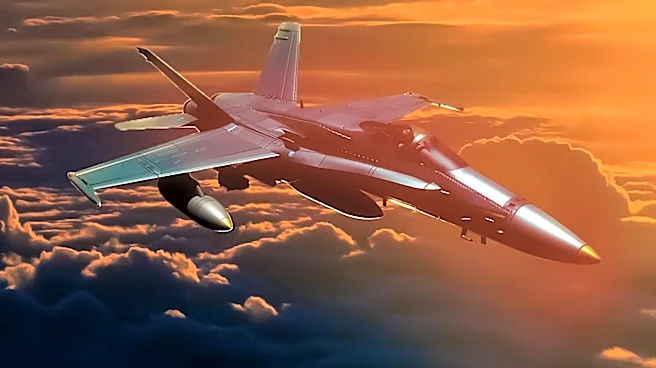







The Lockheed SR-71 Blackbird, despite its unparalleled performance and strategic value, faced a complex and controversial path to retirement. Initially grounded in 1989, the decision was driven by a confluence of political, budgetary, and technological arguments. However, the absence of its unique capabilities soon became apparent, leading to a brief but significant reactivation in the 1990s. This period highlights the ongoing debate about the aircraft's
irreplaceable role in intelligence gathering and the challenges of replacing such a specialized asset.
The Initial Retirement: Politics, Costs, and Redundancy Claims
In 1989, the U.S. Air Force (USAF) retired the SR-71, citing two primary reasons to Congress: the aircraft's high cost to build and maintain, and the assertion that it had been rendered redundant by evolving reconnaissance methods, such as unmanned aerial vehicles (UAVs) and satellites. However, many officers and legislators held a different view, suggesting that Pentagon politics played a significant role in the decision. Former SR-71 commander Graham argued that the Blackbird provided intelligence capabilities that none of its alternatives could match in the 1990s.
Graham noted that in the 1970s and early 1980s, SR-71 pilots and reconnaissance systems officers (RSOs) were top-quality USAF officers, often advancing to higher positions within the USAF and the Pentagon. These "SR-71 generals" were adept at communicating the aircraft's value. However, by the mid-1980s, this generation had retired, and a new generation of USAF generals emerged who believed the SR-71 was redundant. They were keen to pursue newer, top-secret programs, such as the B-2 Spirit strategic bomber, and some saw the SR-71 as a bargaining chip to secure funding for other priorities. The intelligence provided by the SR-71, primarily consumed by the CIA, NSA, and DIA, was not always seen as highly valuable by the USAF itself.
Misunderstanding of aerial reconnaissance and a lack of knowledge about the SR-71, due to its secretive nature, were exploited by detractors. They assured that a replacement was under development, despite evidence to the contrary. Secretary of Defense Dick Cheney claimed the SR-71 cost $85,000 per hour to operate, and opponents estimated annual support costs between $400 million and $700 million, though the actual cost was closer to $300 million. A key criticism was the SR-71's lack of a real-time data link, which the U-2 had been upgraded to carry. This meant much of the SR-71's data could not be used immediately, but had to await post-mission analysis. This perceived lack of real-time capability was used as a justification for its demise, even as attempts to add a data link were reportedly stymied by the same factions pushing for its retirement.
The Call for Reactivation: Unforeseen Gaps and Congressional Action
Just four months after the SR-71's retirement, General Norman Schwarzkopf Jr. reportedly lamented the unavailability of the expedited reconnaissance the Blackbird could have provided during Operation Desert Storm. This sentiment, coupled with unease over political situations in the Middle East and North Korea, prompted the U.S. Congress to re-examine the SR-71's status starting in 1993. Rear Admiral Thomas F. Hall explained that the initial retirement was based on the belief that the time delays associated with SR-71 missions would not meet the tactical requirements of the modern battlefield, and that technology would soon provide real-time data solutions.
However, Senator Robert Byrd and other senators argued that the promised "better than" successor to the SR-71 had yet to materialize, at the cost of a "good enough" and serviceable aircraft. They contended that designing, building, and testing an aircraft with the SR-71's capabilities would be impossible under constrained military budgets. Congressional conferees expressed disappointment with the lack of a suitable replacement, stating that the "experience with the SR-71 serves as a reminder of the pitfalls of failing to keep existing systems up-to-date and capable in the hope of acquiring other capabilities."
The Brief Return to Service and Final Retirement
In response to these concerns, Congress agreed to allocate $100 million (later reduced to $72.5 million) to return three SR-71s to service. Lockheed's Skunk Works successfully reactivated the aircraft under budget. Retired USAF Colonels Jay Murphy, Don Emmons, and Barry MacKean were instrumental in managing the reactivation and rebuilding the logistical and support structure. Active USAF pilots and RSOs who had previously flown the Blackbird volunteered to return. The reactivated aircraft operated under the command of the 9th Reconnaissance Wing at Beale Air Force Base, flying out of a renovated hangar at Edwards Air Force Base. Modifications were made to include a data-link for "near real-time" transmission of Advanced Synthetic Aperture Radar imagery to ground stations.
Despite this successful reactivation, the SR-71's second operational life was also short-lived, ending in 1998. NASA became the final operator, using the Blackbird as a research platform until its ultimate retirement in 1999. Since then, the SR-71's reconnaissance role has been assumed by a combination of satellites and unmanned aerial vehicles (UAVs). As of 2018, Lockheed Martin was developing a proposed UAV successor, the SR-72, though as of 2026, it remains a concept. The Blackbird's journey from cutting-edge spy plane to controversial retirement and brief return underscores its unique place in aviation history and the enduring debate over its strategic value.