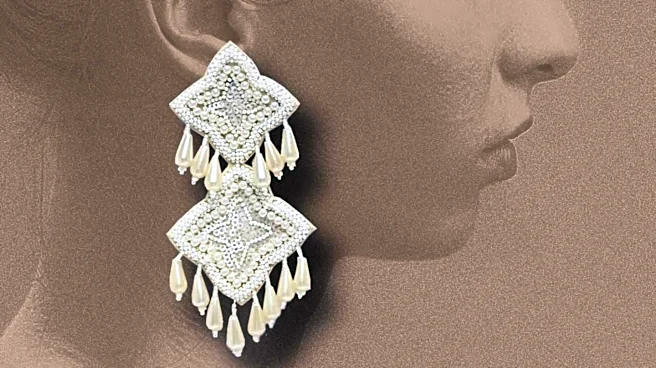









Ear piercing, the act of creating a hole in the ear to wear jewelry, stands as one of humanity's oldest forms of body modification. Its history is rich with cultural significance, spanning millennia and diverse civilizations. What began as a practice intertwined with wealth, status, and even servitude in ancient times has transformed into a widespread fashion statement in the modern era. This journey reflects not only changing aesthetic preferences
but also shifts in societal norms, technological advancements in piercing methods, and evolving perceptions of personal expression.
Ancient Roots and Symbolic Meanings
References to ear piercing, both artistic and written, date back to early history across various cultures. In ancient India, gold earrings were unearthed in Lothal, while the Sumerian Royal Cemetery at Ur revealed similar adornments in Puabi’s tomb from the Early Dynastic Period III. These findings suggest that earrings, and by extension ear piercings, were associated with wealth and status. The Minoan Civilization, between 2000 and 1600 BCE, also saw a prevalence of gold, silver, and bronze hoop earrings, depicted in frescoes on Santorini, Greece. During the late Minoan and early Mycenaean periods, hoop earrings with conical pendants were particularly fashionable.
Beyond adornment, ear piercing carried deeper symbolic meanings. Early evidence from Persepolis shows carved images of Persian Empire soldiers wearing earrings, indicating male adornment. In the Biblical record, gold earrings were a sign of wealth, but ear piercing was also used to mark slaves. In ancient Egypt, as described by Howard Carter regarding Tutankhamun's tomb, perforated earlobes were present, though earrings were not found within the wrappings, suggesting that at the time, earrings might have been worn by children. These examples illustrate the varied and often profound cultural significance attached to ear piercing in ancient societies.
Western Europe's Shifting Attitudes and the 20th Century Revival
In Western Europe, earrings became fashionable among English courtiers and gentlemen during the sixteenth-century English Renaissance. However, by the late 19th and the first half of the 20th century, societal attitudes shifted dramatically. During this period, piercing one's ears was often considered primitive, barbaric, or confined to specific ethnic groups. Consequently, clip-on earrings became the predominant style.
The mid-20th century marked a significant turning point. In 1951, Princess Elizabeth had her ears pierced to wear a wedding gift, an act that may have encouraged many other women to follow suit. By the late 1950s or early 1960s, ear piercing re-emerged in the Western world, particularly among young women. This resurgence was often linked to identifying with anti-materialist youth culture and served as an act of generational rebellion, especially for those who had traveled to more distant or "exotic" locations. Teenage girls even held