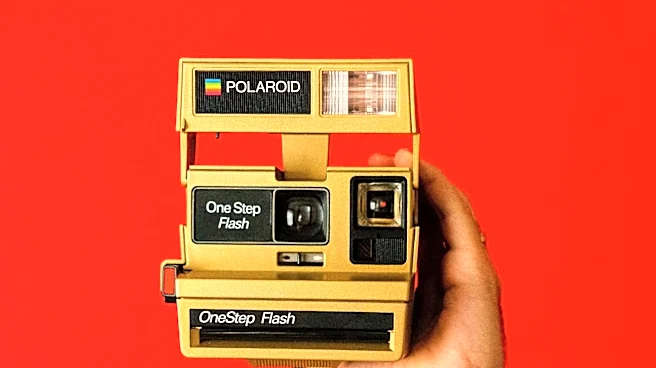








The original Polaroid Corporation, a company once at the forefront of instant photography, declared federal Chapter 11 bankruptcy on October 11, 2001. This event, while marking the end of the initial corporate entity, paradoxically paved the way for the Polaroid brand to endure and even expand its presence across various consumer markets. The story of Polaroid post-2001 is one of brand resilience, strategic acquisitions, and extensive global licensing,
demonstrating how a powerful brand name can outlive its original corporate structure and adapt to new commercial landscapes.
The Initial Transition and Brand Preservation
Following the 2001 bankruptcy, the core assets of the original Polaroid Corporation, most notably the "Polaroid" name itself and its non-bankrupt foreign subsidiaries, were swiftly acquired. Within ten months, Bank One's One Equity Partners (OEP) purchased these assets. OEP Imaging Corporation, the acquiring entity, then strategically changed its name to Polaroid Holding Company (PHC). Crucially, this new company chose to operate under the name of its bankrupt predecessor, Polaroid Corporation. This decision underscored the immense value and recognition associated with the Polaroid brand, indicating a clear intent to preserve and capitalize on its established legacy rather than creating an entirely new identity.
The original company, founded in 1937 by Edwin H. Land, had reached significant heights, employing 21,000 people in 1978 and achieving peak revenue of $3 billion in 1991. Despite its eventual downfall, the brand's historical significance and consumer familiarity made it a valuable commodity even in liquidation. The successor company, Polaroid B.V., continued to build upon this foundation, ensuring the brand's survival and evolution.
Multiple Hands, Diverse Products
Over the years following the initial bankruptcy, the Polaroid brand and its associated assets changed hands multiple times. Each new owner sought to harness the brand's equity, leading to a diversification of products bearing the Polaroid name. This period saw the brand extend beyond its traditional instant photography roots into other consumer electronics. For instance, Polaroid-branded products such as LCD televisions and DVD players were developed and released by various licensees globally. This expansion into different product categories illustrates a common strategy for iconic brands post-bankruptcy: leveraging name recognition to enter new markets through licensing agreements.
One significant shift in ownership occurred in 2017 when Polish billionaire Wiaczesław Smołokowski acquired the brand. This acquisition was particularly impactful for the brand's return to its photographic heritage. It enabled the Impossible Project, a company that had been producing instant films for older Polaroid cameras since 2008, to rebrand. First, it became Polaroid Originals in 2017, and then simply Polaroid in 2020, signaling a renewed focus on instant photography under a unified brand identity. This move brought the brand full circle, reconnecting it with the product that originally made it famous, while also continuing its broader presence through licensed products in other fields.
The Enduring Appeal of a Legacy Brand
The journey of the Polaroid brand from the original corporation's bankruptcy in 2001 to its current state highlights the enduring power of a well-known name. Despite the challenges faced by the original company, including the failure of products like Polavision and struggles to adapt to digital photography, the brand itself maintained a strong appeal. The strategic decisions by successive owners to continue using the Polaroid name, coupled with extensive licensing, allowed it to remain relevant in the consumer market. This evolution demonstrates how a brand can transform from a single-product company into a diversified entity, with its name serving as a recognizable mark across a wide array of goods, from instant cameras to televisions, ensuring its continued presence on a global scale.