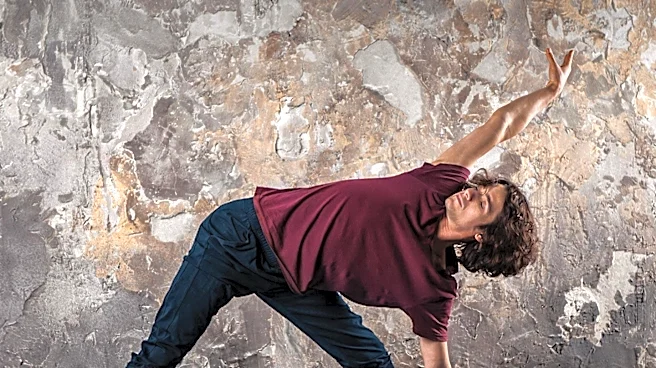








Asanas, the physical postures central to hatha yoga, were originally conceived with profound spiritual purposes within Hinduism. Far from being mere physical exercises, these postures were seen as integral steps toward achieving *samadhi*, a state of meditative consciousness. This spiritual aim was shared across various yoga traditions, including Shaivite Naths, Vaishnavas, Jains, and Sufis, indicating a broad acceptance of their deeper significance.
The goals varied, encompassing tantric manipulation of the subtle body and, on a more physical level, the destruction of poisons, all contributing to a holistic spiritual journey.
Medieval Hatha Yoga, as described by scholars, aimed at the "transmutation of the human body into a vessel immune from mortal decay." This concept is vividly illustrated by the *Gheranda Samhita*'s metaphor of an earthenware pot that requires the "fire of yoga" to become serviceable. Until approximately the fourteenth century, the primary purposes of asana practice were twofold: first, to establish a stable foundation for *pranayama* (breath control), *mantra* repetition (*japa*), and meditation, all of which had their own spiritual objectives; and second, to prevent the accumulation of *karma* and instead acquire ascetic power, known as *tapas*. This *tapas* was believed to confer "supernatural abilities," and Hatha Yoga further expanded this list to include the ability to cure diseases.
Historical Perspectives on Asana's Efficacy
Not all Hindu scriptures uniformly endorsed the benefits of asanas. For instance, the 10th-century *Garuda Purana* expressed skepticism, stating that "the techniques of posture do not promote yoga. Though called essentials, they all retard one's progress." This perspective highlights a historical debate within yogic traditions, where some early yogis favored extreme austerities (*tapas*) to overcome what they perceived as the body's impediment to liberation. This contrasts with the Hatha Yoga approach, which sought to utilize the body as a tool for spiritual advancement rather than an obstacle.
Theos Bernard, a yoga scholar and practitioner, documented his personal experience in his 1944 work, *Hatha Yoga: The Report of a Personal Experience*. He recounted being prescribed a series of asanas specifically designed to enhance blood flow to the brain and spinal cord, followed by "reconditioning asanas" to stretch, bend, and twist the spine. Once sufficiently strong, he progressed to meditation asanas. Bernard viewed the ultimate purpose of Hatha Yoga as gaining control of the breath to facilitate *pranayama*, a process he believed necessitated the thorough application of the six purifications.
Asanas as Tools for Awareness and Mental Equilibrium
Satyananda Saraswati emphasized that asanas function differently from conventional physical exercises. He explained that they involve "placing the physical body in positions that cultivate awareness, relaxation, concentration and meditation." This perspective underscores the mental and spiritual dimensions inherent in asana practice, distinguishing it from purely physical training. Leslie Kaminoff, in *Yoga Anatomy*, suggested that from one viewpoint, "all of asana practice can be viewed as a methodical way of freeing up the spine, limbs, and breathing so that the yogi can spend extended periods of time in a seated position," highlighting their role in preparing the body for deeper meditative states.
B.K.S. Iyengar observed that asana practice fosters "steadiness, health, and lightness of limb." He believed that a stable and pleasant posture leads to mental equilibrium and prevents fickleness of mind. Iyengar also noted that asanas cultivate agility, balance, endurance, and "great vitality," developing a physique that is strong and elastic without being muscle-bound. However, he stressed that their true importance lies in their capacity to train the mind, enabling it to "conquer" the body and transform it into "a fit vehicle for the spirit." This view reinforces the idea that the physical benefits of asanas are secondary to their profound spiritual implications.
Symbolic Naming and the Universal Spirit
Iyengar found significant meaning in the naming conventions of asanas, which often reference plants, insects, fish, amphibians, reptiles, birds, quadrupeds, legendary heroes, sages, and avatars of Hindu gods. He interpreted this as "illustrating spiritual evolution." For example, the lion pose, *Simhasana*, evokes the myth of Narasimha, the man-lion avatar of Vishnu, as recounted in the *Bhagavata Purana*. Iyengar explained that through performing asanas, the yogi embodies various creatures, from the lowest to the highest, without disdain, recognizing that "throughout the whole gamut of creation... there breathes the same Universal Spirit." He concluded that through mastery of asanas, dualities such as gain and loss, or fame and shame, dissipate, leading to a state of profound spiritual unity.
Sjoman offered another perspective on the concept of stretching in yoga, linking it to Patanjali's Yoga Sutra 2.47, which suggests that asanas are achieved "by loosening (*śaithilya*) the effort (*prayatna*) and meditating on the endless (*ananta*)." Sjoman clarified that this physical loosening is connected to the mind's release of restrictions, allowing a natural state of "unhindered perfect balance" to emerge. He noted that relaxation through effort is crucial, as "only a muscle that is worked is able to relax." Thus, asanas served a spiritual purpose by facilitating the exploration of both the conscious and unconscious mind. Heinz Grill further posited that the soul acts as a central link between the manifest body and the unmanifest spirit, suggesting that spiritual thoughts, rather than sense-attached, bodily-involved consciousness, should motivate yoga practice. Grill asserted that this "path from above to below" is essential, because "the soul lives in the receptivity of giving and not in the receptivity of earthly taking."