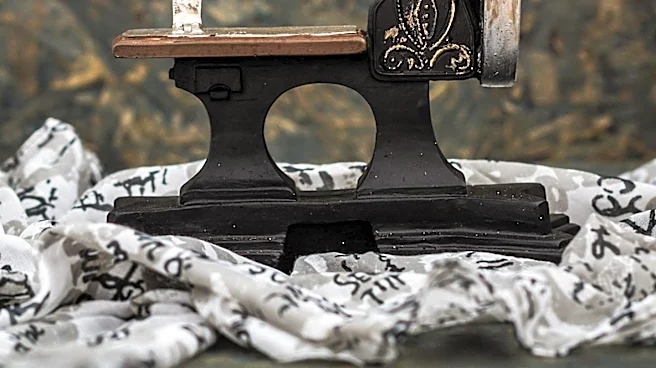









The sewing machine has undergone significant transformations since its inception, revolutionizing the textile industry and home sewing alike. Initially invented to reduce manual labor in clothing production, the sewing machine has evolved from simple hand-operated devices to sophisticated, automated machines. This article delves into the historical development of the sewing machine, highlighting key innovations and their impact on sewing efficiency
and productivity.
Early Innovations and Inventions
The journey of the sewing machine began during the first Industrial Revolution, a period marked by significant technological advancements. The first sewing machine is generally attributed to Englishman Thomas Saint in 1790. His invention aimed to decrease the manual sewing work required in clothing companies, setting the stage for future innovations. Early sewing machines were powered manually, either by turning a flywheel handle or using a foot-operated treadle mechanism. These machines were a significant improvement over hand sewing, offering increased speed and consistency.
In 1829, Barthélemy Thimonnier made notable improvements to the sewing machine, further enhancing its functionality. However, it was Elias Howe's patented design in 1846 that introduced a key innovation: the lockstitch. This design used two threads, one from a needle and another from a bobbin, to create a strong, interlocking stitch. Howe's lockstitch became the foundation for most modern sewing machines, significantly improving the durability and quality of sewn garments.
The Rise of Electrically-Powered Machines
The introduction of electrically-powered sewing machines marked a new era in sewing technology. These machines offered greater speed and efficiency compared to their manual predecessors. The automation of the stitching process allowed fabric to glide effortlessly in and out of the machine, reducing the physical effort required from the operator. This advancement not only increased productivity in industrial settings but also made sewing more accessible and convenient for home users.
Industrial sewing machines, in particular, benefited from these technological advancements. They became larger, faster, and more varied in their capabilities, catering to different sewing tasks and materials. The ability to perform continuous operations for extended periods made industrial machines indispensable in large-scale clothing production, further driving the growth of the textile industry.
Modern Sewing Machines and Their Impact
Today's sewing machines are a testament to the technological progress made over the centuries. Modern machines are equipped with a variety of stitch options, allowing users to create both plain and decorative stitches with ease. The automation of the stitching process has been refined to such an extent that even complex patterns can be executed with precision.
The impact of sewing machines extends beyond the textile industry. They have become essential tools in various fields, including furniture manufacturing, toy production, and bookbinding. The versatility and efficiency of modern sewing machines continue to drive innovation and creativity, making them an integral part of both industrial and domestic settings.
In conclusion, the evolution of the sewing machine from a manual device to a modern, automated tool has transformed the way we produce and interact with textiles. As technology continues to advance, the sewing machine will undoubtedly continue to evolve, further enhancing its capabilities and applications.