








Roger Sessions, a distinguished American composer, left a lasting mark on classical music, and his "Concerto for Orchestra" stands as a testament to his enduring talent. This particular composition holds a significant place in his body of work, not only as his final orchestral piece but also as a recipient of one of the most prestigious awards in music. Commissioned by a renowned American orchestra and premiered under the baton of a celebrated conductor,
the concerto's journey from creation to critical acclaim underscores its importance in 20th-century classical music. Its recognition, including a Pulitzer Prize, solidified its status as a major contribution to the orchestral repertoire.
Commissioning and Premiere
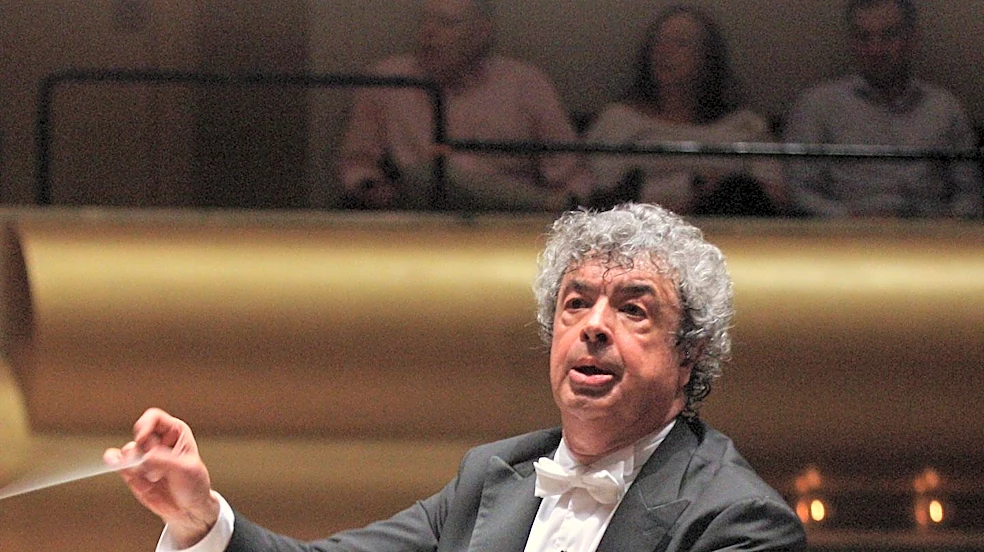
The genesis of the "Concerto for Orchestra" began with a significant commission from the Boston Symphony Orchestra. This collaboration between a leading American composer and a prominent American orchestra set the stage for a notable musical event. The work officially premiered on October 23, 1981, a date that marked a pivotal moment in Sessions's later career. The Boston Symphony Orchestra, under the direction of conductor Seiji Ozawa, brought the complex and intricate score to life for its inaugural audience.
This premiere was not just another concert; it was the unveiling of what would become Sessions's last major orchestral composition. The involvement of such a respected orchestra and conductor speaks volumes about the anticipation and significance surrounding the piece even before its public debut. The performance by the Boston Symphony Orchestra ensured that the work received a high-caliber interpretation, introducing it to the world with the artistic integrity it deserved.
Critical Acclaim and Awards
Following its premiere, the "Concerto for Orchestra" quickly garnered critical attention and significant accolades. The most prominent of these was the 1982 Pulitzer Prize for Music, an award that recognized the work's artistic merit and its contribution to American music. This was not Sessions's first encounter with the Pulitzer committee; he had previously received a special lifetime achievement Pulitzer Prize in 1974, acknowledging his extensive career as a distinguished American composer. The 1982 award for the concerto specifically highlighted this particular composition as a pinnacle of his creative output.
Beyond the Pulitzer, the concerto continued to be celebrated. Years after its premiere, the piece was honored with a performance at the closing of the 50th Tanglewood Music Festival in 2014. This later recognition demonstrates the enduring relevance and appreciation for Sessions's work, cementing its place in the canon of American orchestral music. The critical reception, as exemplified by Andrew Porter's praise in The New Yorker, further illustrates the profound impact the work had on listeners and critics alike. Porter described the experience of listening to the concerto as an ascent, a journey of "slow wonder" that leads to a "quietly rapt" consideration of the musical landscape.
Roger Sessions's Legacy in Music
The "Concerto for Orchestra" serves as a powerful final statement from a composer whose career spanned decades and saw him evolve through various musical styles. Roger Sessions, born in Brooklyn, New York, in 1896, was a prolific composer, teacher, and writer on music. His early career saw him writing in a neoclassical style, but he later moved towards more complex harmonies, postromanticism, and eventually the twelve-tone serialism of the Second Viennese School. His friendship with Arnold Schoenberg influenced his technique, though he developed a unique style that used rows for melodic themes while composing subsidiary parts freely.
Sessions's extensive catalog includes nine symphonies, an opera titled "Montezuma," and other concertos, such as his "Violin Concerto" from 1935. The "Concerto for Orchestra" thus represents the culmination of a long and distinguished career, bringing together his mature compositional voice and his mastery of orchestral writing. Its success and recognition underscore his significant contributions to American classical music, solidifying his reputation as one of the nation's most important composers.