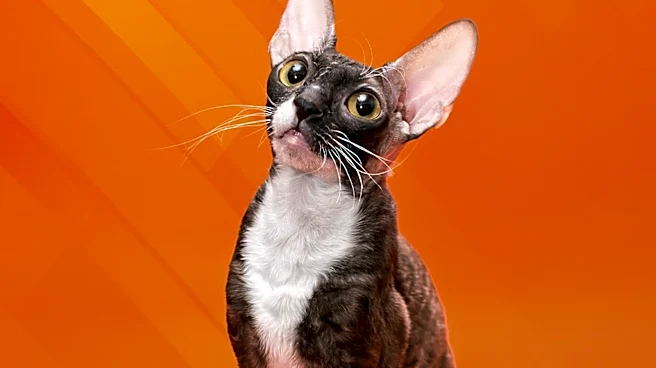





The Cornish Rex is a breed of domestic cat renowned for its exceptionally fine and naturally curly coat. This distinctive feature sets it apart from most other cat breeds, which typically possess three different types of hair in their coats. The Cornish Rex, however, only has the down hair, or undercoat, which is very fine and about one centimeter long. This unique coat, along with other striking physical traits, makes the Cornish Rex a fascinating
subject for cat enthusiasts and geneticists alike. Its origins trace back to a spontaneous genetic mutation discovered in the mid-20th century in the United Kingdom.
The Genetic Anomaly Behind the Curly Coat
The defining characteristic of the Cornish Rex, its curly fur, is the result of a specific genetic mutation. Unlike the Devon Rex, which also has a curly coat but due to a different mutation and gene, the Cornish Rex's curl is unique. Most cat breeds have guard hairs, awn hairs, and down hairs. The Cornish Rex completely lacks guard hairs and awn hairs, possessing only the soft, short undercoat. This genetic difference was precisely identified in 2013 through genome-wide analyses.Researchers pinpointed a four-base pair deletion in a gene on chromosome A1, specifically the lysophosphatidic acid receptor 6 (LPAR6). This deletion leads to a premature stop codon in the receptor, a feature absent in all straight-haired cats analyzed. The LPAR6 receptor is crucial for maintaining the structural integrity of the hair shaft. Interestingly, in humans, mutations in LPAR6 are associated with a form of ectodermal dysplasia characterized by a woolly hair phenotype, highlighting a shared biological mechanism across species.
The Birth of a Breed: Kallibunker's Legacy
The story of the Cornish Rex began in the 1950s on a farm in Cornwall, UK. A litter of kittens was born, and one cream-colored male, named Kallibunker, stood out due to his extremely unusual, fine, and curly coat. Kallibunker was the very first Cornish Rex, marking the origin of this distinctive breed. Recognizing the uniqueness of this kitten, the owner undertook a breeding program to preserve and propagate this trait.To establish the breed, Kallibunker was backcrossed to his mother, a common practice in early breed development to solidify desired genetic traits. This mating produced two more curly-coated kittens, demonstrating the heritable nature of the mutation. One of Kallibunker's offspring, a male named Poldhu, later sired a female named Lamorna Cove. Lamorna Cove was subsequently brought to America, where she was crossed with a Siamese cat. This crossbreeding contributed to some of the characteristic features seen in modern Cornish Rexes, such as their long, whippy tails and large ears, further shaping the breed's appearance.
Distinctive Appearance Beyond the Coat
While the curly coat is the most striking feature, the Cornish Rex possesses several other distinctive physical characteristics. According to the Governing Council of the Cat Fancy (GCCF) standard, the color of the Cornish Rex is considered irrelevant, meaning cats of any color are accepted within the breed standard. Beyond the coat, the breed is recognized for its 'foreign type' body structure, which includes slender legs and tail, oval eyes, and a wedge-shaped head.Their ears are notably large and wide at the base, tapering to rounded tips, often described as having an almost mussel shell shape. The eyes are medium in size and can come in all varieties of eye color, adding to their expressive faces. The body itself is slender and muscular, supported by small paws. This combination of features, from the unique coat to the elegant body and expressive face, contributes to the Cornish Rex's overall distinctive and appealing appearance, sometimes leading to its comparison to the Greyhound of cats due to its sleek look and characteristic galloping run.