


The 1998 Major League Baseball season captivated fans with an electrifying home run chase that saw two sluggers, Mark McGwire and Sammy Sosa, battle to break Roger Maris' long-standing single-season home run record. This intense competition revitalized interest in baseball, which had been impacted by the 1994 strike. The race was not just about individual achievement but also about the dramatic back-and-forth between two of the game's most powerful
hitters, culminating in a new record that would stand for only a few years before being broken again.
The Build-Up to a Historic Season
Interest in the single-season home run record had been building even before 1998. The 1997 season featured McGwire and Ken Griffey Jr. on a record pace, though neither ultimately reached it that year. McGwire finished 1997 with 58 home runs after a mid-season trade to the Cardinals, surpassing Griffey's 56. This set the stage for widespread speculation heading into spring training of 1998 about whether McGwire or Griffey could finally break Maris's record. Major League Baseball actively promoted this narrative, aiming to re-engage fans who had become disillusioned by the premature end of the 1994 season and the cancellation of the World Series.
McGwire, entering his first full season as a Cardinal, started the 1998 season with a bang, hitting home runs in each of his first four games. He maintained a pace ahead of the record for almost the entire season, with his lowest pace hitting 58.9 on May 7 after a five-game drought. In May, McGwire hit 16 home runs, just two shy of Rudy York's August 1937 record of 18. By the end of May, McGwire led the league with 27 home runs, well ahead of Griffey's 19, and was on pace for more than 80 home runs, signaling that a historic season was indeed underway.
Sosa's Surge and the August Battle
While McGwire started strong, June became Sammy Sosa's month to catch up. Entering June, Sosa's 13 home runs were less than half of McGwire's total. However, Sosa had his first of four multi-home run games that month on June 1 and went on to break Rudy York's record by hitting 20 home runs in June, a record that still stands. By the end of his historic June, Sosa's 33 home runs tied him with Griffey and put him only four behind McGwire's 37. The three players remained competitive as August approached.
August saw McGwire experience a season-high eight-game home run drought. After hitting a home run on August 8, his lead had shrunk to just two, with 46 home runs compared to Sosa's 44 and Griffey's 41. McGwire's relative lull continued, as he hit only three home runs over the next ten days, and his pace at the end of August 18, at 61.9, would be his lowest for the remainder of the season. However, he returned to form on August 19, hitting two home runs and beginning a stretch where he would hit 23 home runs in his final 39 games. Sosa, meanwhile, had followed his 20-homer June with a combined total of only 22 for July and August. By the end of August, both sluggers were tied at 55 home runs, putting them on pace for about 65 total and, for the first time in 37 years, placing the single-season home run record in imminent jeopardy. They were also each one short of Hack Wilson's National League record. Griffey's total of 47 home runs left him well behind his two rivals, and he would finish the season with 56 home runs, matching his previous year's total but still five short of Maris's record.
Breaking the Record and the Final Stretch
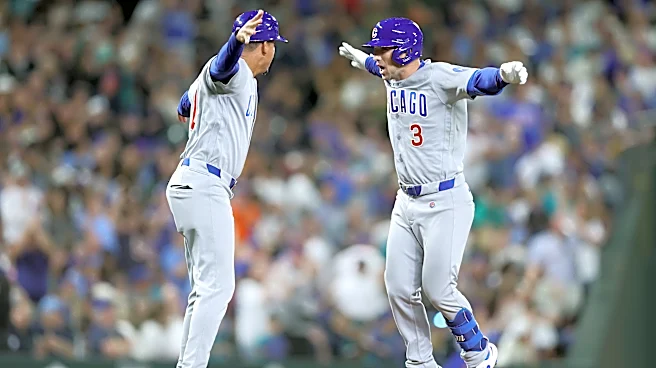
McGwire began September with four home runs in his first two games against the Florida Marlins, reclaiming the lead at 59-56. His September 5 home run set the stage for a classic baseball moment. On September 7, McGwire hit a Mike Morgan pitch 430 feet to become the first player since 1961 to hit 61 home runs in a season. The very next day, September 8, 1998, in a nationally televised game against Sosa's Cubs and with members of the Maris family in attendance, McGwire hit Steve Trachsel's pitch 341 feet—his shortest home run of the season—just over the left field wall, breaking the record for the most home runs ever hit in a single season. The ball did not even reach the stands and was caught by Tim Forneris, a member of the Busch Stadium grounds crew and a law student. Forneris famously declined multiple million-dollar offers and instead gave the ball to McGwire. In a display of admiration and respect, Cubs first baseman Mark Grace shared a half-hug high five with McGwire as he rounded first, and after he touched home, Sosa charged in from right field to embrace McGwire in celebration.
Despite breaking the record, McGwire then went six consecutive games without a home run, allowing Sosa to tie him again at 62 after hitting four home runs in three games against the Milwaukee Brewers. The two continued to battle for the lead, and entering the final series of the season on September 25, they were tied at 65 home runs. Sosa hit a 462-foot home run off Houston Astros pitcher José Lima for his 66th home run, briefly claiming the major league record. However, McGwire would hit five home runs against five different pitchers during a Cardinals homestand against the Montreal Expos, ultimately setting the single-season MLB home run record at 70 with a 370-foot home run off Carl Pavano. Throughout the season, Sosa gave a "V" sign after every home run, dedicating it to the memory of Cubs broadcaster Harry Caray, who had passed away that February.
The Record's Short Reign
McGwire's record of 70 home runs stood for only three seasons. In 2001, Barry Bonds surpassed this mark, hitting 73 home runs. This subsequent breaking of the record by Bonds further cemented the early 2000s as a period of unprecedented power hitting in Major League Baseball. The 1998 home run chase, however, remains a pivotal moment in baseball history, not just for the records broken but for the way it reignited fan passion and created a memorable rivalry between two iconic players.