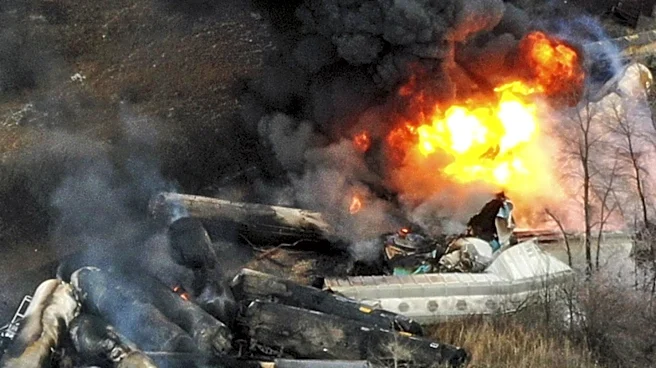






The devastating explosions at the Accurate Energetic Systems (AES) manufacturing facility in Humphreys County, Tennessee, on October 10, 2025, immediately triggered a massive investigative effort. With sixteen lives lost and seven people injured, the need to understand the cause of such a catastrophic event was paramount. The Humphreys County sheriff quickly acknowledged the scale of the task, stating that a "very big investigation" would be necessary,
potentially spanning months to thoroughly examine all possibilities, including foul play.
A Multi-Agency Effort to Piece Together the Puzzle
Numerous agencies converged on the scene to contribute to the complex investigation. The Bureau of Alcohol, Tobacco, Firearms and Explosives (ATF) played a central role, joining the effort to determine the explosion's origin. They were supported by additional investigators from the Chemical Safety and Hazard Investigation Board (CSB), who focused on root cause analysis. The Department of Homeland Security, the Tennessee Bureau of Investigation, and the Federal Bureau of Investigation (FBI) were also among the key responders, underscoring the severity and broad implications of the incident.
Despite the initial challenges posed by continuing explosions that prevented immediate access to the site, investigators meticulously worked to gather evidence. Their efforts aimed to reconstruct the events leading up to the blast and identify the precise sequence of failures or conditions that led to the tragedy. The sheer volume of explosive material involved, and the inherent dangers of the manufacturing process, made this a particularly intricate inquiry.
Pinpointing the Origin: A Chain Reaction on the Ground Floor
By October 25, just over two weeks after the incident, the ATF had made significant progress, determining that the explosion was a chain reaction that originated on the ground floor of the AES building. The facility was known to be manufacturing cast boosters for commercial mining, a process involving explosive mixtures that typically included TNT, RDX, or cyclonite. The manufacturing steps were critical to the investigation: components were mixed in kettles on the mezzanine level, then pumped to heating kettles on the main floor, where the mixture was subsequently packed by hand into cardboard tubes and left to cool.
Crucially, the main floor also housed a loading dock where other explosives were stored, awaiting shipment. The ATF's findings indicated that the explosion began in the heating kettles on the main floor. This initial detonation then triggered a chain reaction, causing additional explosive products stored on the main floor of the AES building to detonate. The scale of this chain reaction was immense, with more than 24,000 pounds of explosives detonating. This figure was later corroborated by a seismological study conducted in 2026 by researchers from Los Alamos National Laboratory, which reported an explosive yield of 11.8 tons of TNT equivalent, consistent with the ATF's inventory reports of 11-13 tons.