



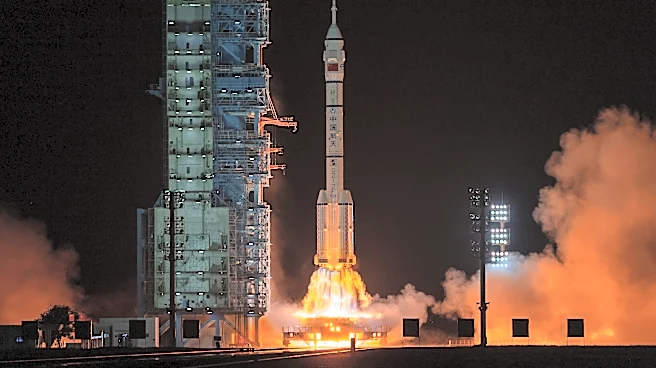

STS-61-B was the 23rd NASA Space Shuttle mission, launched on November 26, 1985, utilizing the Space Shuttle Atlantis. This mission holds a unique place in space history, primarily for setting a record that remains unbroken as of August 2022: the quickest turnaround of a Shuttle orbiter from launch to launch. Just 54 days separated Atlantis' previous mission, STS-51-J, from its launch on STS-61-B. This rapid preparation highlighted the efficiency
and capabilities of the Space Shuttle program during a busy period of operations.
Atlantis' Swift Return to Space
The Space Shuttle Atlantis made its maiden voyage, STS-51-J, on October 3, 1985. Following its landing at Edwards Air Force Base on October 7, 1985, Atlantis was promptly returned to the Kennedy Space Center by October 12, 1985. The orbiter was then moved directly into an Orbiter Processing Facility (OPF), where post-flight de-servicing and pre-flight processing were conducted simultaneously. This streamlined approach was crucial for achieving the rapid turnaround.
After only 26 days in the OPF, a record-fast processing time for the Space Shuttle program, Atlantis was rolled to the Vehicle Assembly Building (VAB) on November 7, 1985. There, it was mated with the External Tank (ET) and Solid Rocket Booster (SRB) stack. The complete assembly was then rolled out to Launch Complex 39A on November 12, 1985, preparing for its next mission, STS-61-B.
Mission Objectives and Achievements
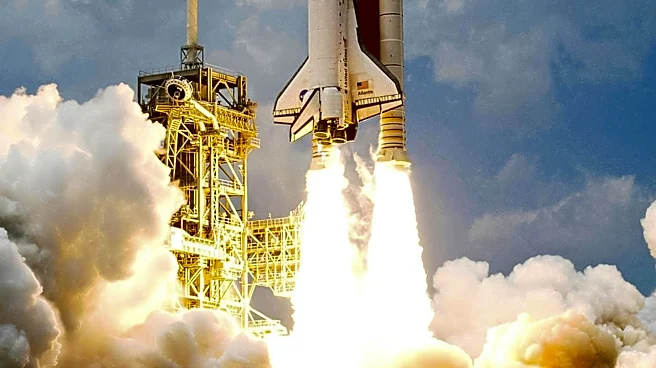
STS-61-B, Atlantis' second flight, was launched from Kennedy Space Center at 7:29:00 p.m. EST on November 26, 1985. This marked the second night launch in the history of the Space Shuttle program and was the ninth and final flight of 1985. A primary objective of the mission was the deployment of three communications satellites: MORELOS-B, AUSSAT-2, and SATCOM KU-2. All three satellites were successfully deployed, one at a time, with their booster stages firing automatically to lift them to geostationary transfer orbits. Their respective owners then took charge, firing onboard kick motors at apogee to circularize the orbits and align them with the equator.
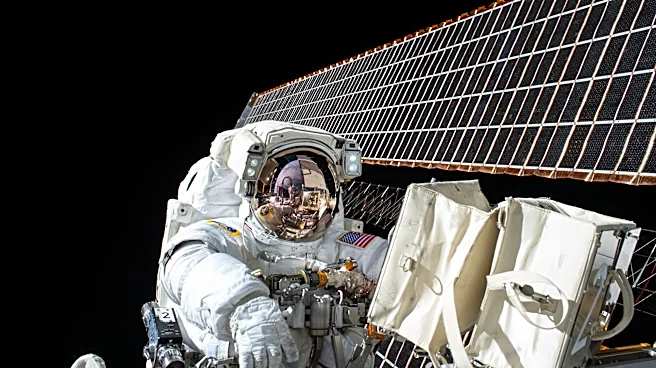
Beyond satellite deployment, STS-61-B also focused on testing techniques for constructing structures in orbit. This involved the EASE/ACCESS experiment, a joint venture between the Langley Research Center (LRC) and the Marshall Space Flight Center (MSFC). ACCESS was a "high-rise" tower made of many small struts and nodes, while EASE was an inverted pyramid-shaped geometric structure composed of a few large beams and nodes. These experiments demonstrated the feasibility of assembling large preformed structures in space, providing valuable insights for future endeavors like the construction of a space station. Astronauts Jerry Ross and Sherwood Spring performed two spacewalks, marking the 50th and 51st extravehicular activities (EVAs) for the United States and the 12th and 13th for the Shuttle program, to conduct this work. An IMAX camera in the cargo bay filmed these activities, along with other scenes of interest.
Landing and Legacy
Atlantis landed safely at Edwards Air Force Base, California, at 4:33:49 p.m. EST on December 3, 1985, after a mission lasting 6 days, 21 hours, 4 minutes, and 49 seconds. The landing occurred one orbit earlier than planned due to lighting concerns at Edwards. The rollout distance on landing was 3,279 meters (10,758 feet), lasting 78 seconds. This mission was Atlantis' second and final flight before the Space Shuttle Challenger disaster in 1986, which grounded the shuttle fleet for two and a half years. Atlantis would not fly again until STS-27, which launched three years later on December 2, 1988. The record-setting turnaround of STS-61-B remains a testament to the operational efficiency achieved by the Space Shuttle program in its early years.