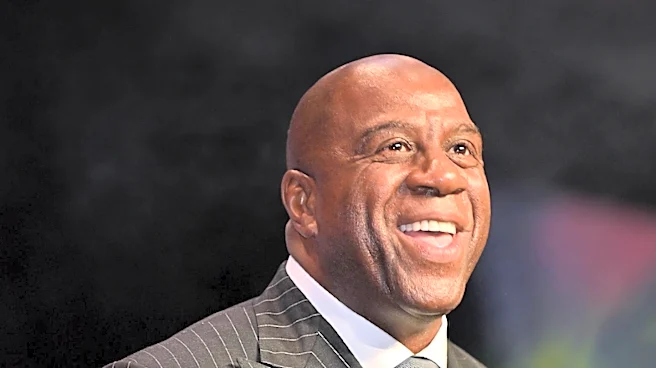



Earvin "Magic" Johnson Jr., born on August 14, 1959, has carved out a remarkable legacy that extends far beyond the basketball court. Known for his exceptional talent as a point guard for the Los Angeles Lakers, Johnson's career is marked by numerous championships and individual accolades. However, his influence did not wane after his playing days. Following a pivotal health announcement in 1991, Johnson transitioned into a successful career as a businessman
and entrepreneur, demonstrating a keen ability to innovate and lead in diverse fields. His journey showcases a rare blend of athletic prowess and strategic business acumen, making him a figure of enduring significance in both sports and commerce.
A Dominant Force on the Basketball Court
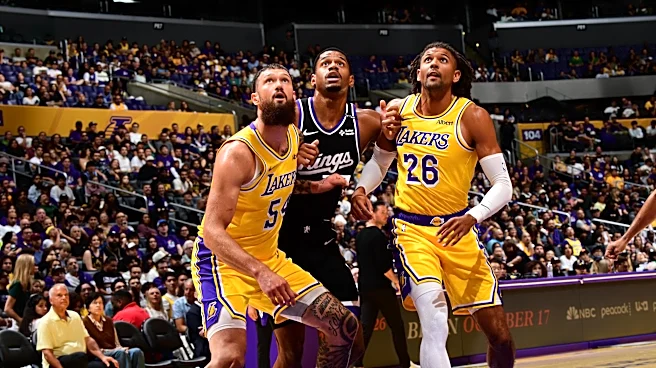
Magic Johnson's basketball career with the Los Angeles Lakers spanned 13 seasons, beginning in 1979 after he was the first overall pick in the NBA draft. His impact was immediate and profound, as he led the Lakers to an NBA championship and earned the NBA Finals Most Valuable Player Award in his rookie year. This initial success set the tone for a decade of dominance, during which he secured four more championships with the Lakers in the 1980s.Johnson's on-court achievements are extensive, including three NBA MVP awards, nine appearances in the NBA Finals, and 12 All-Star selections. He was also named to the All-NBA team ten times. His playmaking ability was legendary; he led the league in assists for four seasons and holds the NBA's all-time record for the highest average assists per game at 11.2. His contributions were recognized with his induction into the Basketball Hall of Fame in 2002 and his inclusion in the list of the 50 Greatest Players in NBA History in 1996.
Navigating Challenges and Triumphant Returns
Johnson's career faced an unexpected turn in 1991 when he abruptly retired after announcing he had contracted HIV. This news sent shockwaves through the sports world. Despite this, he made a memorable return to play in the 1992 All-Star Game, where he was voted the All-Star MVP Award winner. However, facing opposition from other basketball players, he retired again.His desire to play remained, leading to another comeback in 1996 at the age of 36. He played 32 games for the Lakers before retiring for the third and final time. Beyond his NBA career, Johnson was also a key member of the 1992 United States men's Olympic basketball team, famously known as "The Dream Team," which went on to win an Olympic gold medal that year. After leaving the NBA in 1992, he formed the Magic Johnson All-Stars, a touring basketball team that played exhibition games globally.
Building a Business Empire
Johnson's post-basketball career has been marked by significant success in the business world. He founded Magic Johnson Enterprises in 1987, an investment company based in Beverly Hills, California. This venture has grown into a substantial enterprise with diverse investments. In 1995, he acquired an equity stake in a 12-screen multiplex movie theater in Baldwin Hills. His business acumen further expanded in 1998 when his company teamed up with Starbucks, acquiring approximately 125 stores, later selling 105 of them in a $100 million deal in October 2010.His business ventures also include a multi-year marketing deal with electronics retailer Best Buy Co. in March 2008, aimed at boosting sales in urban neighborhoods. In October 2010, he sold his 4% interest in the Los Angeles Lakers for an estimated $27 million. A notable deal in 2006 involved Sodexo, a major food services company, leading to the formation of SodexoMAGIC, LLC, a joint venture where Johnson's company holds a 51 percent ownership. More recently, in June 2015, Magic Johnson Enterprises acquired a controlling interest in EquiTrust Life Insurance Co. From February 2017 to April 2019, Johnson also served as the president of basketball operations for the Los Angeles Lakers, further cementing his multifaceted legacy.