



Landsat 1, launched in 1972, was a pioneering satellite that revolutionized the field of Earth observation. As the first satellite in the Landsat program, it introduced new technologies and methodologies for studying Earth's resources from space. This article examines Landsat 1's role as a trailblazer in Earth observation technology and its contributions to environmental science.
Introduction to Earth Observation
Before the launch of Landsat 1, Earth observation was primarily conducted
using high-altitude aircraft. These methods had limitations in terms of coverage and data consistency, prompting the need for a more comprehensive approach. Landsat 1 addressed these challenges by providing a stabilized, Earth-oriented platform for data collection.
The satellite's near-polar orbit allowed it to capture images of the entire planet, providing unprecedented access to information on agriculture, forestry, geology, and more. This capability marked a significant advancement in the field of remote sensing, as it enabled scientists to study Earth's resources on a global scale.
Technological Innovations
Landsat 1 was equipped with a Multispectral Scanner, a revolutionary instrument for capturing detailed images of Earth's surface. The scanner operated by using a rotating mirror to capture images across different wavelengths, allowing scientists to analyze the spectral signatures of various materials.
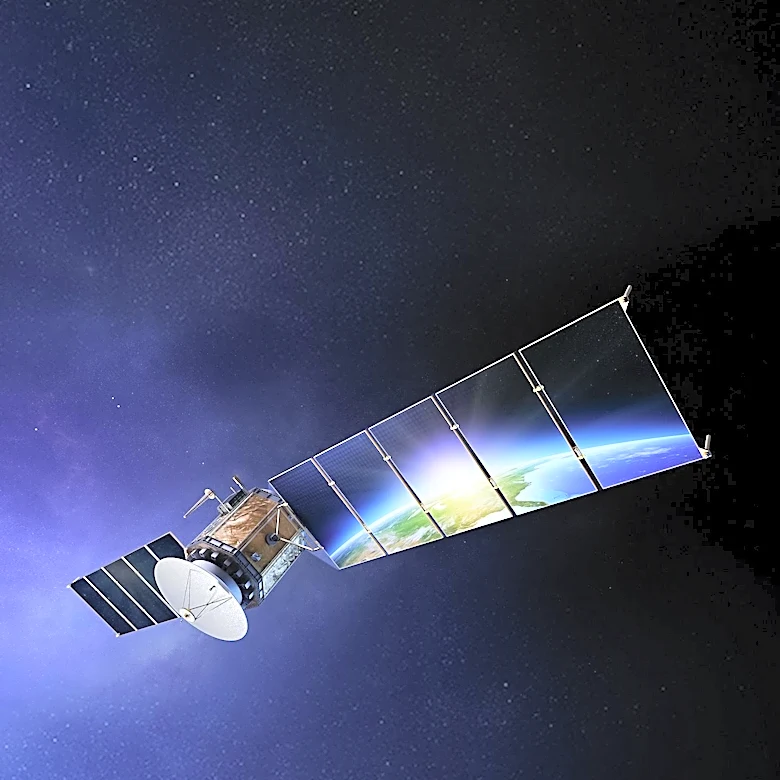
The satellite's design included solar panels for power generation and hydrazine thrusters for propulsion, ensuring reliable operation throughout its mission. The communication systems enabled real-time data transmission, allowing for continuous monitoring of Earth's environment.
Contributions to Environmental Science
The data collected by Landsat 1 has been used by scientists and policymakers worldwide to address environmental challenges. The satellite provided valuable information on agricultural and forestry resources, geology and mineral resources, hydrology and water resources, and more.
Landsat 1's success paved the way for subsequent satellites in the Landsat program, which continue to provide critical data for environmental monitoring. The satellite's pioneering role in Earth observation technology has had a lasting impact on the field, demonstrating the importance of satellite technology in understanding and managing Earth's resources.
Landsat 1's legacy is evident in the continued development of satellite technology and the expansion of the Landsat program. Today, Landsat satellites remain a vital tool for studying Earth's environment, highlighting the enduring significance of this pioneering mission.