



The Apollo 11 mission was a landmark achievement in human history, not only for its successful Moon landing but also for the technological innovations that made it possible. The mission showcased the pinnacle of engineering and scientific advancement of its time, with each component of the spacecraft playing a crucial role in the mission's success.
The Saturn V Rocket
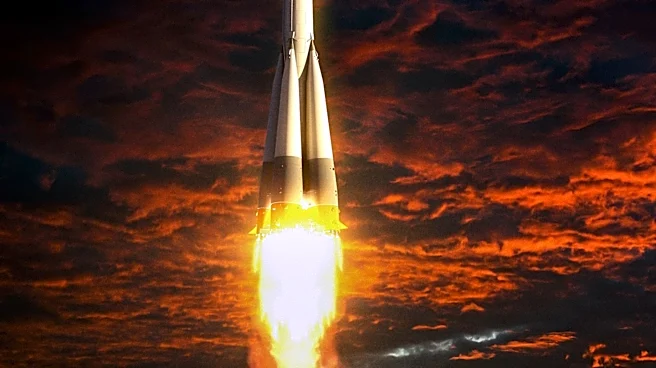
At the heart of the Apollo 11 mission was the Saturn V rocket, a technological marvel that remains one
of the most powerful rockets ever built. Developed under the direction of Wernher von Braun, the Saturn V was designed to carry the Apollo spacecraft beyond Earth's orbit and into lunar trajectory. It stood 363 feet tall and consisted of three stages, each responsible for different phases of the launch.
The first stage provided the initial thrust to escape Earth's gravity, while the second stage continued the journey into space. The third stage, known as the S-IVB, was responsible for propelling the spacecraft towards the Moon. The Saturn V's reliability and power were critical to the success of the Apollo missions, and its development marked a significant leap in rocket technology.
The Apollo Spacecraft
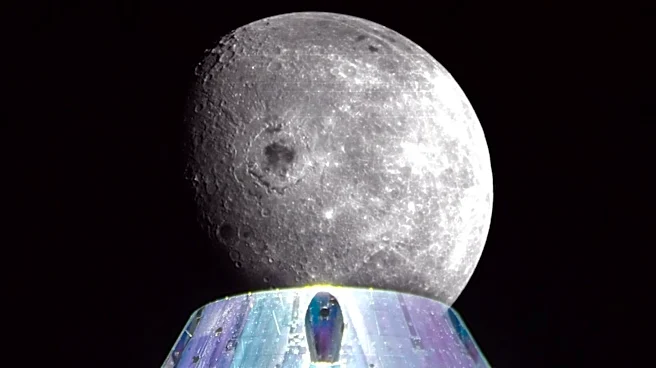
The Apollo spacecraft itself was a complex system composed of three main parts: the command module, the service module, and the lunar module. The command module, named Columbia, housed the three astronauts and was the only part to return to Earth. It was equipped with advanced navigation and communication systems, ensuring the crew's safety throughout the mission.
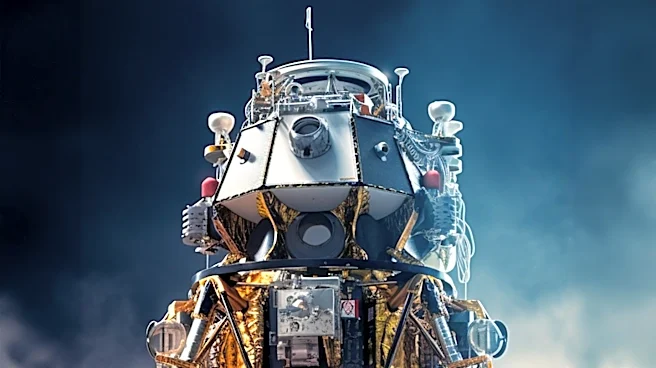
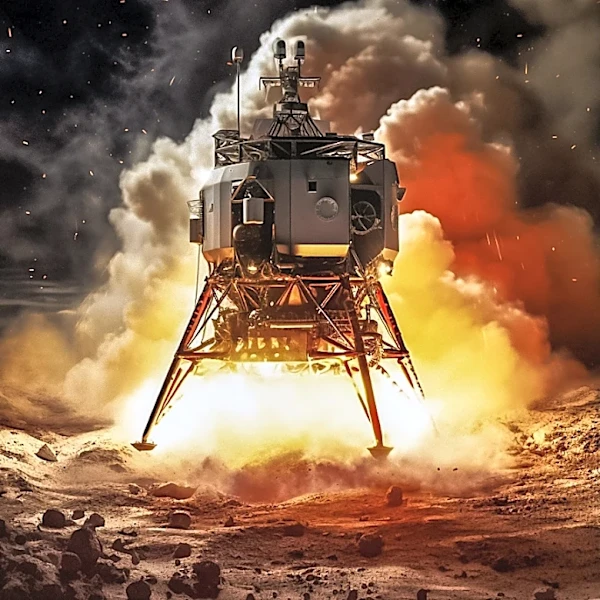
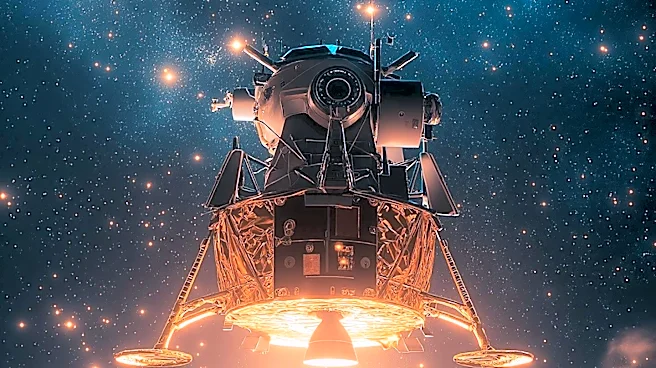
The service module provided essential support, including propulsion, electrical power, and life support systems. It was a vital component that enabled the command module to function effectively during the mission. The lunar module, named Eagle, was designed specifically for landing on the Moon. It had two stages: a descent stage for landing and an ascent stage for returning to lunar orbit.
Innovations and Challenges
The Apollo 11 mission faced numerous challenges, requiring innovative solutions and meticulous planning. One of the key decisions was the choice of lunar orbit rendezvous, which allowed the spacecraft to be launched by a single Saturn V rocket. This approach involved separating the lunar module from the command module in lunar orbit, a maneuver that required precise calculations and execution.
The mission also relied on cutting-edge computer technology. The lunar module's guidance computer, developed by MIT, was one of the first to use integrated circuits, making it a precursor to modern computing. Despite encountering program alarms during the descent, the computer's design allowed it to prioritize critical tasks, ensuring a successful landing.
In summary, the technological achievements of Apollo 11 were a testament to human ingenuity and collaboration. The mission's success was made possible by the groundbreaking engineering and scientific advancements of its time, setting the stage for future exploration of space.