






John Willis Menard holds a significant place in American history as the first African American elected to the United States House of Representatives. Born in Kaskaskia, Illinois, in 1838 to Louisiana Creole parents, Menard's life was marked by a dedication to public service and civil rights. His election in 1868, following the Civil War, represented a pivotal moment for African Americans seeking political representation. However, his journey to Congress
was fraught with challenges, ultimately preventing him from being seated, yet his efforts paved the way for future African American legislators.
Early Life and Education
Menard's early life provided a foundation for his later activism and political aspirations. He was born to free people of color, who were Louisiana Creoles from New Orleans, with a heritage of both European and African descent. This background likely shaped his perspective and commitment to equality. He received an education that was uncommon for many African Americans of his era, attending schools in Sparta, Illinois, Ohio Central College, and Iberia College in Iberia, Ohio. These educational opportunities equipped him with the knowledge and skills necessary for his diverse career path.
His family connections also suggest a broader network; he may have been related to Michel Branamour Menard, a French-Canadian fur trader and a founder of Galveston, Texas. Such connections could have provided a degree of social capital, even as he navigated a society marked by racial prejudice. Menard's early experiences and education were crucial in preparing him for the challenges he would face in his political career.
Federal Service and Post-War Activism
During the tumultuous period of the American Civil War, Menard served the federal government, working as a clerk in the Department of the Interior under President Abraham Lincoln. This role placed him at the heart of national affairs during a critical time. In 1863, he was dispatched to British Honduras to investigate the feasibility of establishing a colony for newly freed slaves, demonstrating his involvement in efforts to address the future of African Americans post-emancipation. This experience underscored his commitment to the welfare of his community.
After the war, Menard relocated to New Orleans in 1865, a city with deep personal ties for his family. There, he continued his activism through journalism, establishing a newspaper initially named *The Free South*, which was later renamed *The Radical Standard*. Through his publishing endeavors, Menard provided a platform for advocating for the rights and advancement of African Americans during the Reconstruction era, using the power of the press to influence public opinion and policy.
The Contested Election of 1868
In a special election held on November 3, 1868, to fill the unexpired term of a deceased Democrat, James Mann, John Willis Menard was elected as a Republican to represent Louisiana's 2nd congressional district. This election marked a historic first, as he became the first African American to be elected to the United States House of Representatives. However, his victory was immediately challenged by his white Democratic opponent, Caleb S. Hunt, who contested the election results. This opposition prevented Menard from being seated in Congress, highlighting the deep-seated racial prejudices and political resistance of the time.
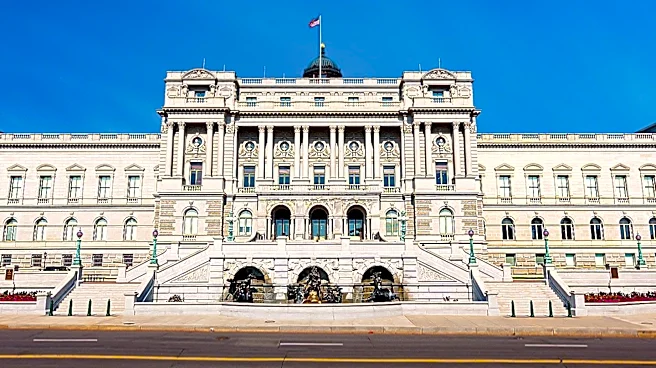
The House Committee on Elections failed to reach a definitive conclusion on the challenge, leading the case to be brought before the entire House of Representatives. On February 27, 1869, Menard made history again by becoming the first African American to address the chamber, presenting his case for being seated. Despite his powerful address and the subsequent debate, neither Menard nor Hunt garnered enough support to be seated. A vote to seat Hunt failed, and a subsequent motion to send the matter back for further investigation and to seat Menard in the interim also failed. This outcome meant that neither man was seated for the remainder of the 40th Congress, denying Menard his rightful place in the legislative body, despite his historic election.