



In 1934, Australia embarked on a significant diplomatic journey known as the Australian Eastern Mission. This mission, which ran from March 21 to June 14, was publicly presented as a goodwill tour, but it carried substantial commercial, diplomatic, and strategic objectives. It marked a pivotal moment for Australia, representing its first diplomatic mission conducted outside the traditional confines of the British Empire. Led by John Latham, then Attorney-General
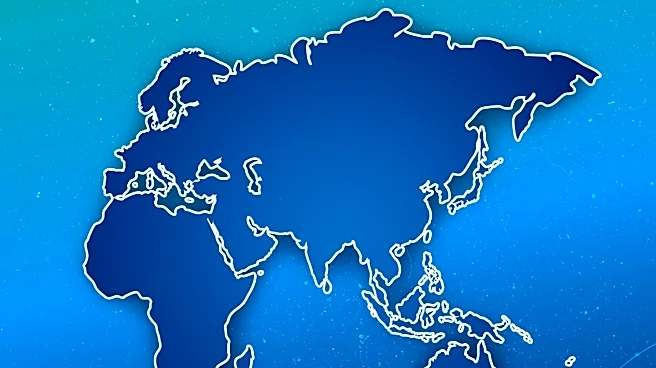
and Minister for External Affairs, the mission concentrated on key Asian nations, particularly China, the Netherlands East Indies, and Japan, with shorter visits to British colonies and the American-administered Philippines. This initiative laid foundational groundwork for Australia's independent foreign policy in the lead-up to World War II.
The Strategic Imperatives Behind the Goodwill Tour
The Australian Eastern Mission, while framed as a goodwill tour, was deeply rooted in strategic and commercial considerations. Prime Minister Joseph Lyons was keen to downplay its commercial aspects publicly, even requesting newspaper editors to avoid the term "trading mission" and forbidding government ministers from discussing it with the press. This was likely an effort to prevent foreign governments, especially Japan, from raising trade balance issues. Privately, however, Latham was tasked with critical objectives. He was to directly ascertain Japan's stance on the League of Nations and its conditions for a final resolution to the Manchurian question. Furthermore, Lyons instructed Latham to address concerns about military activities, including naval surveys and fortification construction, in the South Seas Mandate, which shared a maritime border with Australia's mandate in the Territory of New Guinea. Beyond Japan, Latham was also directed to investigate matters pertinent to Australian security, particularly the development of the British naval base at Singapore, aligning with Australia's commitment to the Singapore strategy.
The mission's itinerary was extensive, covering a vast geographical area over 85 days, with 37 days spent in transit. The most significant time was allocated to the Netherlands East Indies (11 days), China (14 days), and Japan (12 days), indicating their strategic importance. Other destinations, such as British Malaya, Singapore, French Indochina, British Hong Kong, and the Philippines, received more transitory attention, often limited to social engagements. In Japan, Latham met with Foreign Minister Kōki Hirota on May 12, 1934, where the Japanese occupation of Manchuria and its withdrawal from the League of Nations were primary discussion points. Latham's encouragement for Japan to rejoin the League was rebuffed, with Hirota making it clear that de jure recognition of Manchukuo was a prerequisite for Japan's return to internationalism.
Recommendations and the Shaping of Australian Foreign Policy
Upon his return, Latham submitted an official report to parliament on July 6, 1934, shortly after resigning as a cabinet minister. In his address to the House of Representatives, he emphasized Australia's geographical position in "the East" and the critical importance of maintaining friendly relations with neighbors and peace in the region as a major objective of Australian foreign policy. While his official report touched upon diplomatic and defense aspects, these were more thoroughly detailed in a separate, confidential document titled "Secret Report on the International Position in the Far East," presented directly to Prime Minister Lyons.
This secret report concluded that the mission had successfully fostered goodwill and clarified Japan's position on Manchuria, though it had failed to persuade Japan to return to internationalism. Notably, Latham's report was highly critical of the state of the naval base at Singapore, describing it as "chaotic." His observations on trade were supplemented by three confidential reports authored by Moore, which were appended to the secret report. Latham strongly advocated for expanding the trade commissioner service, prioritizing China and the Dutch East Indies. He envisioned trade commissioners playing a dual role, combining diplomatic functions with trade development, thereby bridging the information gap between Australia and its northern neighbors.
Enduring Legacy and Long-Term Ramifications
The Australian Eastern Mission is recognized as a turning point in Australia's external relations. It marked the nation's first serious attempt to formulate a coherent policy towards Asia and significantly broadened its foreign and trade policy scope. A 2008 parliamentary research paper on Australia-China relations highlighted the mission as a moment when a more self-confident Australia began to distinguish its interests from those of Britain. Latham's assessment of Japan and his visit to Singapore had profound long-term implications for Australian defense policymaking. His criticisms of the Singapore naval base reinforced Australian concerns about relying solely on the British military in a wider Pacific conflict, contributing to Lyons' commitment to rearmament throughout the 1930s.
However, Latham's assessment of potential Japanese expansion proved inaccurate, particularly his view that Japan would not expand southward and his acceptance of Japanese assurances regarding the non-militarization of the South Seas Mandate. Despite these misjudgments, the mission was influential in the government's 1936 decision to establish the Department of External Affairs as fully independent from the Prime Minister's Department. While the mission did not immediately lead to the appointment of formal diplomatic representatives in Asian countries, with Australia initially continuing to be represented by British officials, Latham's recommendations on trade commissioners were swiftly adopted. By the late 1930s, trade commissioners were appointed to China (1935), the Dutch East Indies (1935), Japan (1935), Egypt and the Middle East (1936), and India (1939). Ultimately, Latham himself was appointed as Australia's first Minister to Japan in 1940, just a year before the attack on Pearl Harbor and Australia's subsequent declaration of war on Japan.