





The Cuban Missile Crisis, a tense standoff in October 1962, brought the world to the brink of nuclear war. A pivotal factor in the United States' understanding and response to this crisis was the crucial role of aerial reconnaissance. Without the concrete evidence provided by U.S. aerial photographs, the situation might have unfolded very differently. These images not only confirmed the presence of Soviet offensive weapons in Cuba but also directly
contradicted Soviet denials, forcing a decisive U.S. reaction.
Unveiling the Threat: U-2 Flights and Early Discoveries
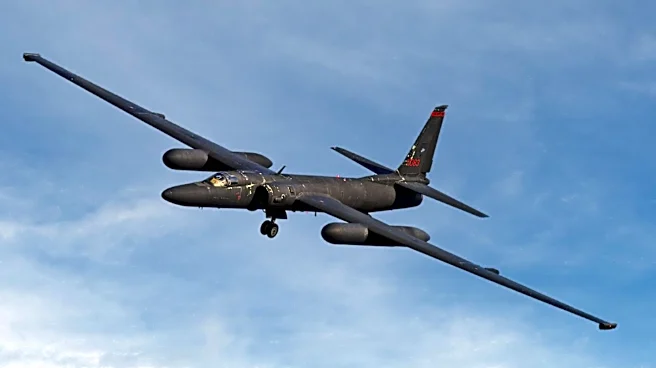
The initial and most significant breakthrough came from U-2 reconnaissance flights. On October 14, 1962, U-2 photographs provided undeniable visual evidence of the placement of Soviet SS-4 medium-range ballistic missiles (MRBMs) in Cuba. These missiles were capable of hitting targets in the continental United States with nuclear warheads. This discovery immediately triggered a maximum effort from the U.S. intelligence community and an unprecedented military alert. The images showed missile assembly in Cuba, including missile transporters and missile-ready tents, where fueling and maintenance would take place.
Arthur C. Lundahl, a key figure in aerial reconnaissance, directed the analysts who found this visual evidence. His expertise, honed from combining academic training as a geologist with photography, allowed him to interpret intricate details in pictures, distinguishing natural features from man-made constructions. Lundahl's briefing to President John F. Kennedy on October 16 confirmed the Soviet weapons' presence, which had not been anticipated by either the intelligence community or the military. This briefing was critical in informing the President about the immediate threat.
Confirming the Deception: Photographic Evidence Against Soviet Denials
Prior to the photographic evidence, the Soviet Union had consistently denied deploying offensive weapons in Cuba. Anatoly Dobrynin, the Soviet ambassador to the United States, had personally assured Attorney General Robert F. Kennedy on September 4, 1962, that only defensive weaponry was being supplied to Cuba, a message directly from Khrushchev himself. Dobrynin later reiterated this denial regarding the presence of Soviet missiles.
The aerial reconnaissance photographs directly contradicted these diplomatic assurances. The images provided concrete, irrefutable proof that the Soviet Union was not only supplying offensive weapons but was actively constructing launch sites for them. For instance, a photograph taken on November 1, 1962, showed a medium-range ballistic missile launch site at San Cristobal in Cuba. This visual confirmation was essential in discrediting Soviet claims and solidifying the U.S. position that a serious threat existed.
The Impact on Decision-Making and Crisis Resolution
The photographic intelligence was not just a piece of information; it was the driving force behind the crisis. Policy papers, which often lagged behind the rapidly changing situation, were constantly being updated by the photographic evidence. Lundahl even raised the issue that policymakers should be working 12-hour shifts alongside the photo analysts to stay current with the intelligence. This highlights how central the photography was to understanding the evolving threat and formulating a response.
The knowledge gained from these aerial images allowed President Kennedy to pressure the Soviets to remove the missiles. Lundahl received a personal commendation from President Kennedy for his work, and the National Photographic Interpretation Center (NPIC) received a Presidential Unit Citation. The ability to visually confirm the missile sites was paramount in navigating the crisis, providing the U.S. with the necessary leverage and understanding to demand the withdrawal of the Soviet weapons and ultimately avert a potential nuclear conflict.