





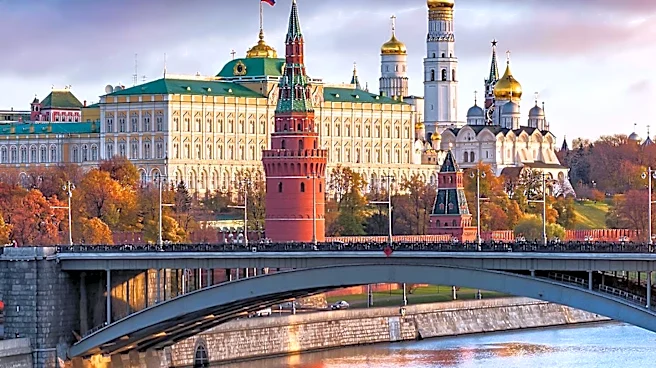
Moscow, the capital of Russia, boasts a history stretching back to prehistoric times, evolving from early human settlements to a global city of immense cultural and political significance. Its journey is marked by periods of growth, conflict, and transformation, reflecting the broader historical currents of the region. From its first mention in chronicles in 1147 to its modern status as a bustling metropolis, Moscow has consistently played a central
role in the narrative of Eastern Europe, adapting and rebuilding through centuries of change.
Prehistoric Roots and Early Slavic Inhabitants
The site where modern-day Moscow stands has been continuously inhabited since prehistoric eras. Among the earliest archaeological discoveries are relics from the Lyalovo culture, which experts date back to the Neolithic period. These findings provide concrete evidence that the initial inhabitants of this area were primarily hunters and gatherers, utilizing the natural resources of the land for their survival. This early human presence laid the groundwork for future settlements, indicating the region's long-standing appeal as a habitable and resource-rich location.
Around 950 AD, two significant Slavic tribes, the Vyatichi and the Krivichi, migrated into and settled the area. Historical accounts suggest that the Vyatichi likely constituted the majority of Moscow's indigenous population during this period. Their arrival marked a crucial shift in the demographic and cultural landscape, introducing Slavic customs and social structures that would eventually form the bedrock of the city's identity. These early tribal settlements were the direct precursors to the more organized towns and fortifications that would emerge centuries later.
The Rise of a Principality and Early Fortifications
Moscow first appears in historical records in 1147, mentioned as a part of the principality of Rostov-Suzdal. This principality itself had emerged from the fragmentation of Kievan Rus', a powerful medieval state. The 1147 chronicle entry specifically refers to Moscow as a meeting place for Yuri Dolgorukiy and Sviatoslav Olgovich, indicating its early importance as a strategic location for gatherings and possibly trade. At this time, Moscow was considered a minor town, situated on the western border of the larger principality.
The significance of Moscow began to grow considerably during the latter half of the 12th century. Recognizing its strategic value, the town was transformed into a fortified *gorod*, or stronghold, in the 1150s. This period saw the construction of the first walls of the Kremlin, a defensive complex that would become synonymous with Moscow's power and resilience. These early fortifications were vital for protecting the burgeoning settlement from external threats and establishing its role as a regional center.
Challenges and Consolidation: Mongol Invasions and Princely Rule
The nascent development of Moscow faced a severe challenge during the Mongol invasions of 1237–1238. Following the devastating destruction of Ryazan, Moscow itself was sacked by the Mongol forces. This event was a significant setback, but the city eventually recovered and continued its trajectory of growth. The period after the Mongol invasions saw the establishment of a local branch of Rurikid princes, further solidifying Moscow's political structure.
Daniel, the youngest son of Alexander Nevsky, is generally regarded as the first prince of Moscow. In 1263, Moscow was granted to him as an *otchina*, or hereditary land. While two chronicles mention Mikhail Khorobrit as "Mikhail of Moscow" in the mid-13th century, Daniel's rule is widely recognized as the beginning of Moscow's princely lineage. Upon Mikhail's death in 1248, if an appanage principality was indeed created, Moscow reverted as an escheat to the grand prince of Vladimir. Until 1271, the principality was governed by the administrators of Daniel's uncle Yaroslav, who had been granted Tver as his own appanage. Daniel himself is first noted in chronicles in 1282, participating in a feudal conflict between his two elder brothers, underscoring the complex political landscape of the time and Moscow's emerging role within it.
Moscow as a Capital and Modern Growth
Moscow's status as a capital city has seen several shifts throughout history. It became the capital of the Grand Principality of Moscow in the 15th century. When the Tsars began their rule in 1547, Moscow served as the political and economic heart of the realm. However, this changed in 1712 when Peter the Great moved the capital to Saint Petersburg. It wasn't until 1918, following the Russian Revolution, that Moscow was reinstated as the capital. This decision cemented its position as the capital of the Russian Federation, a role it continues to hold today.
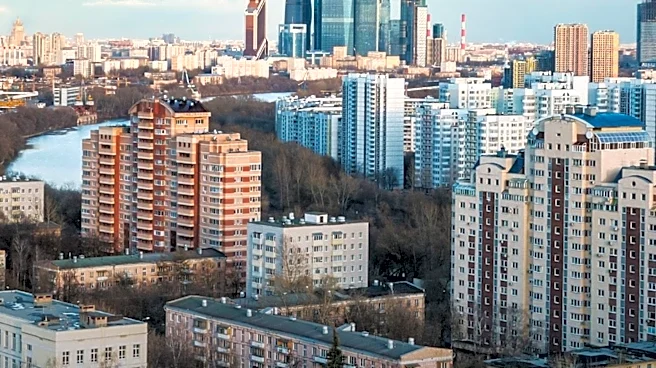
Since the dissolution of the USSR in 1991, Moscow has experienced significant transformations. A market economy has flourished, leading to a rapid expansion of Western-style retail, services, architecture, and lifestyles. Despite a national population decline in Russia after the fall of the USSR, Moscow's population continued to grow throughout the 1990s and 2000s, increasing from under nine million to over ten million. This growth has also brought challenges, including the dramatic expansion of low-density suburban sprawl and increased traffic congestion, particularly with the conversion of summer dachas into year-round residences and the proliferation of automobiles. The city's infrastructure has adapted, with projects like the widening of the MKAD ring road and the completion of the Third Ring Road, demonstrating Moscow's ongoing evolution as a major global center.