

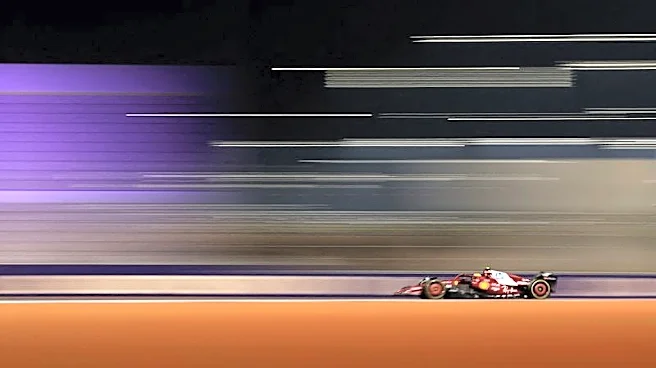
Sauber Motorsport's journey in Formula 1 is a compelling narrative of technical adaptation, strategic engine partnerships, and fluctuating sporting fortunes. From its debut as a relatively small, independent Swiss team in 1993 to its current trajectory towards becoming a factory-backed Audi operation, Sauber has consistently sought to innovate and compete at the highest level. This evolution has seen the team utilize a diverse range of engines, develop
its chassis in Hinwil, and achieve significant milestones, including podium finishes and a Grand Prix victory. The story of Sauber's technical and sporting development highlights the relentless pursuit of performance and the challenges of maintaining competitiveness in the technologically demanding world of Formula 1.
Early Technical Foundations and Engine Partnerships
Sauber entered Formula 1 in 1993 with a chassis developed in-house at Hinwil, Switzerland. For its debut, the team initially benefited from an indirect partnership with Mercedes-Benz, which supported the team through an agreement with Ilmor. This collaboration provided Sauber with competitive engines, allowing JJ Lehto to score points in the team's very first race. The relationship with Mercedes became official in 1994, but it was short-lived, as Mercedes shifted its focus to McLaren for 1995. This forced Sauber into a rapid search for new engine suppliers, a recurring theme in its early history.For the 1995 season, Sauber secured an exclusive deal for the Ford-Zytec-R V8 engine, which had powered Michael Schumacher to a championship the previous year. However, regulatory changes required the engine to be reduced in displacement, and it did not integrate well with the Sauber C14 chassis, which had been designed for a lighter Mercedes unit. Despite these technical hurdles, Heinz-Harald Frentzen achieved the team's first podium finish at the Italian Grand Prix. The 1996 season saw Sauber use newly designed Cosworth V10 engines, which proved to be unreliable and underpowered. This period underscored the critical importance of a well-integrated engine and chassis package, a challenge for independent teams relying on customer engines. In 1997, Sauber forged a long-standing partnership with Petronas, which involved leasing Ferrari engines rebranded under the Petronas name. This arrangement, lasting until 2005, provided technical stability but also led to Sauber being seen as a "junior" Ferrari team, often using components similar to those of the Italian giant.
The Apex of Performance: The BMW Sauber Era
The most significant leap in Sauber's technical and sporting capabilities occurred with the acquisition of a majority stake by BMW in 2006, forming the BMW Sauber F1 Team. This transformation brought the resources of a major automotive manufacturer, allowing for substantial investment in development. The team retained its Hinwil base, integrating BMW's engineering prowess with Sauber's existing infrastructure. This era saw a dramatic improvement in performance, with the team consistently challenging for podiums and points.The BMW Sauber F1 Team achieved its greatest sporting success during this period. In 2007, the team finished second in the Constructors' Championship, a remarkable achievement. The pinnacle came in 2008 at the Canadian Grand Prix, where Robert Kubica secured the team's only Formula 1 victory, leading a one-two finish with teammate Nick Heidfeld. This period demonstrated the potential of the Hinwil operation when backed by significant manufacturer support and technical expertise. The team amassed 17 podium finishes in total during its four years as BMW Sauber, showcasing a level of competitiveness rarely seen before or since for the Swiss outfit.
Independent Resilience and Modern Challenges
Following BMW's withdrawal at the end of 2009, Peter Sauber repurchased the team, which returned to independent status, albeit still using Ferrari engines and gearboxes. The 2010 season saw the team struggle with reliability early on, but improvements were made under new technical leadership. The 2012 season proved to be a standout for the independent Sauber, with the C31 chassis demonstrating strong performance. Sergio Pérez achieved two second-place finishes, marking the team's best-ever results as an independent constructor. The team finished sixth in the Constructors' Championship with 126 points, highlighting its ability to punch above its weight with a well-designed car and talented drivers.However, subsequent years brought renewed financial and technical challenges. The 2014 season was particularly difficult, as the team failed to score a single point for the first time in its history. This period underscored the immense pressure on independent teams to maintain competitive development budgets. The sale to Longbow Finance S.A. in 2016 provided some financial relief, and the subsequent partnership with Alfa Romeo from 2018 brought increased technical collaboration and branding. As Alfa Romeo's association concluded after 2023, Sauber is now in a transitional phase, operating as "Kick Sauber" for 2024-2025, while preparing for its ultimate transformation into the Audi factory team in 2026. This future partnership represents the culmination of Sauber's long quest for full manufacturer backing, promising a new era of technical resources and sporting ambition.