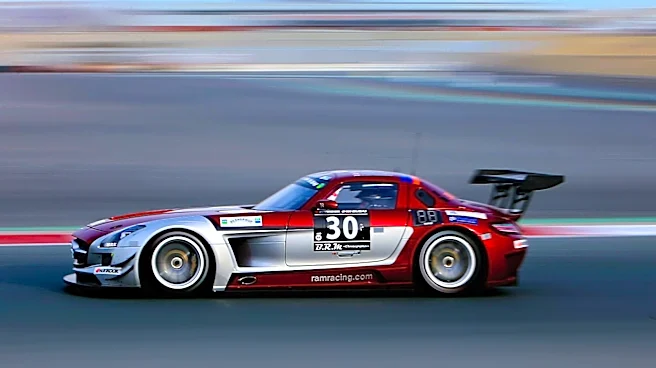



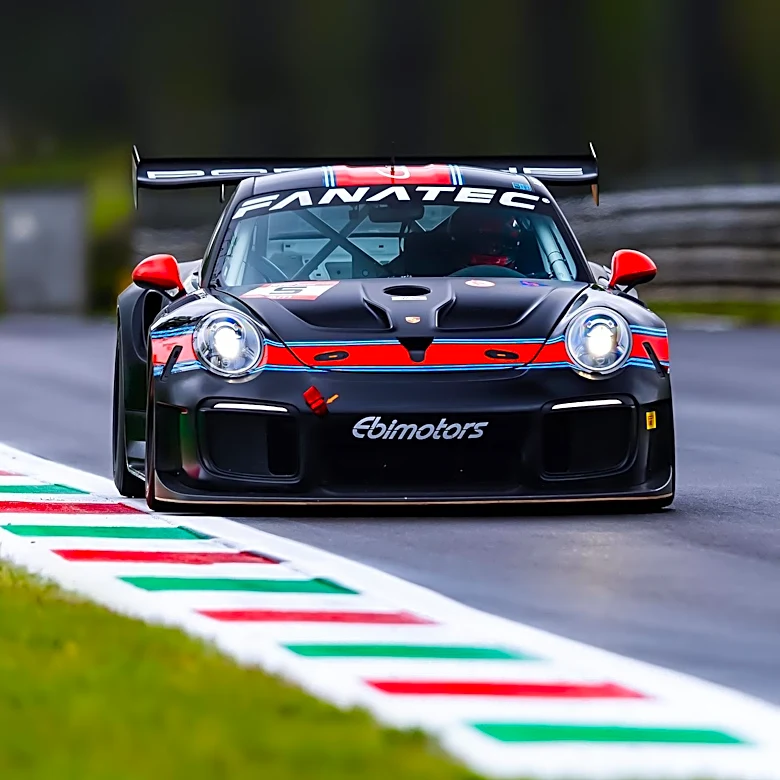


The FIA GT3 European Championship was a significant sports car racing series that operated from 2006 to 2012. Organized by the Stéphane Ratel Organisation (SRO) and regulated by the Fédération Internationale de l'Automobile (FIA), this championship carved out a unique niche in the world of motorsports. It was conceived as a derivative of the more professional FIA GT1 World Championship, but with a distinct mission: to offer a competitive environment
for amateur racers driving cars that were closer to their production counterparts. This focus on accessibility and production-based vehicles, combined with sophisticated performance balancing, made it a compelling series for both participants and fans.
Origins and Core Philosophy
Launched in 2006, the FIA GT3 European Championship aimed to achieve two primary goals: to broaden manufacturer involvement in motorsports and to support amateur drivers across Europe. Unlike many top-tier racing series that cater exclusively to professional drivers and highly specialized machinery, GT3 was designed to be more inclusive. The series emphasized cars that, while modified for racing, retained a strong connection to their road-going versions. This approach not only made the racing more relatable for enthusiasts but also provided a more cost-effective entry point for teams and drivers.
A key aspect of the championship's philosophy was the use of extensive performance balancing and handicap weights. These measures were implemented to ensure that cars from different manufacturers, despite their inherent design differences, could compete on a more equal footing. This system was crucial for fostering close racing and preventing any single manufacturer from dominating the series, thereby enhancing the competitive spirit and appeal of the championship.
The Role of the "Gentleman Driver"
The FIA GT3 European Championship specifically targeted what are often referred to as "gentleman drivers" – amateur racers who participate for passion rather than as a full-time profession. This distinction was central to the series' identity. To maintain the amateur status of its participants, the FIA established strict rules regarding driver eligibility. These regulations were designed to exclude highly experienced professional drivers who might otherwise overshadow the amateur talent.
For instance, drivers under the age of 55 were generally not permitted if they had held an FIA Super Licence or Grade A License, or if they had achieved top finishes in prestigious open-wheel series like Formula 3000, A1 Grand Prix, GP2, Indy Racing League, or Champ Car World Series. Winning the 24 Hours of Le Mans outright or being a hired works driver for a major automobile manufacturer also disqualified a driver. These stringent criteria ensured that the championship remained true to its amateur-focused mission, though an exception allowed drivers over 45 with prior professional experience to petition the SRO and FIA for entry, recognizing that some experienced drivers might transition to amateur status later in their careers.
Expanding Manufacturer Involvement and Future Plans
The championship's structure also aimed to combine multiple one-make series into a larger event. This created a "race within a race" scenario, where teams not only competed for overall victory but also vied for supremacy within their specific manufacturer's cup. This innovative format encouraged broader manufacturer participation by offering a platform where their specific models could shine, while still being part of a larger, diverse grid.
Looking ahead, the FIA and SRO had plans to not only expand the overall European championship but also to support the development of additional one-make series across Europe. This strategy mirrored successful models like the Ferrari Challenge and Porsche Supercup, aiming to create a robust ecosystem for sports car racing that nurtured talent and provided opportunities at various levels. The FIA GT3 European Championship, therefore, served as a vital stepping stone and a vibrant arena for sports car racing, emphasizing fair competition and the spirit of amateur motorsport.