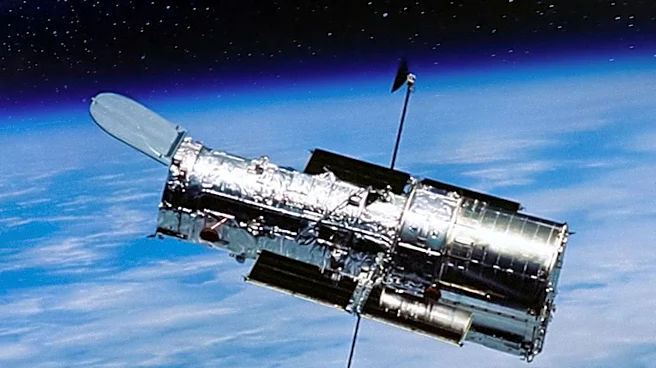








The James Webb Space Telescope (JWST) represents a monumental leap forward in space-based astronomy, specifically designed to conduct infrared observations. As the largest telescope ever launched into space, it boasts high-resolution and high-sensitivity instruments that enable it to peer at objects too ancient, distant, or faint for its predecessor, the Hubble Space Telescope. This advanced capability allows for groundbreaking investigations across
various fields of astronomy and cosmology, including the study of the universe's first stars, the formation of early galaxies, and the detailed atmospheric characterization of potentially habitable exoplanets.
Design and Optical Prowess
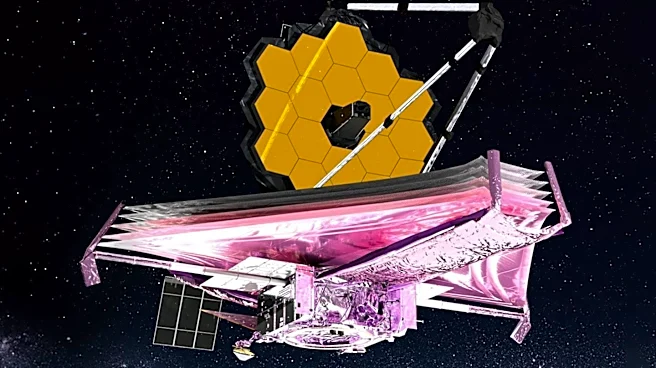
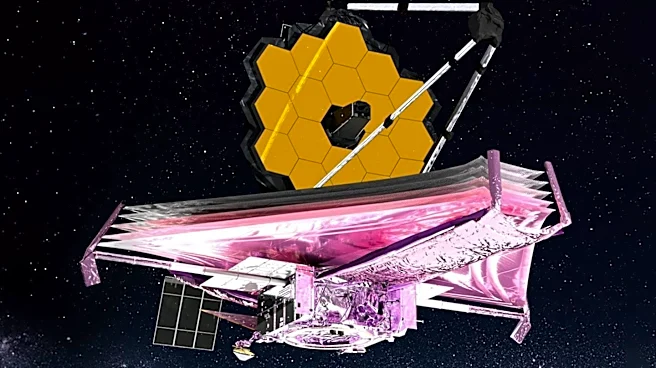
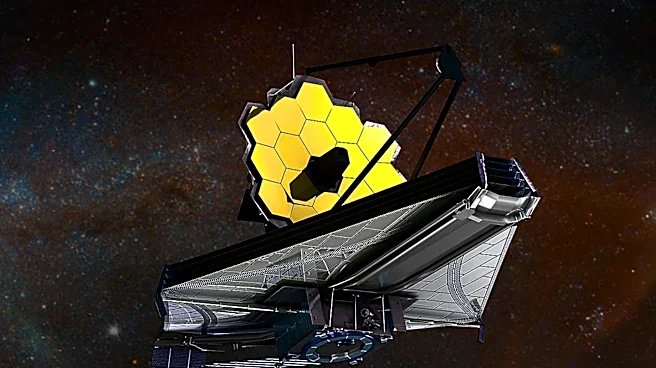
Central to Webb's capabilities is its impressive primary mirror, which measures 6.5 meters (21 feet) in diameter. This mirror is composed of 18 hexagonal segments made of gold-plated beryllium, a design choice necessitated by the size constraints of launch vehicles. If it had been designed as a single, large mirror, it would have been too big to fit. These segments unfolded after the telescope's launch and are precisely positioned using image plane wavefront sensing via phase retrieval, which employs precise actuators. After initial configuration, these segments only require occasional updates every few days to maintain optimal focus, a contrast to terrestrial telescopes that constantly adjust their mirrors due to gravitational and wind loading. The telescope uses 132 small actuation motors to position and adjust its optics, capable of positioning the mirror with an accuracy of 10 nanometers.
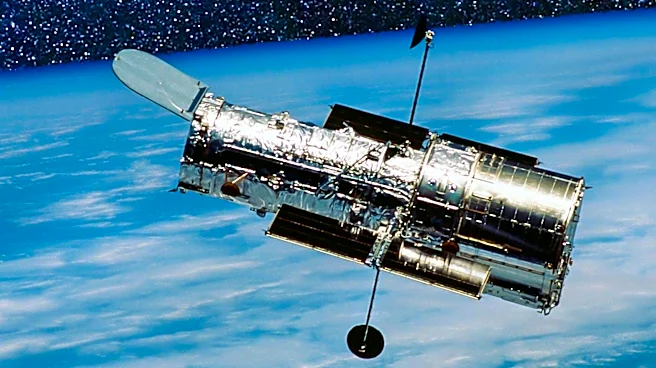
Despite its mirror being 2.7 times larger than Hubble's, Webb produces images of comparable resolution because it observes in the infrared spectrum, which has longer wavelengths than the visible spectrum Hubble observes. The longer the wavelength a telescope is designed to observe, the larger the information-gathering surface, such as mirrors in the infrared spectrum or antenna area in the millimeter and radio ranges, is required to achieve the desired resolution. Webb's optical design is a three-mirror anastigmat, utilizing curved secondary and tertiary mirrors to deliver images free from optical aberrations across a wide field of view. The secondary mirror itself is 0.74 meters (2.4 feet) in diameter, and a fine steering mirror adjusts its position many times per second for image stabilization. Point light sources in Webb's images exhibit six diffraction spikes, plus two fainter ones, a characteristic result of the hexagonal shape of its primary mirror segments.
The Crucial Role of the Sunshield
To make observations in the infrared spectrum, Webb must be kept at an extremely low temperature, below 50 Kelvin (-223.2 °C; -369.7 °F). Without this extreme cold, infrared radiation emitted by the telescope itself would overwhelm its sensitive instruments, effectively blinding them. This critical thermal control is achieved primarily through its massive sunshield, which blocks light and heat from the Sun, Earth, and Moon. The sunshield consists of five layers, each approximately 0.1mm thick, made of Kapton E film coated with aluminum on both sides. The two outermost layers also feature an additional coating of doped silicon on their Sun-facing sides to enhance reflection of solar heat back into space. This design provides an effective sun protection factor of 1,000,000.
The sunshield was designed to be folded twelve times to fit within the Ariane 5 rocket's payload fairing, which measures 4.57 meters (15.0 feet) in diameter and 16.19 meters (53.1 feet) long. Once deployed, the shield expands to dimensions of 14.162 meters by 21.197 meters (46.46 feet by 69.54 feet). The sunshield's intricate deployment was successfully completed on January 4, 2022, ten days after launch, when the telescope was more than 0.8 million kilometers (500,000 miles) from Earth. Accidental tears in the delicate film structure during deployment testing in 2018 had previously caused delays in the telescope's launch schedule, highlighting the complexity and importance of this component.
Orbital Mechanics and Operational Environment
Webb operates in a halo orbit around the Sun–Earth L2 Lagrange point, located approximately 1.5 million kilometers (930,000 miles) beyond Earth's orbit around the Sun. This specific orbit is crucial for maintaining the telescope's cold operating temperature and ensuring continuous power and communication. Its halo orbit around the L2 point allows it to avoid the shadows of both Earth and the Moon, maintaining a constant environment for the sunshield and solar arrays. This stable thermal environment is vital for maintaining the precise alignment of the primary mirror segments. The telescope's position near L2 keeps the Sun, Earth, and Moon on the same side of the spacecraft at all times, allowing the sunshield to effectively block their heat and light. This arrangement keeps the spacecraft's temperature constant and below the 50 Kelvin necessary for faint infrared observations. The telescope can view 40 percent of the sky from any one position and can observe the entire sky over a six-month period.