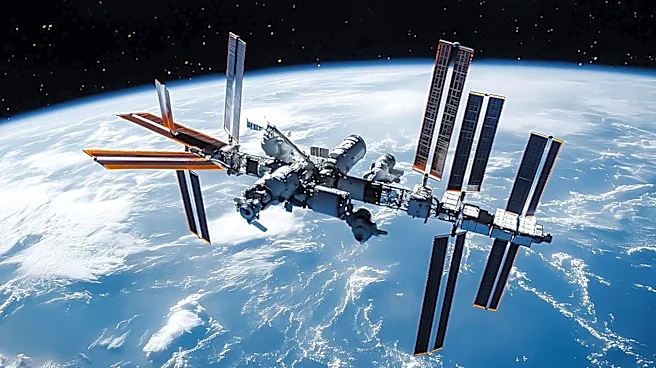

Expedition 1 marked a pivotal moment in space exploration, initiating the continuous human presence on the International Space Station (ISS). This groundbreaking mission saw a three-person crew reside
aboard the orbiting laboratory for 136 days, from November 2, 2000, to March 19, 2001. Their successful tenure laid the foundation for an uninterrupted human occupation of the ISS, a remarkable feat that continues to this day, as of 2026. The mission's duration and the crew's safe return on STS-102 on March 21, 2001, solidified the operational capabilities of the nascent space station and paved the way for future long-duration expeditions.
Launch and Initial Operations
The journey for Expedition 1 began with its launch on October 31, 2000, at 07:52 UTC, aboard a Soyuz TM-31 spacecraft from the Baikonur Cosmodrome in Kazakhstan. The crew, consisting of Commander William Shepherd from NASA and Russian cosmonauts Yuri Gidzenko and Sergei Krikalev, docked with the International Space Station on November 2, 2000, at 09:21 UTC. Upon entering the station, Shepherd reportedly activated a fan and declared, "We are now entering the International Space Station to stay." This simple act symbolized the beginning of a new era in space habitation. The initial tasks for the crew involved activating critical life support systems and unpacking supplies that had been delivered by earlier missions.
Early Challenges and Resupply Efforts
One of the early challenges faced by Expedition 1 involved the resupply efforts. The Russian uncrewed resupply spacecraft Progress M1-4 was crucial for delivering essential supplies to the station. However, during its docking attempt on November 18, 2000, the automatic docking system malfunctioned. This necessitated a manual intervention, with cosmonaut Yuri Gidzenko skillfully controlling the docking using the TORU docking system. This incident highlighted the importance of crew expertise and backup systems in the complex environment of space operations. The successful manual docking ensured the crew received their much-needed provisions, allowing the mission to continue as planned.
Establishing a Permanent Outpost
The primary objective of Expedition 1 was to activate and bring to life the International Space Station as a permanently crewed outpost. This involved a multitude of tasks, from setting up communication systems to ensuring the functionality of various modules. The crew's daily routine included scientific experiments, maintenance, and preparing the station for the arrival of future modules and crews. Their efforts transformed the collection of modules into a habitable and operational space laboratory. The continuous human presence established by Expedition 1 has allowed for decades of scientific research, technological development, and international collaboration in low Earth orbit, fundamentally changing humanity's relationship with space.