



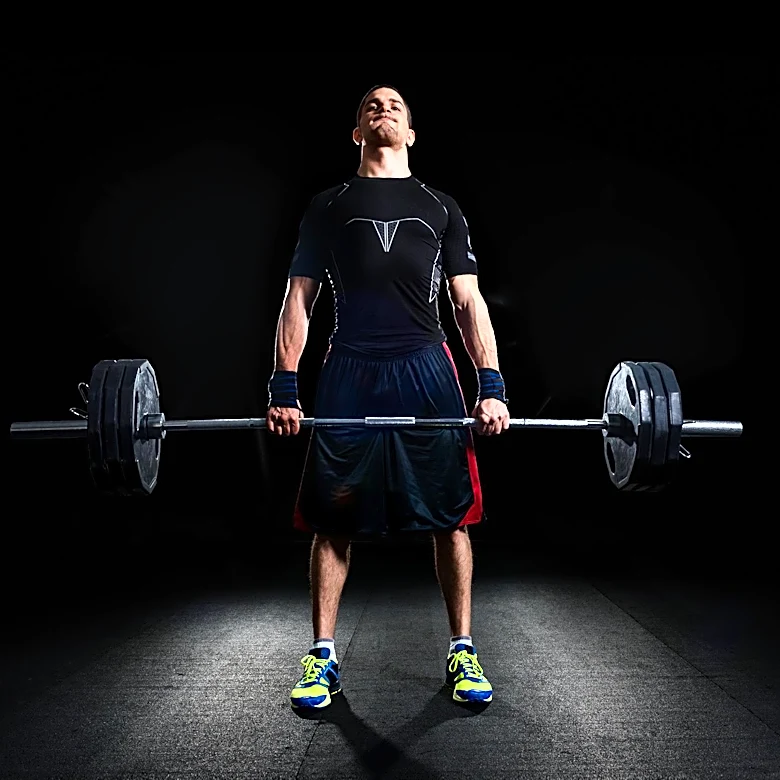


Strength training is a form of exercise specifically designed to increase an individual's muscle force. This type of training typically involves the use of weights or an individual's own body weight to create resistance. The ultimate goal of strength training is to enhance physical strength, which is a measure of how much force an individual can exert on physical objects. Key to achieving muscle growth and increased strength is the principle of progressive
overload, where the body is continually challenged with greater demands over time. This guide will explore the fundamental aspects of strength training, including the muscles targeted and the diverse range of exercises available.
The Science Behind Physical Strength
An individual's physical strength is determined by two primary factors: the cross-sectional area of the muscle fibers that are recruited to generate force, and the intensity of that recruitment. Muscle fiber types also play a significant role; individuals with a higher proportion of type I slow-twitch muscle fibers will generally be weaker but possess greater endurance compared to those with a high proportion of type II fast-twitch fibers. While genetic inheritance sets the potential boundaries for physical strength, training is crucial in realizing this potential. The ability to gain muscle also varies among individuals, influenced by genetics, hormone levels, sex, age, overall health, and adequate nutrition.To accurately determine maximum muscular strength, a one-repetition maximum (1RM) test is often employed. This test measures the heaviest weight an individual can lift for a single repetition. Beyond muscle fiber composition, other considerations for strength include the ability to recruit muscle fibers for a specific activity, joint angles, and the length of each limb. Interestingly, for a given cross-section, shorter limbs are generally capable of lifting more weight.
Targeting Major Muscle Groups: Upper Body
Strength training programs often categorize exercises by the muscle groups they target. For the upper body, several key areas are focused on. The pectorals, or chest muscles, can be worked through exercises such as the bench press, chest fly, dips, Hindu push-ups, machine fly, and standard push-ups. The lats and trapezius, which make up the upper back, benefit from exercises like bent-over rows, chin-ups, front levers, inverted rows, muscle-ups, pullovers, pull-downs, pull-ups, seated rows, shoulder shrugs, supine rows, and face pulls.Shoulder development, specifically targeting the deltoids, involves exercises like the bridge, face pull, front raise, headstand into handstand push-up, Hindu push-up, lateral raise, planche, rear delt raise, shoulder press, and upright row. For the biceps, located at the front of the arms, effective exercises include bicep curls, chin-ups, and reverse grip push-ups. The triceps, on the back of the arms, can be strengthened with close-grip bench presses, close grip push-ups, dips, push-downs, and triceps extensions. Finally, the forearms can be targeted with wrist curls.
Core and Lower Body Strength
Developing a strong core and lower body is equally important in a comprehensive strength training regimen. The abdomen and obliques, which constitute the core, can be trained with exercises such as crunches, leg raises, L-sits, planks, Russian twists, sit-ups, and squats. The lower back, another crucial part of the core, benefits from exercises like the bridge, deadlift, good-morning, hyperextension, and pelvic lift.For the glutes, or buttocks, exercises like the bridge, deadlift, good-morning, hip thrust, hyperextension, leg press, lunge, and squat are effective. The hamstrings, located at the back of the thighs, can be worked with the deadlift, good-morning, leg curl, and hyperextension. The quadriceps, at the front of the thighs, are targeted by exercises such as the leg press, lunge, and squat. Lastly, the calves, or gastrocnemius, can be strengthened through calf raises and donkey calf raises. This wide array of exercises allows for a balanced and effective approach to increasing overall physical strength.