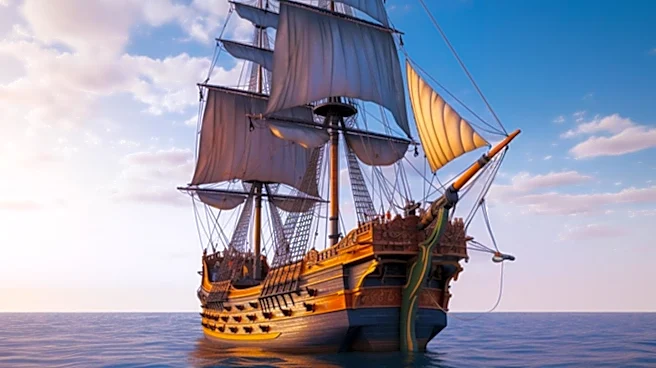







Before its iconic journey carrying the Pilgrims to the New World, the Mayflower was a working merchant ship with a history rooted in European trade. The identity of this particular Mayflower, among many vessels sharing the same popular name in 17th-century England, is established through records detailing its home port, estimated tonnage, and the name of its master, Captain Christopher Jones. Understanding its commercial life and ownership provides
crucial context for the ship that would eventually play such a pivotal role in American history.
Tracing the Mayflower's Early History and Ownership
While the exact date and location of the Mayflower's construction are unknown, later records designate it as "of London." However, port books from 1609–1611 also identify it as "of Harwich" in the county of Essex, which coincidentally was Captain Jones's birthplace around 1570. Records from August 1609 confirm Jones as both master and part-owner of the Mayflower when it was chartered for a voyage from London to Trondheim, Norway, and back. During this return trip, the ship lost an anchor in bad weather and delivered a short cargo of herring, leading to litigation that remained unresolved until at least 1612.
By 1620, Captain Christopher Jones was one of the ship's owners, alongside Christopher Nichols, Robert Child, and Thomas Short. Thomas Weston, a member of the Company of Merchant Adventurers of London, played a significant role in arranging the Pilgrims' voyage by chartering the Mayflower from Child and Short in the summer of 1620. Weston himself would later travel to Plymouth Colony. The absence of records for Jones's Mayflower between 1616 and 1624 is unusual for a ship regularly trading in and out of London, possibly due to lost records or the unique arrangements for the Pilgrims' transfer from Leyden to New England.
Commercial Voyages and Cargoes
Before its historic transatlantic crossing, the Mayflower was actively involved in various European trade routes. Records indicate its presence on the Thames at London twice in 1613, in July and again in October and November. In 1616, it was documented on the Thames carrying a cargo of wine, suggesting recent voyages to wine-producing regions such as France, Spain, Portugal, or the Canary Islands. Captain Jones frequently sailed the Mayflower across the English Channel, transporting English woolens to France and bringing French wine back to London.
Beyond these routes, the Mayflower also carried diverse cargoes to Norway, including hats, hemp, Spanish salt, hops, and vinegar. There is also speculation that Captain Jones may have taken the Mayflower whaling in the North Atlantic off Spitsbergen or even sailed to Mediterranean ports. These commercial activities highlight the ship's regular use in maritime trade, demonstrating its capacity and the experience of its crew in navigating various waters before undertaking the unprecedented journey to the New World with the Pilgrims.