




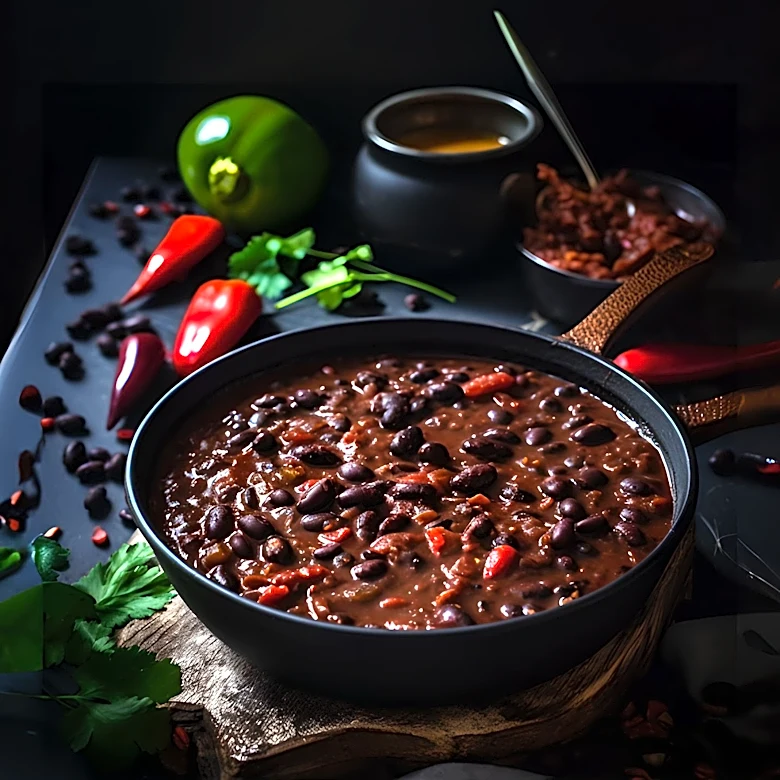



Feijoada, the iconic Brazilian stew of black beans and various pork and beef cuts, is often shrouded in a popular legend regarding its origins. This widespread myth suggests that masters gave their enslaved people the "leftovers" of pigs, such as feet, ears, and tails, which were then cooked with beans and water to create the dish. However, historical research and culinary traditions do not support this romanticized view of slavery's social and cultural
relations in Brazil. Instead, the true history of feijoada is a more complex tapestry woven from Portuguese, African, and indigenous culinary traditions, evolving over centuries to become the national dish it is today.
Debunking the "Leftovers" Myth
According to historian Carlos Augusto Ditadi, writing in Gula magazine in May 1998, the notion that feijoada originated from enslaved people cooking discarded pig parts is a modern folklore. This myth fails to account for the culinary habits of the time. For instance, pig's feet were a recognized part of Portuguese eating habits, as evidenced by Camilo Castelo Branco's 1882 novel, "A Brasileira de Prazins," which mentions "the pig's foot in Portuguese tripe." This indicates that such parts were not necessarily considered "less noble" or mere leftovers, but rather valued ingredients within certain culinary traditions.
Furthermore, historical records from the Imperial Household in 1889 show purchases of various animal parts, including green meat, veal, mutton, pork, sausage, blood sausage, liver, kidneys, tongue, brains, offal, and tripe sauces. This demonstrates that these ingredients were consumed by a broader segment of society, not exclusively by enslaved people, and were even considered delicacies. The idea that these were simply unwanted scraps given to enslaved individuals is therefore historically inaccurate.
Indigenous and European Influences
The black bean, a fundamental component of feijoada, was domesticated by indigenous peoples in the Americas. Its affordability and ease of cultivation made it a staple for European settlers in Brazil. Both the upper classes and the poor consumed black beans, though their preparations differed significantly. The upper classes often enjoyed them with an assortment of meat and vegetables, a practice similar to feijoada, while the poor and enslaved typically ate a simpler mixture of black beans and manioc flour.
The Brazilian version of feijoada is likely an adaptation of Portuguese stews, which originated in the north of Portugal. These Portuguese feijoadas often featured white or red beans with pork or beef, and sometimes included other vegetables like tomatoes, carrots, or kale, along with various sausages. The concept of a meat and vegetable stew can even be traced back to ancient Roman cuisine, spreading with the Roman Empire and influencing dishes like the French cassoulet and Spanish puchero. This long lineage suggests a gradual evolution rather than a singular, sudden creation.
Evolution and National Identity
By the 19th century, feijoada had transformed from what might have been a working-class supper into Brazil's national dish. Its widespread popularity across all social strata, always associated with festivity and celebration, underscores its deep integration into Brazilian culture. The culinary historian Jessica B. Harris has drawn parallels between feijoada and American soul food, noting similarities in the use of mixed meats, slow-cooking methods, and the accompaniment of collard greens, linking these traditions to enslaved African people. While the "leftovers" myth may be inaccurate, the influence of diverse culinary traditions, including those of enslaved Africans, in shaping the inventive cuisine of colonial Brazil is acknowledged. This complex interplay of indigenous ingredients, European culinary traditions, and African adaptations ultimately forged the rich and celebrated dish known as feijoada.