






'Poor Things' is a 2023 film that stands as a testament to a collaborative creative vision, originating from a 1992 novel and brought to life by a distinctive directorial and writing team. This erotic black comedy, a co-production between Ireland, the United Kingdom, and the United States, delves into themes of self-discovery and liberation through its unique narrative. The journey from page to screen involved a careful adaptation process and the assembly
of a talented cast and crew who shaped its retrofuturist Victorian London setting and complex characters.
From Novel to Screenplay
The film 'Poor Things' is directly based on the 1992 novel of the same name by Scottish writer Alasdair Gray. Gray's novel provides the foundational story of Bella Baxter, a young woman in Victorian London whose body is reanimated by an unorthodox scientist. The adaptation of this intricate literary work into a screenplay was undertaken by Tony McNamara. McNamara's writing was crucial in translating the novel's themes and narrative style into a cinematic format, earning praise for its execution.
The screenplay's development was a key step in shaping the film's distinct voice and structure. It allowed for the exploration of the novel's core ideas, such as Bella's journey of self-discovery and sexual liberation, within the visual and narrative constraints of a film. The success of the adaptation is reflected in the critical acclaim the film received, with the screenplay often highlighted as a strong component of its overall impact.
The Vision of Yorgos Lanthimos
At the helm of 'Poor Things' was director Yorgos Lanthimos, known for his distinctive and often surreal cinematic style. Lanthimos' direction was a central element in the film's critical success, with many reviewers specifically commending his vision. His approach to the material helped define the film's aesthetic, which is set in a retrofuturist alternative late-Victorian London, and its unique tone, blending elements of eroticism, black comedy, and science fantasy.
Lanthimos's involvement was instrumental in shaping the film's visual language and its portrayal of the characters' emotional and intellectual journeys. His direction contributed to the film's ability to explore complex themes in a compelling and often provocative manner. The film's critical reception frequently cited his directorial choices as a key factor in its originality and impact.
A Stellar Ensemble Cast
The film features a prominent ensemble cast, with Emma Stone taking on the lead role of Bella Baxter. Stone's performance was particularly lauded by critics, earning her significant awards, including Best Actress at both the Golden Globe Awards and the Academy Awards. Her portrayal of Bella's evolution from an infant's mind in an adult body to a self-aware and liberated woman was central to the film's narrative.
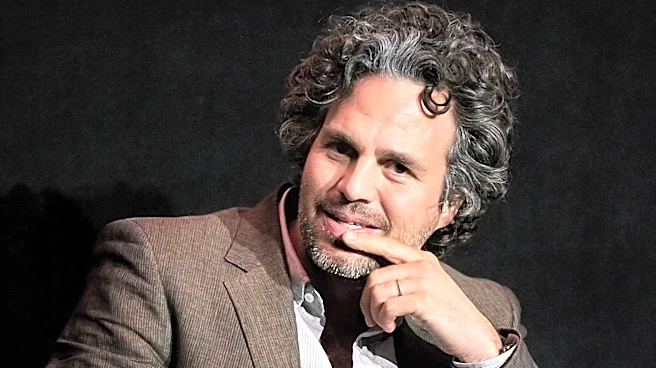
Alongside Stone, the cast includes Mark Ruffalo, Willem Dafoe, Ramy Youssef, Christopher Abbott, and Jerrod Carmichael. Ruffalo and Dafoe also received particular praise for their performances, contributing to the film's strong critical reception. The collective talent of the cast brought depth and nuance to the characters, enhancing the film's exploration of its intricate plot and thematic elements.