



The 24th Infantry Regiment, a unit of the United States Army with a history dating back to 1869, played a significant role in the Korean War. Before its original dissolution in 1951, the regiment was primarily composed of African American soldiers. Despite the official desegregation of the U.S. armed forces in 1948 by Executive Order 9981, the 24th Infantry remained predominantly African American, though its officer corps included both African and
European Americans. This unique composition, coupled with the intense pressures of combat, led to a complex and often challenging experience for the regiment during the conflict.
Early Deployment and the Pusan Perimeter Defense
In late June 1950, shortly after North Korea's invasion of South Korea, the 24th Infantry was deployed to Korea to join the war effort. The regiment was immediately thrust into the thick of the fighting, participating in the critical defense of the Pusan Perimeter. This defensive stand was crucial in preventing the complete collapse of South Korea in the early stages of the war. For its valor and effectiveness in defending the Pusan Perimeter, the 24th Infantry Regiment was awarded the Republic of Korea Presidential Unit Citation, a testament to its significant contributions during this desperate period.
However, the regiment's performance was not without its difficulties. During the Battle of Sangju, the 24th Infantry Regiment was criticized for its performance, with some Army statements describing the mostly black unit as being quick to panic and retreat. Some historians, however, have argued that these statements were biased, downplaying the regiment's successes and overstating its failures. The light casualty count during the Sangju action was partially attributed to effective use of fortifications and North Korean caution, but also to the quick withdrawals by 24th Infantry troops. General Walker, then commander, reportedly viewed the 24th Infantry as an ineffective unit and resolved to use it only as a "trip wire force," requiring reinforcement by another regiment for serious resistance.
Pursuing the Enemy and Chinese Counteroffensives
Following the successful defense of the Pusan Perimeter, the 24th Infantry participated in the breakout and the subsequent pursuit of the Korean People's Army (KPA) into North Korea. The landing at Inchon by U.S. and Republic of Korea (ROK) forces on September 15, 1950, compelled the KPA to withdraw from the Pusan Perimeter. The 24th Infantry was divided into Task Forces Blair and Corley, named after their commanders, and began pursuing the KPA on September 27.
Later in November, the regiment faced overwhelming assaults from Chinese People's Volunteer Army (PVA) troops, which forced the U.S. Eighth Army to withdraw. On November 29, the Chinese 40th Army flanked the 24th Infantry's line north of the Chongchon River in North Korea, leading to the withdrawal of the neighboring 9th Regiment, 2nd Division. The 3rd Battalion of the 24th Infantry found itself at Kunu-ri on November 30, with PVA troops behind it. With air support, the battalion managed to extricate itself, though it suffered one soldier killed, 30 wounded, and 109 missing. Overall, the 24th Infantry lost one-fifth of its officers and one-third of its enlisted men during the withdrawal across the Chongchon. Colonel Corley attributed the disarray of the 3rd Battalion to its commander, Lt. Col. Melvin E. Blair, whom he summarily relieved.
Desegregation, Performance, and Recognition
The challenges faced by the 24th Infantry Regiment, including the court-martial of Lieutenant Leon Gilbert for refusing an order, brought greater attention to issues of segregation and discrimination within the U.S. military. These incidents contributed to the broader discussion about the need for full integration. The 24th Infantry was fully desegregated on October 1, 1951.
By early March 1951, American and ROK troops were ready for a full-scale offensive. On March 6, the 25th Division advanced across the Han River. The 1st Battalion of the 24th performed well, moving over difficult terrain against an entrenched enemy. The 3rd Battalion also initially performed well, executing a river crossing and advancing through rough country against well-dug-in PVA troops. However, the 1st Battalion reportedly collapsed under PVA fire and withdrew in disorder while climbing steep terrain, leading to a significant loss of confidence in the regiment by the Division commander. Many soldiers of the 24th were reported to have run away from the fight, abandoning their weapons and equipment. A derisive poem circulated throughout the U.S. Army, stating: "When them Chinese mortars begins to thud, the Old Deuce-Four begin to bug."
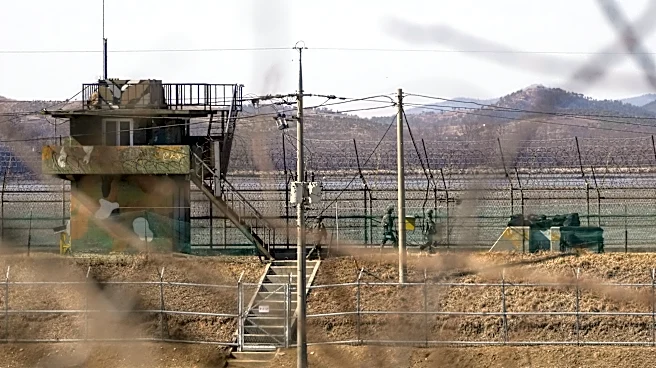
Despite these reported difficulties, the 24th Infantry Regiment fought throughout the entire Korean peninsula, from the initial defense of the Pusan Perimeter to the Chinese counteroffensives and finally to U.N. counteroffensives that stabilized near the current Korean Demilitarized Zone. The regiment had three posthumous Medal of Honor recipients during the Korean War: Cornelius H. Charlton, Ray E. Duke, and William Thompson, highlighting individual acts of extraordinary bravery within the unit.