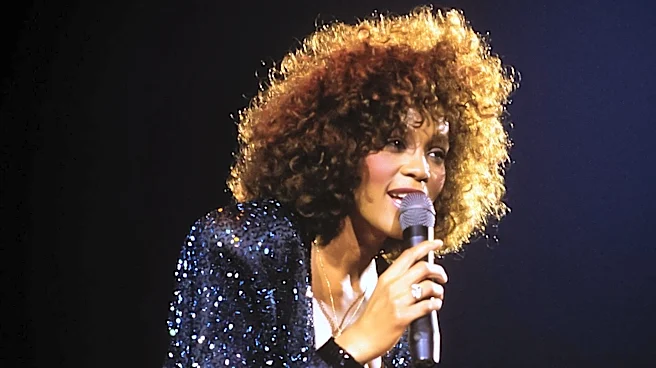




"Didn't We Almost Have It All" stands as a testament to Whitney Houston's vocal prowess and artistry, earning widespread critical acclaim and becoming a significant hit in her career. Released in July 1987 as a single from her second studio album, *Whitney*, the song quickly ascended to number one on the US Billboard Hot 100, where it remained for two weeks. This achievement not only solidified Houston's status as a dominant force in music but also
tied her with legendary acts like Elvis Presley and The Supremes for the most consecutive number one singles at the time. The song's success was deeply intertwined with the powerful and emotional vocal performance delivered by Houston.
Critical Acclaim for Houston's Performance
Music critics widely praised "Didn't We Almost Have It All," specifically highlighting Houston's vocal delivery. About.com, for instance, ranked the song number 7 on their list of "Top 20 Best Whitney Houston Songs." Editor Bill Lamb described it as "a big, emotional production that pulls out all of the stops vocally," underscoring the song's dramatic scope and Houston's ability to meet its demands. Rob Wynn of AllMusic also singled out the song as a highlight in his review of the *Whitney* album, further cementing its reputation as a standout track.Pop Rescue noted the song as an "80s power ballad," emphasizing that Houston's "vocals take center stage" throughout the piece. This observation points to the song's structure and arrangement, which were designed to showcase her extraordinary voice. The critical consensus consistently revolved around the emotional depth and technical brilliance Houston brought to the recording, making it a memorable and impactful performance.
The Orchestral Pop and R&B Blend
The song's genre is described as orchestral pop, R&B, and soul, a combination that provided a rich backdrop for Houston's vocals. Lee Holdridge and Robbie Buchanan were instrumental in arranging the song, contributing to its orchestral pop sound. This lush arrangement, coupled with the R&B and soul influences, created a sophisticated and powerful musical landscape. The production, handled by Michael Masser, was meticulously crafted to support and elevate Houston's voice, allowing her to explore her full vocal range.Houston's vocal range in the song spans from the low note of B-flat 3 to the high note of E-flat 5. This impressive range, combined with the song's slow tempo of 60 beats per minute, allowed for a nuanced and expressive performance. The song's key changes, starting mainly in B-flat major and shifting to G major at the beginning of the chorus before returning, added to its dynamic quality, providing moments for Houston to showcase her control and power. Her own involvement in vocally arranging the song further demonstrates her artistic input and understanding of how to best utilize her voice within the composition.