



U.S. Route 66, often called "The Mother Road" or "The Main Street of America," holds a significant place in American history. Though officially decommissioned as a U.S. Highway, its story did not end with deactivation. Instead, parts of the road were repurposed, abandoned, or, in many cases, preserved, ensuring its legacy continues. The transition from a primary transportation artery to a historic landmark reflects a broader appreciation for its cultural
impact and the memories it created for generations of travelers.
The Transformation of a Deactivated Highway
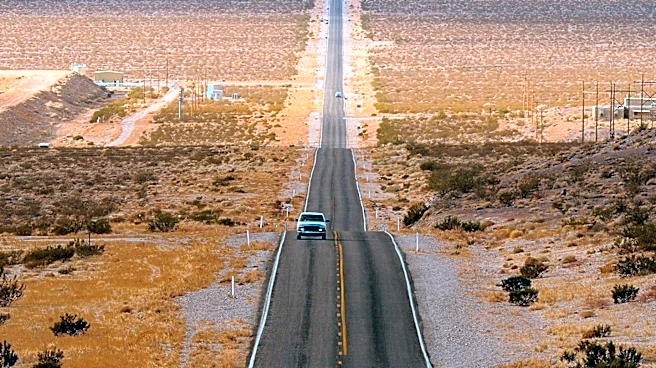
When the highway was deactivated, sections of the road were handled in various ways. Within many towns, the route transformed into a "business loop" for the interstate highway system, maintaining some of its original function for local commerce. Other segments became state roads, local roads, or private access routes. Some portions were completely abandoned, left to the elements as a testament to a bygone era of American travel. Despite these changes, it is still largely possible to drive much of the original route and its alternative alignments from Chicago to Los Angeles with careful planning, highlighting the road's enduring physical presence.Some sections of U.S. Route 66 are remarkably well-preserved, including a stretch between Springfield and Tulsa. These older sections sometimes retain their historic "slab highway" form, measuring only 9 feet wide. These narrow, paved concrete strips, often marked with concrete curbs to define the lane and gravel shoulders for passing, were never repaved to become full-width highways. This preservation offers a unique glimpse into the road's original construction and the driving experience of earlier decades, allowing modern travelers to connect with its past.
State-Level Preservation and Renaming Efforts
Even after deactivation, several states maintained the "66" designation for parts of the highway, albeit as state roads. In Missouri, for example, Routes 366, 266, and 66 are all original sections of the historic highway. Oklahoma's State Highway 66 (SH-66) continues to serve as a "free" alternative route near its turnpikes, demonstrating its continued utility and recognition. Further west, a significant segment of U.S. Route 66 in Arizona runs north of Interstate 40, with much of it designated as State Route 66 (SR 66). This route extends from Seligman to Kingman, passing through towns like Peach Springs.In California, a surface street between San Bernardino and La Verne, known as Foothill Boulevard, retains its number as SR 66, showcasing how urban areas integrated the old route into their modern infrastructure. Additionally, various county roads and city streets in different locations along the former route have kept the "66" number, serving as local reminders of the historic highway. These state and local efforts are crucial in maintaining the identity and accessibility of the Mother Road for both residents and tourists.
Museums and Sculptures: Celebrating Route 66's Cultural Impact
The cultural significance of Route 66 is celebrated in numerous museums and artistic installations across the country. The National Museum of American History in Washington, D.C., features a section on U.S. Route 66 in its "America on the Move" exhibition. This exhibit includes a piece of the original pavement from the route that started in Bridgeport, along with a restored car and truck typical of those driven on the road in the 1930s. Also on display are a "Hamons Court" neon sign from a gas pump and tourist cabins near Hydro, a "CABINS" neon sign that once pointed to Ring's Rest tourist cabins in Muirkirk, and various postcards sent by a traveler to his future wife while journeying along the route.Oklahoma, in particular, is rich with tributes to Route 66. Elk City hosts the National Route 66 & Transportation Museum, which covers all eight states the Mother Road traversed. Clinton, Oklahoma, is home to the Oklahoma Route 66 Museum, designed to showcase the iconic ideas, images, and myths associated with the highway. A memorial museum for Will Rogers, the route's namesake, is located in Claremore, while his birth ranch is preserved in Oologah. In Sapulpa, the Heart of Route 66 Auto Museum features a replica of the world's tallest gas pump, standing 66 feet high. Tulsa boasts multiple sites, including Cyrus Avery Centennial Plaza at the east end of the historic 11th Street Bridge, featuring a 20,000-pound sculpture called "East Meets West." This sculpture depicts the Avery family riding west in a Model T Ford, meeting a horse-drawn carriage traveling east. In 2020, Avery Plaza Southwest opened at the west end of the bridge, featuring a "neon park" with replicas of Tulsa-area Route 66 neon signs, such as the Tulsa Auto Court, Oil Capital Motel, and the famous bucking-bronco sign from the Will Rogers Auto Court. Future plans for this site include a Route 66 Interpretive Center. Tulsa also installed "Route 66 Rising," a 70 by 30-foot sculpture on the road's former eastern approach to the city at East Admiral Place and Mingo Road. On Tulsa's Southwest Boulevard, a granite marker dedicated to Route 66 as the Will Rogers Highway features an image of Will Rogers and information from Michael Wallis, author of "Route 66: The Mother Road." Howard Park, just past W. 25th Street, has three Indiana limestone pillars dedicated to Route 66 through Tulsa, celebrating its role in transportation, Tulsa's industry and Native American heritage, and Art Deco architecture and American culture. The Historic Route 66 Village at 3770 Southwest Blvd. includes a tourist information center modeled after a 1920s-1930s service station and other period artifacts like the Frisco 4500 steam locomotive with train cars. Additionally, Tulsa has installed twenty-nine historical markers along the 26-mile stretch of the highway through the city, offering tourist-oriented stories, historical photographs, and maps of historic sites and other markers. These markers are mostly along the post-1932 alignment of the highway via 11th Street, with some along the 1926 path via Admiral Place.