
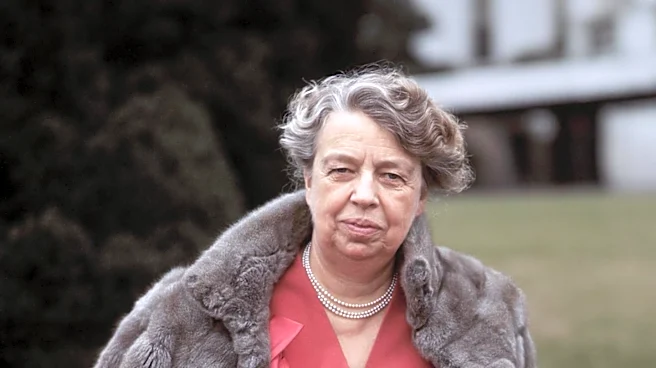

The John F. Kennedy Center for the Performing Arts, a prominent cultural institution in Washington, D.C., has a history that stretches back decades before its opening in 1971. The idea for a national cultural center first emerged in 1933, during the Great Depression, when First Lady Eleanor Roosevelt explored ways to alleviate unemployment among American performers. This early vision laid the groundwork for what would eventually become a significant
federal undertaking, marking the first time the U.S. government directly supported a structure dedicated to the performing arts. The journey from a Depression-era concept to a national monument involved numerous legislative efforts, architectural challenges, and a pivotal renaming in honor of a fallen president.
Early Concepts and Legislative Efforts
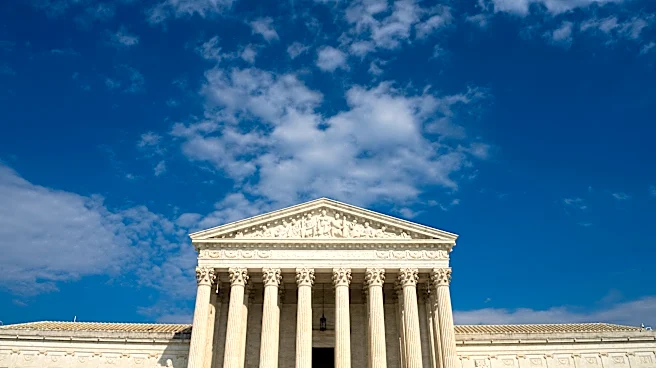
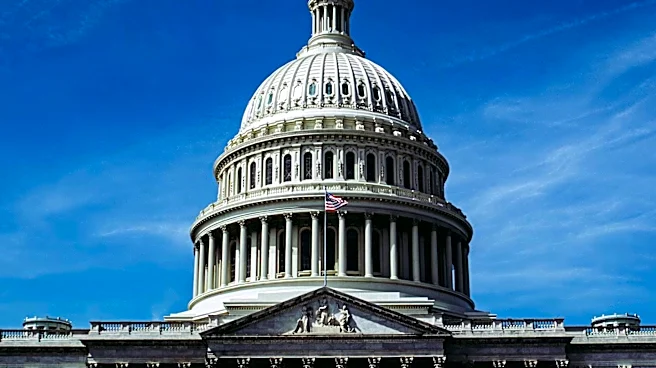
The initial discussions in 1933 centered on establishing cultural institutions as part of the Emergency Relief and Civil Works Administration, aiming to create jobs for artists. This concept gained further traction in 1935 when Congress held hearings to consider plans for a Cabinet-level "Department of Science, Art and Literature." These plans also included the construction of a monumental theater and arts building on Capitol Hill, near the Supreme Court. While these specific proposals did not materialize, they demonstrated a growing recognition of the need for a national cultural hub.
A more concrete step was taken in 1938 with a Congressional resolution calling for the construction of a "public building which shall be known as the National Cultural Center" near Judiciary Square. However, this project, too, never came to fruition. The idea for a national theater resurfaced in 1950, championed by U.S. Representative Arthur George Klein of New York. He introduced a bill to authorize funds for planning and building a cultural center, notably including provisions to prohibit discrimination against both cast and audience. This emphasis on inclusivity was a significant aspect of the renewed effort to establish a national arts venue.
Site Selection, Design, and Escalating Costs
In 1955, the Stanford Research Institute was tasked with selecting a suitable site and providing design suggestions for the proposed center. Over the next three years, from 1955 to 1958, Congress engaged in extensive debates surrounding the project. Despite the controversies, a bill was eventually passed in the summer of 1958. On September 4, President Dwight D. Eisenhower signed the National Cultural Center Act into law, providing crucial momentum for the project. This act was groundbreaking, as it represented the federal government's first direct financial involvement in a performing arts structure.
The legislation stipulated that a portion of the estimated costs, ranging from $10 million to $25 million, had to be raised within five years of the bill's passage. In June 1959, Edward Durell Stone was selected as the architect for the project. Stone presented his preliminary designs to the President's Music Committee in October 1959. At this point, the estimated construction costs had already doubled, reaching $50 million, compared to the initial estimates of $25 million to $30 million. By November 1959, these costs had further escalated to $61 million. Despite the rising expenses, Stone's architectural design was generally well-received, earning praise in editorials from publications like The Washington Post and Washington Star. It quickly secured approval from key bodies, including the United States Commission of Fine Arts, the National Capital Planning Commission, and the National Park Service.
Fundraising Challenges and a Living Memorial
President Eisenhower established the National Cultural Center Board of Trustees on January 29, 1959, to lead fundraising efforts. However, these initial efforts proved largely unsuccessful, with only $13,425 raised in the first three years. The project received a significant boost with the involvement of President John F. Kennedy, who was keen on promoting culture in the nation's capital. He provided leadership and support for the initiative. In 1961, Kennedy enlisted Roger L. Stevens to help develop the National Cultural Center and serve as chairman of the board of trustees. Stevens, in turn, recruited First Lady Jacqueline Kennedy as the center's honorary chairman and former First Lady Mamie Eisenhower as co-chairman, bringing prominent figures into the fundraising fold.
Jarold A. Kieffer became the first executive director of the National Cultural Center in January 1961, overseeing various fundraising activities and assisting with the architectural plan. Tragically, at the time of President Kennedy's assassination in November 1963, the National Cultural Center had only managed to raise $13 million. Following his death, the board re-envisioned the project as a "living memorial" to him. In 1964, Congress officially renamed the institution the John F. Kennedy Center for the Performing Arts, solidifying its dedication to the late president. President Lyndon B. Johnson marked this new chapter by digging the ceremonial first shovel of earth at the groundbreaking for the Kennedy Center on December 2, 1964. Despite this milestone, debates continued for another year regarding the Foggy Bottom site, with some advocating for an alternative location on Pennsylvania Avenue. Nevertheless, excavation of the chosen site commenced on December 11, 1965, and the area was cleared by January 1967, paving the way for the construction of this enduring national cultural center.
Operational Funding and Capital Improvements
After its opening, the Kennedy Center's operational and maintenance funding became a subject of congressional appropriations. On June 16, 1971, Congress authorized appropriations for one year to the board of trustees for these expenses. In subsequent years, these appropriations were directed to the National Park Service to cover operations, maintenance, security, safety, and other functions not directly related to the performing arts activities. A cooperative agreement was signed between the National Park Service and the Kennedy Center, outlining that each party would pay a portion of the operating and maintenance costs, based on the proportion of time the building was used for performing arts functions. However, this agreement did not clearly define responsibility for long-term capital improvement projects, and Congress provided only periodic funding for one-time projects.
Recognizing the need for significant upgrades, Congress recommended in fiscal years 1991 and 1992 that $27.7 million be allocated for capital improvement projects. This included $12 million for structural repairs to the garage and $15.7 million for structural and mechanical repairs, as well as projects to improve handicapped access. In 1994, the Kennedy Center was given full responsibility for capital improvement projects and facility management. From 1995 to 2005, over $200 million in federal funds were allocated for long-term capital projects, repairs, and to ensure the center complied with modern fire safety and accessibility codes. These improvements encompassed renovations to the Concert Hall, Opera House, plaza-level public spaces, and the installation of a new fire alarm system. While these renovation projects were crucial, some were completed 13 to 50 percent over budget due to modifications made during the process, leading to overtime and other penalties. Renovations to the Eisenhower Theater were completed in 2008, further enhancing the center's facilities.