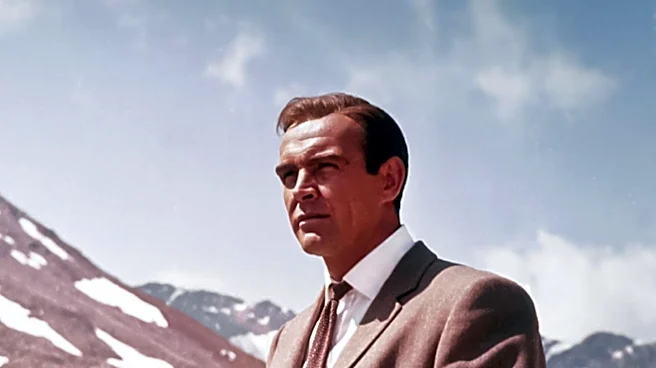









Released in 1999, *The World Is Not Enough* marked the nineteenth installment in the long-running James Bond film series produced by Eon Productions. Directed by Michael Apted, the film aimed to continue the franchise's tradition of espionage, action, and global intrigue. However, upon its release, the movie garnered a mixed to negative critical reception, a sentiment that has largely persisted in retrospective analyses. This initial critical response
and its subsequent placement in rankings of Bond films offer insight into its standing within the iconic series.
Initial Critical Response and Box Office Performance
When *The World Is Not Enough* first premiered, it faced a somewhat lukewarm reception from critics. While specific detailed critical reception and box office figures are not extensively provided, the general consensus indicated a less enthusiastic response compared to some of its predecessors. The film's narrative, which centers on James Bond protecting Elektra King after her billionaire father, Sir Robert King, is murdered by the terrorist Renard, involved a plot to manipulate petroleum prices through a nuclear meltdown in Istanbul. Despite the high stakes and typical Bond elements, the film struggled to achieve widespread critical acclaim.
Retrospective Rankings and Enduring Perceptions
Over time, the critical view of *The World Is Not Enough* has solidified, often placing it in the lower tiers of the James Bond canon. By 2007, several prominent media outlets had ranked the film among the weaker entries in the series. For instance, MSN, a major online service, listed *The World Is Not Enough* as the third-worst Bond film. This ranking placed it above only *A View to a Kill* and *Licence to Kill*, suggesting a significant critical consensus regarding its quality. Similarly, IGN, a popular entertainment website, also included it in their list of the worst Bond films, positioning it as the fifth-worst in the franchise.
The Plot's Intricacies and Character Dynamics
The film's plot begins with Bond retrieving money for Sir Robert King, which turns out to be booby-trapped, leading to King's death. Bond's pursuit of the assassin leads him to Renard, a former KGB agent turned anarchist terrorist, who is immune to pain due to a bullet lodged in his brain. Bond is then tasked with protecting Elektra King, who had previously been abducted by Renard. The narrative unfolds with Bond uncovering Elektra's complicity with Renard, her desire for revenge against her father, and a scheme to detonate a nuclear submarine in Istanbul to increase the value of her oil pipeline. These complex character motivations and plot twists, while central to the film, did not ultimately elevate its critical standing.
Legacy Within the Bond Franchise
The enduring perception of *The World Is Not Enough* as one of the less successful Bond films highlights the high standards and expectations placed upon the franchise. While it contributed to the ongoing narrative of James Bond, its mixed critical reception and consistent placement in "worst of" lists indicate that it did not resonate as strongly with critics as other entries. This retrospective view underscores how individual films are judged not only on their own merits but also in comparison to the rich and varied history of the James Bond series.