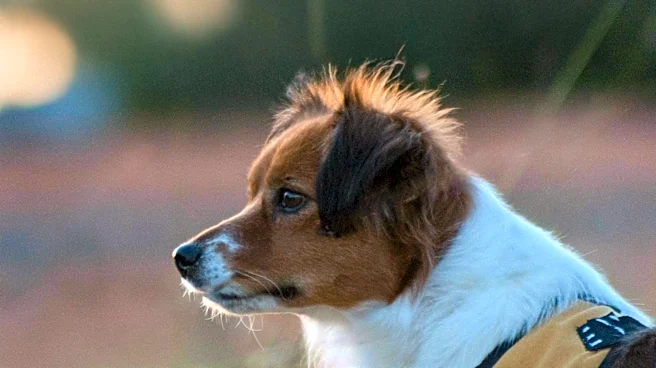








Dog harnesses are essential equipment for many pet owners, offering a safer and often more comfortable alternative to collars for guiding, holding, and even lifting dogs. The design of a harness, which consists of straps surrounding the dog's torso, effectively reduces tension on the neck and allows for free breathing, especially when a dog pulls. However, the world of dog harnesses is not monolithic; a variety of types exist, each with unique construction,
benefits, and ideal applications, catering to everything from daily walks to specialized working tasks.
The Versatility of Chest and Y-Harnesses
The chest harness is a widely recognized and easy-to-use option. It fastens to the dog's body with a chest strap, positioned horizontally at the sternum between the shoulder joints, and a girth strap. These harnesses are available in both saddle and non-saddle versions and are typically made from materials like leather, nylon, or lined with soft polar or neoprene. Their design makes them simple to put on and take off. For everyday, urban use, the chest harness is highly beneficial, particularly for dogs prone to tracheal collapse, as it keeps the neck area free from pressure when the dog pulls on the leash.
In contrast, the Y-harness offers a different approach to comfort and freedom of movement. Its straps are located between the neck and shoulder joints, surrounding the dog's neck to create a distinct Y-shape when viewed from the front. This design is lauded for providing the highest freedom of movement for the dog. While generally more complicated to put on and take off compared to chest harnesses, Y-harnesses are available in types for everyday use and specialized versions for racing or running, such as sledding, and are designed not to encourage pulling.
Specialized Harnesses for Work and Support
For dogs engaged in specific activities, specialized harnesses are crucial. Sled dog harnesses are a prime example, designed for running, cycling, sledding, skijoring, or pulling weight. This category includes several common types: X-back, H-back, half-harness, and spreader bar harnesses. The X-back style is a popular choice for recreational and sprint/mid-distance mushers due to its lightweight, durable construction, and ease of customization and removal. Some long-distance mushers, however, opt for half-harnesses, believing they lead to fewer athletic injuries. For heavy weight pulling, harnesses with thicker lining and wider chest straps are preferred, featuring more padding and extending further behind the dog to distribute the load safely and efficiently.
Rehabilitation and lifting harnesses are another vital category, designed to assist dogs with mobility challenges. These harnesses feature at least one handle and wrap around a dog's body to help a person lift weight off their hips, spine, or legs. They come in various forms, including front, rear, front and rear combo, mid-section support, amputee, and full-body harnesses, each tailored to specific conditions like hip dysplasia, broken bones, or arthritis. Similarly, tactical dog harnesses provide an extra layer of protection and utility, often including a handle for difficult terrain and attachments for devices like GPS trackers. Assistance dog harnesses, worn for identification, can be cape harnesses for ergonomics or pulling harnesses with rigid handles for mobility support, all designed to facilitate the dog's work while ensuring comfort.