






The 1931 American pre-Code horror film *Frankenstein*, directed by James Whale and produced by Carl Laemmle Jr., stands as a landmark in cinematic history. This iconic movie was not a direct adaptation of Mary Shelley's 1818 novel *Frankenstein; or, The Modern Prometheus*, but rather drew its inspiration from a 1927 play titled *Frankenstein: An Adventure in the Macabre* by Peggy Webling. This theatrical adaptation, in turn, was based on Shelley's original
literary work, creating a layered lineage for the film's narrative and characters.
From Novel to Stage to Screen
The journey of *Frankenstein* from a classic novel to a groundbreaking film involved several creative interpretations. Mary Shelley's novel provided the foundational story of an obsessed scientist and his creation, but the 1927 play by Peggy Webling served as the immediate blueprint for the movie. This stage adaptation likely introduced or emphasized certain elements that would become central to the film's enduring legacy. The film stars Colin Clive as Henry Frankenstein, the driven scientist, and Boris Karloff as the Monster, a role that would define his career and become synonymous with the creature itself.
Universal Pictures, the studio behind the film, took a significant risk with this horror production. However, upon its release, *Frankenstein* proved to be a substantial commercial success. It was widely praised by both critics and audiences, quickly establishing itself as a major cultural phenomenon. This positive reception paved the way for a series of sequels and spin-offs, solidifying its place within the burgeoning horror genre and within Universal's own filmography.
Iconic Imagery and Lasting Impact
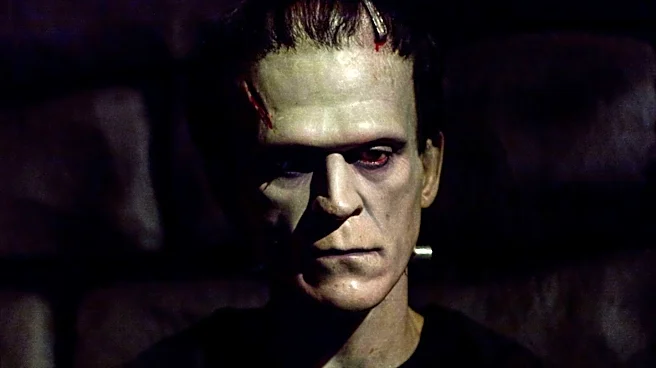
Beyond its box office success, the 1931 *Frankenstein* had a profound and lasting impact on popular culture. The film is credited with establishing iconic imagery that persists to this day. The portrayal of a maniacal "mad" scientist, often accompanied by a hunchbacked assistant, became a widely recognized stereotype. Furthermore, the film's specific depiction of Frankenstein's Monster, brought to life by Boris Karloff's performance and Jack Pierce's makeup, became the definitive visual representation of the creature in the public imagination.
This visual and thematic influence extended far beyond the immediate sequels. The film's success inaugurated a mythology and a style that would shape subsequent horror films. The stereotypes of the mad scientist and his assistant, for instance, originated with this picture. The image of the creature from this cinematic version entered the collective consciousness, with all later versions of the monster drawing from this initial portrayal. The film's enduring legacy is evident in its continued relevance and the way its imagery and themes have been reinterpreted and referenced across various media for decades.
Censorship and Controversies
Released in the pre-Code era of Hollywood, *Frankenstein* contained several scenes that would have been deemed unacceptable after the implementation of the Hays Code in 1934. Despite this, the film faced censorship in various U.S. states and was even partially or entirely banned in several European countries. One particularly controversial scene involved the Monster inadvertently drowning a young girl, Maria, by throwing her into a lake after they ran out of flowers to toss. This part of the scene was removed by censors in Massachusetts, Pennsylvania, and New York after its initial 1931 release.
Another point of contention for these states was a line delivered by the exhilarated Henry Frankenstein. Upon seeing his creation come to life, Henry exclaims, "Now I know what it feels like to BE God!" This line was considered blasphemous by some censors. Kansas, for example, initially demanded 32 cuts, which would have halved the film's length, though a compromise was eventually reached. Many of these censored scenes were lost over time due to cuts made to the original camera negatives for re-releases during the Hays Code era. However, the scene with the girl being thrown into the lake was rediscovered in the early 1980s and has since been restored to modern versions of the film, highlighting the ongoing historical and cultural significance of these once-controversial moments.