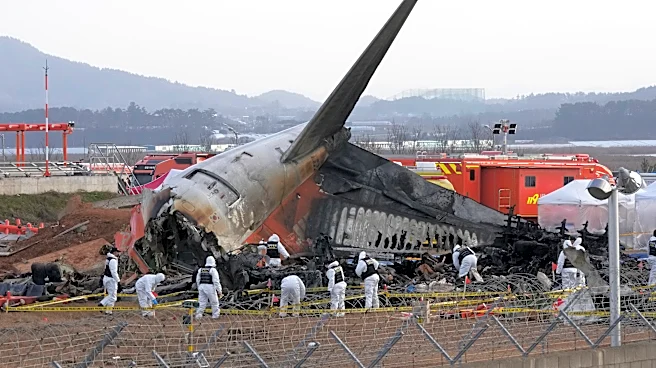






The crash of Comair Flight 5191 on August 27, 2006, prompted an extensive investigation by the National Transportation Safety Board (NTSB) to determine the probable cause of the accident. This inquiry delved into various aspects, from pilot actions and air traffic control procedures to airport infrastructure and airline policies. The NTSB's findings highlighted a confluence of factors, primarily focusing on pilot error, but also touching upon systemic
issues within air traffic control.
Pilot Error: The Primary Probable Cause
During a public meeting on July 26, 2007, the NTSB formally announced the probable cause of the accident. They concluded that the crash was primarily due to "the flight crew members' failure to use available cues and aids to identify the airplane's location on the airport surface during taxi and their failure to cross-check and verify that the airplane was on the correct runway before takeoff." Investigators determined that Captain Jeffrey Clay and First Officer James Polehinke ignored multiple clues indicating they were on the wrong runway and failed to confirm their position before attempting takeoff. This included the pilots' non-pertinent conversations during taxi, which the NTSB cited as a contributing factor that led to a loss of positional awareness.
Furthermore, the NTSB noted that the pilots violated sterile flight deck rules, which prohibit non-essential conversations during critical phases of flight, such as taxiing and takeoff. The cockpit voice recorder (CVR) transcript revealed a conversation between the pilots that was not related to flight operations during the taxi phase. This lapse in adherence to established protocols was seen as a significant element in the chain of events that led to the accident. The NTSB's report emphasized that despite their experience, the pilots failed to utilize the basic geographical characteristics of the airport and standard signage and markings available to them.
Air Traffic Control and Airport Infrastructure Concerns
Beyond pilot actions, the investigation also brought to light issues concerning air traffic control staffing and airport conditions. The Federal Aviation Administration (FAA) discovered that tower-staffing levels at Blue Grass Airport violated an internal policy. This policy, outlined in August 2005 verbal guidance, required two controllers on duty in facilities combining radar approach control and tower functions, with one monitoring air traffic on radar and the other handling other tower duties, including communications with taxiing aircraft. At the time of the accident, only a single controller was performing both tower and radar responsibilities.
While the FAA initially stated that a second controller would not have prevented the accident, the NTSB identified the FAA's "failure to require that all runway crossings be authorized only by specific air traffic control clearances" as a contributing factor. Following the accident, the FAA announced that Blue Grass Airport and other understaffed airports would implement two controllers on duty for overnight shifts or shift radar responsibilities to Indianapolis Center when only one controller was available. The NTSB also issued recommendations to address air traffic controller fatigue and to prevent controllers from performing nonessential administrative tasks while aircraft were taxiing under their control.
Recommendations and Aftermath
The NTSB's investigation led to several safety recommendations. In April 2007, the FAA, acting on an NTSB recommendation, reiterated advice to pilots to positively confirm their position before crossing the hold-short line onto the takeoff runway and again when initiating takeoff. In May, the FAA advised that pilot training should include specific guidance on runway-lighting requirements for night takeoffs. Comair also discovered that its pilots had been using an airport map that did not accurately reflect recent changes to the airport layout, though the NTSB determined this did not contribute to the accident. The comprehensive investigation aimed to prevent similar tragedies by addressing both human factors and systemic deficiencies.