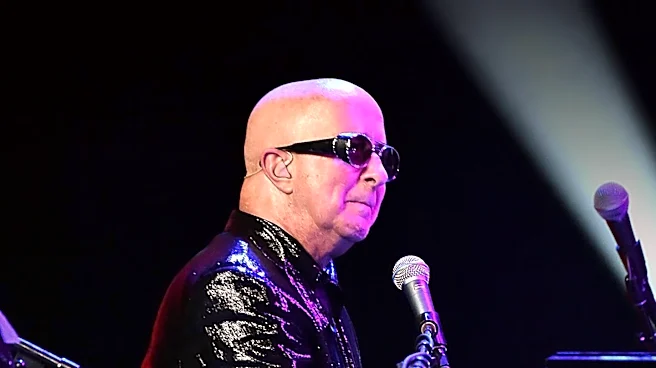









"Cold Spring Harbor" stands as Billy Joel's inaugural studio album, released on November 1, 1971, by Family Productions. While it marked the official start of his solo recording career, the album initially sold poorly and did not gain significant attention until after the success of his 1973 album, "Piano Man," and subsequent releases. This trajectory from relative obscurity to later recognition highlights the album's unique place in Joel's discography,
showcasing his early musical direction in pop rock and soft rock genres, despite the technical challenges that marred its initial presentation.
Recording and Musical Style
The album was recorded in July 1971 across two distinct locations: Record Plant Studios in Los Angeles, California, and Ultrasonic Recording in Hempstead, New York. This bicoastal recording process contributed to the album's production, capturing Joel's early songwriting and performance style. The genres explored on "Cold Spring Harbor" are primarily pop rock and soft rock, laying the groundwork for the melodic and narrative-driven music that would become Billy Joel's signature sound.
At the time of its original release, the album had a total length of 32 minutes and 54 seconds. This duration was later adjusted in the 1983 reissue to 30 minutes and 26 seconds, reflecting edits and changes made during the remixing process. The album features the single "She's Got a Way," which was released in November 1971, coinciding with the album's debut. This track, like others on the album, offered an early glimpse into Joel's talent for crafting heartfelt ballads and engaging pop melodies.
The Impact of a Mastering Flaw
A significant factor affecting the initial reception of "Cold Spring Harbor" was a mastering error. The original LP release played at a faster speed than it was recorded, causing Billy Joel's voice to sound unnaturally high. This technical flaw was a major point of contention for Joel, who expressed his frustration with the altered sound. This error likely contributed to the album's poor initial sales, as the distorted vocals did not accurately represent Joel's artistic intent.
Despite this setback, the album eventually found its audience. Its recognition grew retrospectively, largely due to the immense popularity of Joel's later works. Fans and critics, looking back at his career, began to appreciate "Cold Spring Harbor" as an important foundational piece, offering insights into the nascent stages of a legendary musician's journey. The album's eventual reissue in 1983, which corrected the speed error, allowed listeners to hear the music closer to its intended form, further aiding its re-evaluation.
The 1983 Reissue and Its Alterations
In 1983, producer Artie Ripp oversaw a remixed, edited, and speed-corrected version of "Cold Spring Harbor." This revised edition was released by Columbia Records, aiming to rectify the original mastering mistake. However, the reissue was not merely a correction; it also involved significant changes to the album's content. Studio musicians were brought in to add new rhythmic sections to tracks like "Everybody Loves You Now" and "Turn Around."
Furthermore, some songs underwent substantial editing. "You Can Make Me Free" was shortened by nearly three minutes, with much of its ending and transition removed. The track "Tomorrow Is Today" also saw the removal of its bass, drums, and original orchestration. While the reissue addressed the critical speed error, it presented a version of the album that differed in arrangement and length from Joel's initial vision, offering a complex legacy for his debut work.