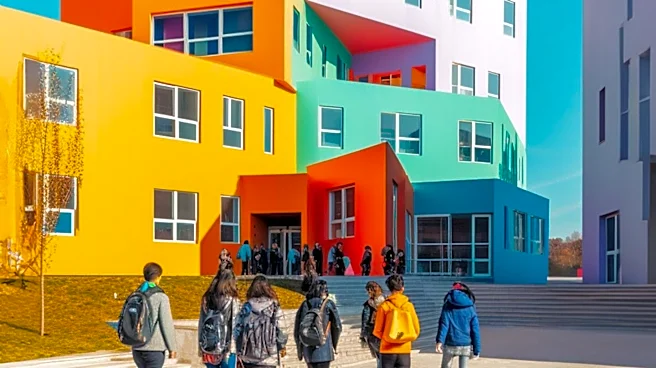









Place-based education is an innovative approach that seeks to connect students with their local environment and community. This educational philosophy emphasizes learning that is deeply rooted in the unique history, culture, and ecology of a student's immediate surroundings. By focusing on local issues and resources, place-based education aims to foster a sense of community and environmental stewardship among students.
Origins and Development
The concept of place-based education
was coined in the early 1990s by Laurie Lane-Zucker of The Orion Society and Dr. John Elder of Middlebury College. The approach was initially developed by The Orion Society, a nonprofit organization based in Massachusetts, with funding from the Geraldine R. Dodge Foundation. Although the principles of place-based education have been utilized by educators for some time, it was this formal development that brought the approach into the educational spotlight.
Place-based education is sometimes referred to as pedagogy of place, experiential education, or community-based education. It draws from a variety of educational practices, including experiential learning, contextual learning, and problem-based learning. This multidisciplinary approach aligns with several popular pedagogies, such as thematic, hands-on, and project-based learning, making it a versatile and adaptable educational model.
Core Principles
At its core, place-based education seeks to employ students and school staff in solving community problems. Unlike conventional education, which often relies on textbooks and classroom-based learning, place-based education uses the local community as a primary resource for learning. This approach encourages students to develop a deep understanding of their local environment, culture, and history before expanding their focus to national or global issues.
The philosophy behind place-based education is that students often lose their "sense of place" when they focus too quickly on broader issues. By grounding education in the local context, students can develop a stronger connection to their community and a better understanding of how local events and processes relate to larger regional, national, and global forces.
Impact on Education
Place-based education challenges traditional educational models by asking students to consider questions like "Where am I?" and "What is the nature of this place?" This approach encourages students to engage with their surroundings creatively and critically, fostering a sense of belonging and responsibility toward their community.
By integrating local history, culture, and ecology into the curriculum, place-based education helps students develop a more comprehensive understanding of their environment. This, in turn, can lead to a greater appreciation for the interconnectedness of local and global issues, promoting a more sustainable and community-oriented mindset.
In summary, place-based education offers a unique and effective way to engage students with their local environment and community. By focusing on local issues and resources, this educational approach fosters a sense of community and environmental stewardship, preparing students to become active and responsible members of society.