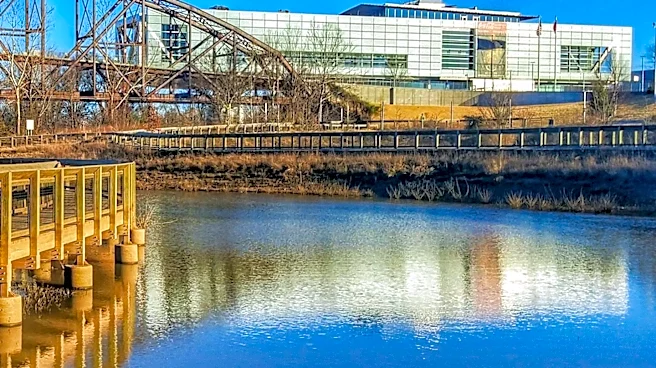






The William J. Clinton Presidential Library and Museum, commonly known as the Clinton Presidential Center, stands as a significant institution in Little Rock, Arkansas. Dedicated on November 18, 2004, this complex serves multiple purposes, encompassing the preservation of presidential history, the promotion of public service, and the fostering of community development. It represents a substantial investment, both public and private, aimed at creating
a lasting legacy for the 42nd President of the United States, Bill Clinton, who served from 1993 to 2001.
A Multifaceted Complex
The Clinton Presidential Center is more than just a library; it is a comprehensive complex designed to house various entities. At its core is the Clinton Presidential Library and Museum, which serves as the official repository for the records and artifacts of Clinton's presidency. This makes it the thirteenth presidential library completed in the United States and the eleventh to be operated by the National Archives and Records Administration. Furthermore, it is notable as the third presidential library to fully comply with the Presidential Records Act of 1978, ensuring public access and preservation of historical documents.Beyond the historical archives, the center also hosts the offices of the Clinton Foundation, an organization dedicated to global initiatives. This integration allows for ongoing work in areas such as public health, economic development, and climate change, extending the impact of the former president's post-presidency endeavors. The presence of the Clinton Foundation within the center underscores its role as a living institution, actively engaged in contemporary issues.
Fostering Future Leaders: The Clinton School of Public Service
An integral part of the Clinton Presidential Center is the University of Arkansas Clinton School of Public Service. This institution is dedicated to educating and training future leaders in public service, offering graduate-level programs that emphasize practical experience and community engagement. Its inclusion within the presidential center highlights a commitment to not only reflecting on the past but also shaping the future of public leadership. The school's presence reinforces the center's educational mission, providing a unique academic environment connected to a presidential library.This educational component distinguishes the Clinton Presidential Center, creating a dynamic space where historical study, philanthropic work, and academic pursuits converge. Students at the Clinton School benefit from direct access to the resources of the presidential library and the ongoing activities of the Clinton Foundation, offering a rich, interdisciplinary learning experience focused on real-world challenges and solutions.
The Dedication and Economic Impact
The dedication ceremony on November 18, 2004, was a notable event, featuring appearances by prominent figures including Hillary Clinton and Barbara Bush. This ceremony marked the official opening of a project that cost $165 million in private funding, supplemented by an additional $11.5 million worth of land donated by the City of Little Rock. This significant investment was not just for the buildings themselves but also for the broader revitalization of the surrounding area.Indeed, the center has had a profound economic impact on Little Rock. Following the announcement of its location, the area experienced a surge in new businesses, including hotels, restaurants, housing complexes, offices, and retail stores. The River Market district, a dining and retail hub near the library, was revitalized as a direct result. Overall, the center has spurred an estimated $2 billion in new projects in downtown Little Rock, with over $1 billion invested in new real estate. Since its opening, the library has attracted over 1.64 million visitors, demonstrating its role as a major cultural and economic driver for the region.