


Bristol Motor Speedway, located in Bristol, Tennessee, stands out as a distinctive and popular venue on the NASCAR circuit. Originally known as Bristol International Raceway and Bristol Raceway, this short track is renowned for its unique physical characteristics that contribute to its intense racing action. Constructed in 1960, it hosted its first NASCAR race on July 30, 1961. Despite its relatively short length, Bristol's design, including extraordinarily
steep banking, an all-concrete surface, and stadium-like seating, makes it one of the most challenging and exciting tracks for both drivers and fans. It has also earned a reputation as one of the loudest NASCAR tracks, a testament to the close-quarters racing it facilitates.
Early Design and Initial Challenges
The initial design of Bristol International Speedway, conceived by Larry Carrier and Carl Moore after a visit to Charlotte Motor Speedway in 1960, aimed for a scaled-down version of that track. The construction, which began in 1960 and lasted approximately a year, resulted in an oval exactly half a mile long. The track featured a width of 60 feet on the straightaways and 75 feet in the turns, with a banking of 22 degrees in the curves. The original seating capacity for the first NASCAR race on July 30, 1961, was 18,000, making it one of the larger tracks of its era, as most NASCAR Grand National (now Cup Series) circuits accommodated fewer than 10,000 fans.
However, the track underwent significant renovations in the fall of 1969. The banking in the curves was dramatically increased to 36 degrees, and the track's length was slightly altered to 0.533 miles, its current distance. The straightaways also received banking, set at 16 degrees. These modifications made Bristol's banking the steepest in the Cup Series. While these changes significantly boosted qualifying speeds, increasing from 142.699 km/h in the spring of 1969 to 166.458 km/h in the summer of 1969, they also led to a high number of accidents in the first race on the reconfigured track, with only ten out of thirty-two cars finishing. Over time, drivers and mechanics adapted to the higher speeds, and the accident rate decreased.
The Transition to Concrete and Modern Features
A pivotal change in Bristol Motor Speedway's physical makeup occurred in 1992 when the asphalt surface was removed and replaced with an all-concrete surface, a feature for which the track has since become famous. This concrete construction is a key element that distinguishes Bristol from many other tracks. The track's unique layout also includes two pit roads: one in the area of the start-finish line and another on the backstretch. Until 2002, drivers who qualified poorly were assigned to the backstretch pit road, which was considered a disadvantage. A rule change in 2002 introduced a split regulation: during a yellow flag, both pit roads formed a composite single pit lane, with entry in Turn 2 and exit in Turn 1, requiring a full lap in the pit lane and eliminating the disadvantage of the rear pit. Under green flag conditions, the entry to the rear pit was in Turn 2 and exit in Turn 3, while the front pit entry was in Turn 4 and exit in Turn 1. This new rule, while aiming to level the playing field, initially caused confusion, with some drivers driving through both pit roads under green.
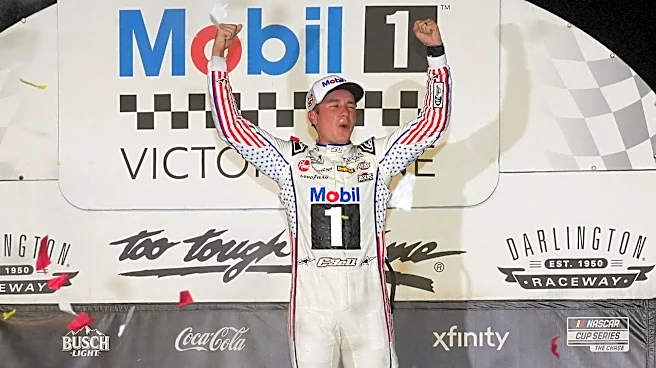
Further enhancements to the track's infrastructure continued into the 21st century. In 2002, a long-awaited pedestrian tunnel to the infield was completed, allowing access during races. The infield also saw the construction of a new building for driver briefings, a new Victory Lane, and new scoreboards in Turns 2 and 3. An ambitious project began on August 26, 2002, involving the demolition and reconstruction of the entire backstretch, including the concrete seating. This expansion increased the seating capacity to over 160,000 and added 52 luxurious suites above the grandstand. In 2007, the track surface was renewed again, and the curves were reconfigured to feature variable banking, adding another layer of complexity to the racing experience. A tower with video screens on all four sides was also placed in the center of the infield, further enhancing the fan experience.
Stadium-Like Atmosphere and Fan Experience
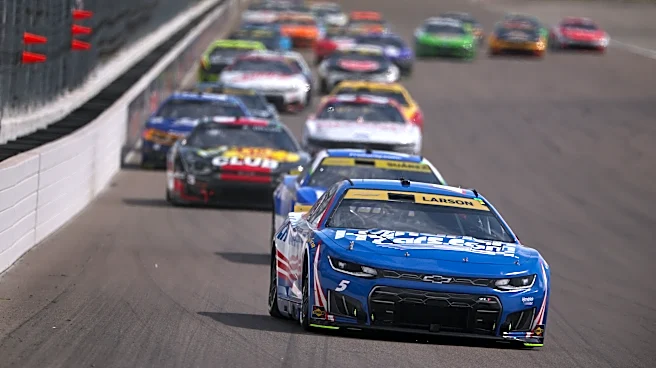
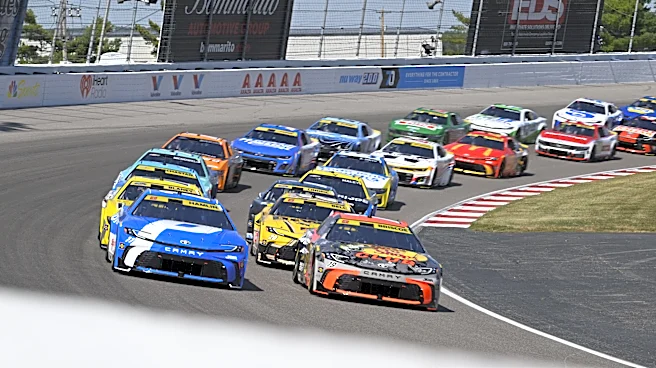
Beyond its technical specifications, Bristol Motor Speedway is known for its stadium-like seating, which contributes to an unparalleled atmosphere. The track's short length means that the 43 cars in the starting lineup occupy nearly half of the track, creating a dense field of competitors. This proximity, combined with the high speeds achieved due to the steep banking, often leads to comparisons of racing at Bristol to "fighter jets flying in a gymnasium." The intense traffic and powerful race cars frequently result in a high number of caution laps, as contact and bumping between vehicles are practically unavoidable on the tight track. This unique environment fosters a strong divide among fans and drivers: they either love it or hate it, often depending on whether they grew up with short track or superspeedway racing.
The popularity of Bristol's races is evident in the demand for tickets. Cup Series race tickets are notoriously difficult to acquire due to the high demand. Even Xfinity Series races often draw over 100,000 spectators, making them some of the most successful events in that series. The track's continuous expansion under Speedway Motorsports, which acquired it in 1996, has seen seating capacity grow from 71,000 to 162,000, with significant investments in infrastructure. All spectator areas have been renamed after past winners and NASCAR champions, further embedding the track's rich history into its physical layout. This commitment to both racing and fan experience solidifies Bristol Motor Speedway's status as a concrete colossus in the world of NASCAR.